







How to Make Your Haberdashery’s Bias Tape Section Profitable
Learn how to sell bias tape in your haberdashery with Byetsa: Fany base assortment, displays, margins, turnover and restocking. B2B guide for distributors and retailers.
 By Francesco ZagnoniPublished on 10 min read

Quick answer
To make its bias binding section profitable, a haberdashery should set up a well-sized core range, display it by family and colour in the hot spots, measure stock turnover and restock the top 20 every 4 to 6 weeks, ordering for seasonal campaigns in advance.
Key points
- Bias binding sells all year round because it combines project customers, loyal customers who restock and impulse purchases.
- Core range: six or seven Fany families in 18 and 30 mm, widths that cover 80% of enquiries.
- Target turnover: 3 to 6 times a year for top lines, and less than 15% with no sales in 12 months.
- Display Fany reels by family and then by colour, and reserve eye level, the entrance and the till area for the top 20.
- Restock the top 20 every 4 to 6 weeks and order for seasonal campaigns 6 to 8 weeks in advance.
Why the Bias Tape Section Can Be One of the Most Profitable in Your Haberdashery
For many haberdasheries, bias tapes are one of the few categories where margin, turnover, and customer loyalty converge. Unlike other trimmings that depend on a one-off project, bias tape sells year-round: it sells when someone needs to finish a bib, complete a dress, order custom finishes, or change their kitchen décor.
However, not all haberdasheries make the section equally profitable. Some work it as a living display that moves every week; others maintain it as a static wall of reels that barely turn over. The difference rarely lies in the product price: it lies in how the section is conceived, what assortment is set up, and how restocking is managed. At Byetsa we have been manufacturing bias tapes for wholesale purchase in haberdasheries and distributors since 1969, and our Fany catalogue is designed precisely so that retailers do not have to reinvent how to present and move the product.
Bias Tape as a Regular Restocking and Impulse Purchase Product
Three profiles mix in a haberdashery's purchasing behaviour. The project customer comes in with a specific idea and needs a few metres of a particular bias tape. The loyal customer restocks the same type of bias tape from time to time. And the impulse customer comes in for something else, passes by the bias tape wall, and picks up a reel they had not planned on.
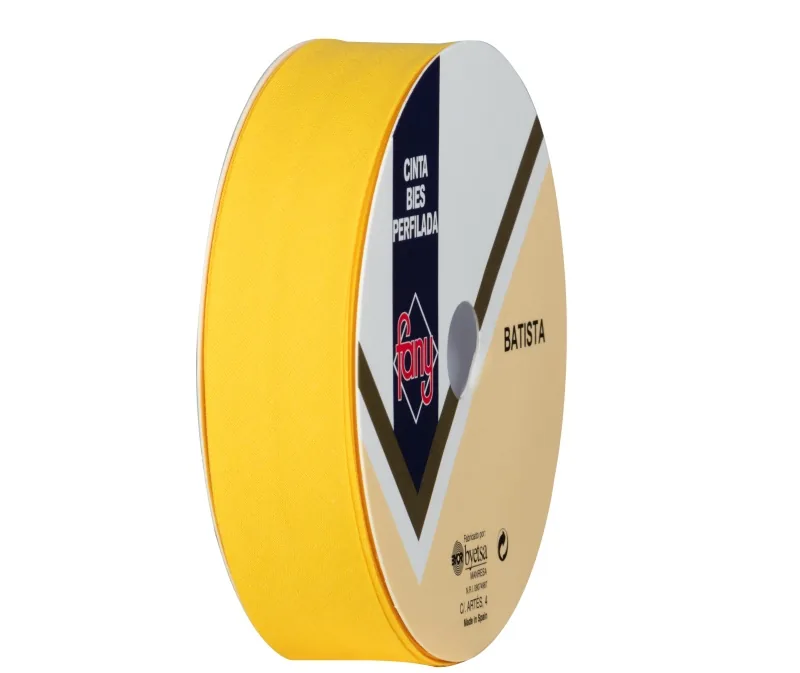
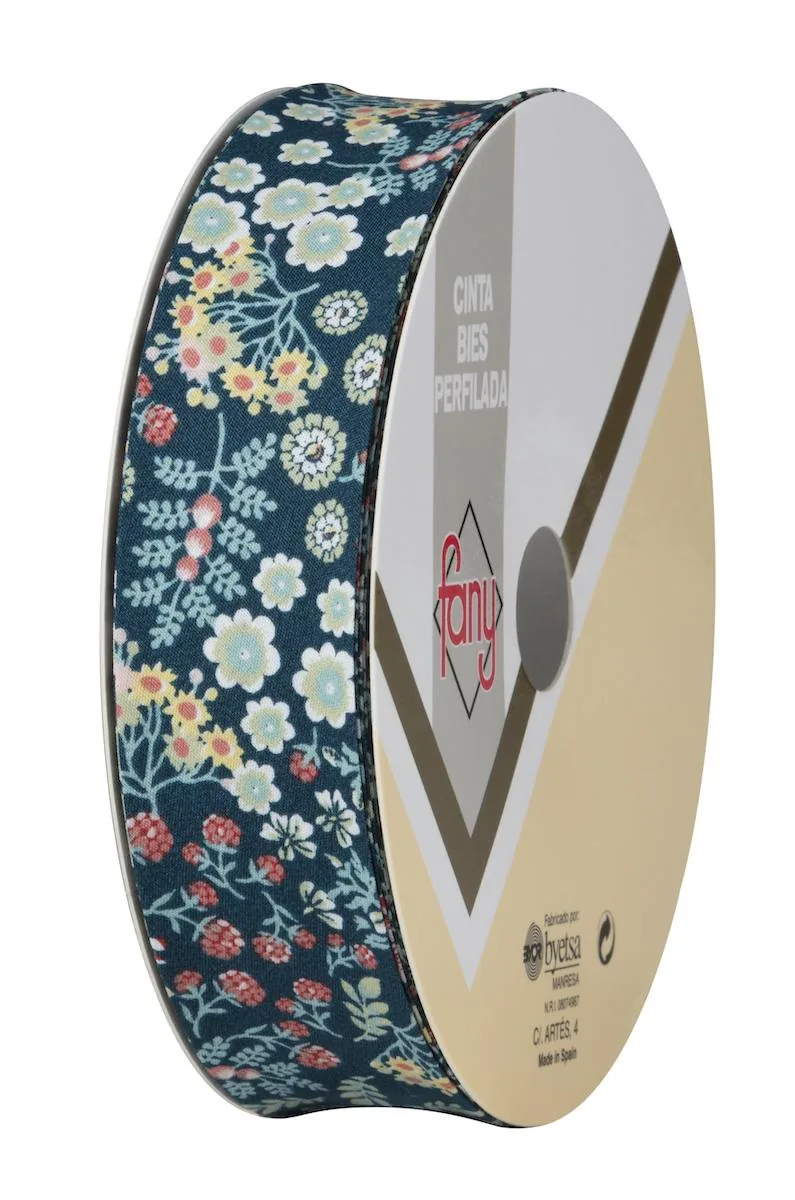
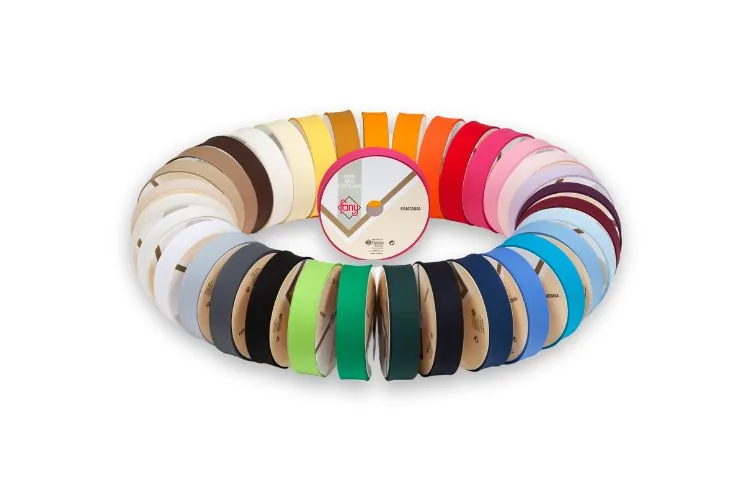
These three profiles make bias tape a different product from the rest of haberdashery retail. It is not like a zip or a specialised button, which only sell when someone is looking for them: bias tape also sells when it is seen. That is why the Fany reel format is designed with a colour front disc and identifying side card, so that each reel functions as a small display in itself. This hybrid nature explains why the section sustains stable cash flow throughout the year: it has peaks, but rarely stalls if the assortment is well constructed.
Cost Structure, Commercial Margin, and Turnover
Two concepts should be separated: price per metre to the end customer and price of the complete reel. A standard Fany reel is 25 metres (some families are supplied in 10 or 20 metres). Your haberdashery decides whether to sell by the cut, by the reel, or combine both options. Most of the margin usually comes from cut sales; full reel sales are requested by small workshops or professional seamstresses and provide volume.
The capital tied up per reference is low compared to other categories. A 25-metre reel takes up very little shelf space and releases an attractive margin with fast turnover. The key is to think of the section as a matrix of families × widths × colours: each reference occupies a position and you need to know how much it sells and how much it costs you to have it sitting idle.
Indicators You Should Measure: Turnover, Top SKUs, and Dead Stock
Three basic indicators give you a realistic picture of how your section is performing.
- Annual turnover per reference: how many times you sell the entire reel per year, or how many metres you sell by the cut. For Fany bias tapes, 3-6 turnovers per year for top SKUs and 1-2 for complementary ones are reasonable.
- Percentage of dead references: how many SKUs have gone more than 12 months without a sale. If you exceed 15%, your section is fossilising.
- Top 20 ranking: in a well-managed section, 20% of references usually generate 70-80% of revenue. Identifying your top 20 tells you exactly which reels can never be missing and which you should prioritise in restocking.
How to Build an Assortment and Display That Sell Themselves
Once you understand how the product behaves, two levers make the difference: a well-sized assortment and a display designed so the customer decides alone, without needing to ask.
The assortment is not built by instinct: it is built by combining what your regular customer requests, the most demanded families nationwide, and the gaps you detect in your area. The display transforms those reels into a showcase within the store itself. Done well, both levers reinforce each other.
Base Assortment: Families, Widths, and Colours That Cannot Be Missing
For a standard haberdashery, the minimum viable assortment is built on six or seven families from the Fany catalogue and two dominant widths (18 mm and 30 mm). In batiste (50% polyester + 50% cotton), the master colour chart solves all the basics: white, ecru, black, navy, red, grey, beige, and a couple more tones depending on your neighbourhood profile. In 100% cotton bias tape, a reduced selection in basics for customers seeking natural fibre.
From there, three printed families that almost no one stops requesting: gingham bias tape in check, mini check, and stripe (the family that sells itself in children's fashion and home textiles), elastic bias tape (97% cotton + 3% elastane) for knit, lingerie, or sportswear customers, and a couple of satin references for special occasions and premium sewing. For Q4, lamé in gold and silver plus some Christmas or Noel reference.
The essential widths are 18 mm for fine finishes (collars, cuffs, children's garments) and 30 mm for visible finishes (tablecloths, curtains, cushions). With those two you cover 80% of enquiries. The 12 mm decor with scalloped edge is a good addition for childcare.
Visual Display: Fany Displays, Colour Grouping, and Hot Zones
The Fany catalogue is presented in reels with colour front disc and side card with the Fany logo, a format designed so the reel functions as its own display. You do not need closed showcases: what makes the section profitable is the customer's direct visual contact with the colour.
Group the reels by family first, colour second. A wall organised by families (batiste, cotton, gingham, elastic, satin, lamé, decor) makes it easy for customers to go straight to their category. Within each family, arrange by colour range (whites, earth tones, reds, greens, blues, blacks) and you will see how the arrangement itself invites taking more than one reel.
The hot zones of the point of sale are three: eye level, wall header upon entry, and proximity to the checkout. Reserve those positions for your top 20. Seasonal prints (Christmas, Fruit, Stars) change position each quarter so the section communicates novelty.
Labelling, Sample Display, and Customer Communication
The section that sells best is the one the customer understands without asking. For that you need three things. First, clear price labelling: price per metre and, if you work it, price of the complete roll.
Second, small usage signs next to each family. Simple phrases like "ideal for children's finishes," "20-40% elasticity," or "decor bias tape for premium finishes" guide the non-professional customer. A visual reference to the most demanded commercial widths or a clear typology of tapes and bias tapes for haberdashery works well for customers who come in unsure.
Third, a physical colour sample display for customers who come with their fabric and need an exact match. It is a simple tool that differentiates your haberdashery and multiplies the average ticket.
Operations: Efficient Restocking and Leveraging Seasonal Campaigns
The other 50% of the section's success is not visible on the wall. It is in the back room: in how you restock, how often you order, and what seasonal items you plan in advance. A haberdashery that runs out of top reels in May or lamé in November loses a significant portion of its annual revenue.
Working with a European manufacturer changes the restocking dynamic. When your supplier is in Manresa and not on another continent, you stop buying large lots "just in case" and start buying what sells, when it sells. This frees up capital, avoids dead stock, and allows you to react to campaigns and trends without risks.
Restocking with a European Manufacturer and the Haberdashery Commercial Calendar
The haberdashery that best makes its bias tape section profitable schedules restocking in two parallel rhythms. The first is the continuous rhythm of the top 20: the references that sustain day-to-day operations. It is reasonable to order small restocks every 4-6 weeks based on actual turnover, not year-long forecasts.
The second is the campaign rhythm. In spring demand for gingham and elastic bias tape rises (childcare, communions, knitwear); in summer customers seek accessories like Tiedye, Urban Wild, or Aquarium; during back to school bias tapes for uniforms rise; and during the last quarter comes the peak for satin, lamé, and Christmas and Noel references. Knowing the available industrial and haberdashery presentation formats helps you anticipate what to order at each moment.
Ordering campaigns 6-8 weeks in advance ensures you have product on the wall when demand begins. The rule for selling bias tape in haberdashery without accumulating dead stock is simple: restock the top 20 frequently and order seasonal items on schedule.
We make what you need
Looking for bias binding for your production or your haberdashery?
Frequently asked questions
01What Minimum Bias Tape Stock Does a Haberdashery Need to Start Selling?
A solid initial assortment can be built with between 60 and 120 well-chosen references. The base should include batiste 18 mm and 30 mm in about ten basic colours, gingham check and mini check bias tape in children's range, elastic bias tape in white, black, and red, satin in a brief selection, and a touch of lamé for campaigns. It is preferable to start focused and observe what turns over before expanding.
02What Displays and POS Materials Does Byetsa Offer for Haberdasheries?
The Fany format itself already functions as a display: the reel has a front disc with visible colour and identifying side card. For points of sale that need specific support, Byetsa can provide physical colour charts and family sample displays. The most effective approach is usually to stack Fany reels by family and colour on open shelving, without closed showcases.
03What Are the Best-Selling Bias Tape Widths and Colours in Haberdashery?
The dominant widths are 18 mm and 30 mm, with additional presence of 12 mm for decor bias tape. In colours, the universal basics are white, ecru, black, navy, red, grey, and beige. In prints, children's gingham check in red, blue, and pink, polka dots in black and red, and lamés in gold and silver are SKUs that almost no haberdashery can afford to have sitting idle.
04What Commercial Margin Does the Bias Tape Section Leave in a Haberdashery?
The margin depends on the sales model (cut per metre vs. complete reel) and the store's positioning, but cut sales per metre usually leave margins well above the trimmings average. Clearly labelling both prices is key: cut sales sustain profitability, complete reel sales provide volume.
05How Do I Manage Restocking to Avoid Accumulating Dead Stock?
Work with two rhythms: continuous restocking of the top 20 every 4-6 weeks and campaign purchases 6-8 weeks in advance. Review your dead SKUs (more than 12 months without turnover) each quarter. And take advantage of the proximity of a European manufacturer in Manresa to avoid inflating orders: order what turns over, when it turns over.
06What Is the Difference Between Byetsa's Fany and Byor Brands?
Fany is the haberdashery presentation brand: reels of 10, 20, or 25 metres with colour front disc and identifying card.
Byor is the industrial brand: large-yardage rolls, custom cuts, and formats designed for manufacturers and workshops.
Related articles
Differences between Byetsa’s Fany (blister) and Byor (industrial) brands
Fany vs Byor: differences between the haberdashery format in blister packs and spools, and the industrial format in rolls. A guide for distributors, haberdasheries, and manufacturers.
Read article
Bias Tape for Haberdasheries: How to Stock Your Store with the FANY Line
Discover how to stock your haberdashery with bias tape from Byetsa’s FANY line: colours, prints and formats from 5 to 25 m for retail sale.
Read articleHaberdashery Ribbons: Types, Uses, and Byetsa’s Leadership in the Industry
Discover the types of ribbons available in haberdasheries and why Byetsa is the leading name. Quality, variety, and textile solutions for professionals.
Read articleDo you have a question about bias binding?
If you have any questions about our products or need personalised advice, please do not hesitate to contact our team. We are here to help you in any way we can. Write to us!
- Phone93 874 40 98
- Emailinfo@byetsa.es
- AddressC/ Artés, 4 · Pol. Ind. Els Dolors · 08243 Manresa (Barcelona)
Tell us what you need
We will reply with the right reference, format and width for your production.