
Differences between Byetsa’s Fany (blister) and Byor (industrial) brands
Fany vs Byor: differences between the haberdashery format in blister packs and spools, and the industrial format in rolls. A guide for distributors, haberdasheries, and manufacturers.
 By Francesco ZagnoniPublished on 10 min read
Quick answer
Fany and Byor are two Byetsa brands for the same bias binding made in Manresa: Fany is the haberdashery presentation (spools of 10, 20 or 25 metres and 5-metre blister packs) and Byor the industrial one (long-length rolls and made-to-measure widths).
Key points
- Fany and Byor share the same factory in Manresa, dyeing processes, quality controls and base reference numbering.
- Fany is supplied in rolls of 25, 20 or 10 metres depending on the family, and occasionally in 5-metre blister packs.
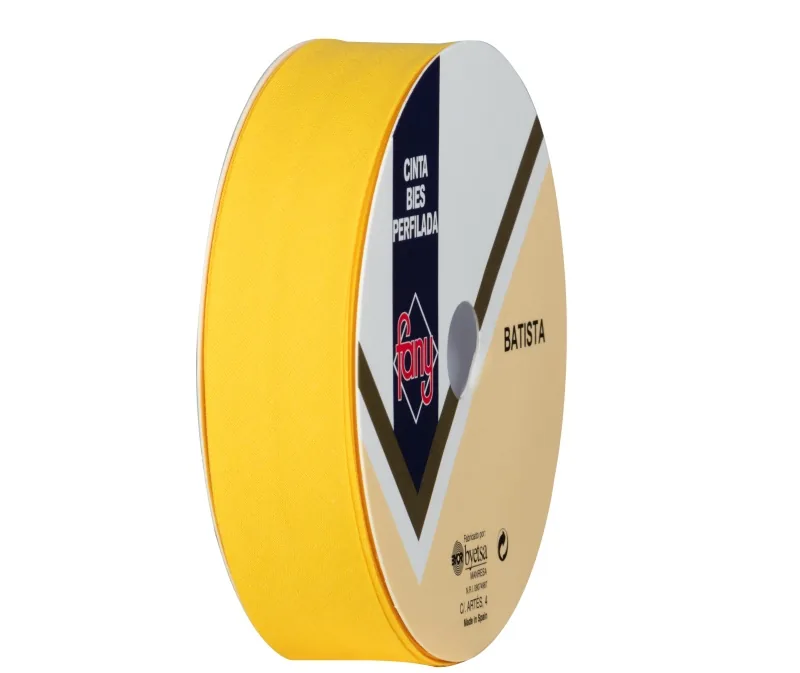
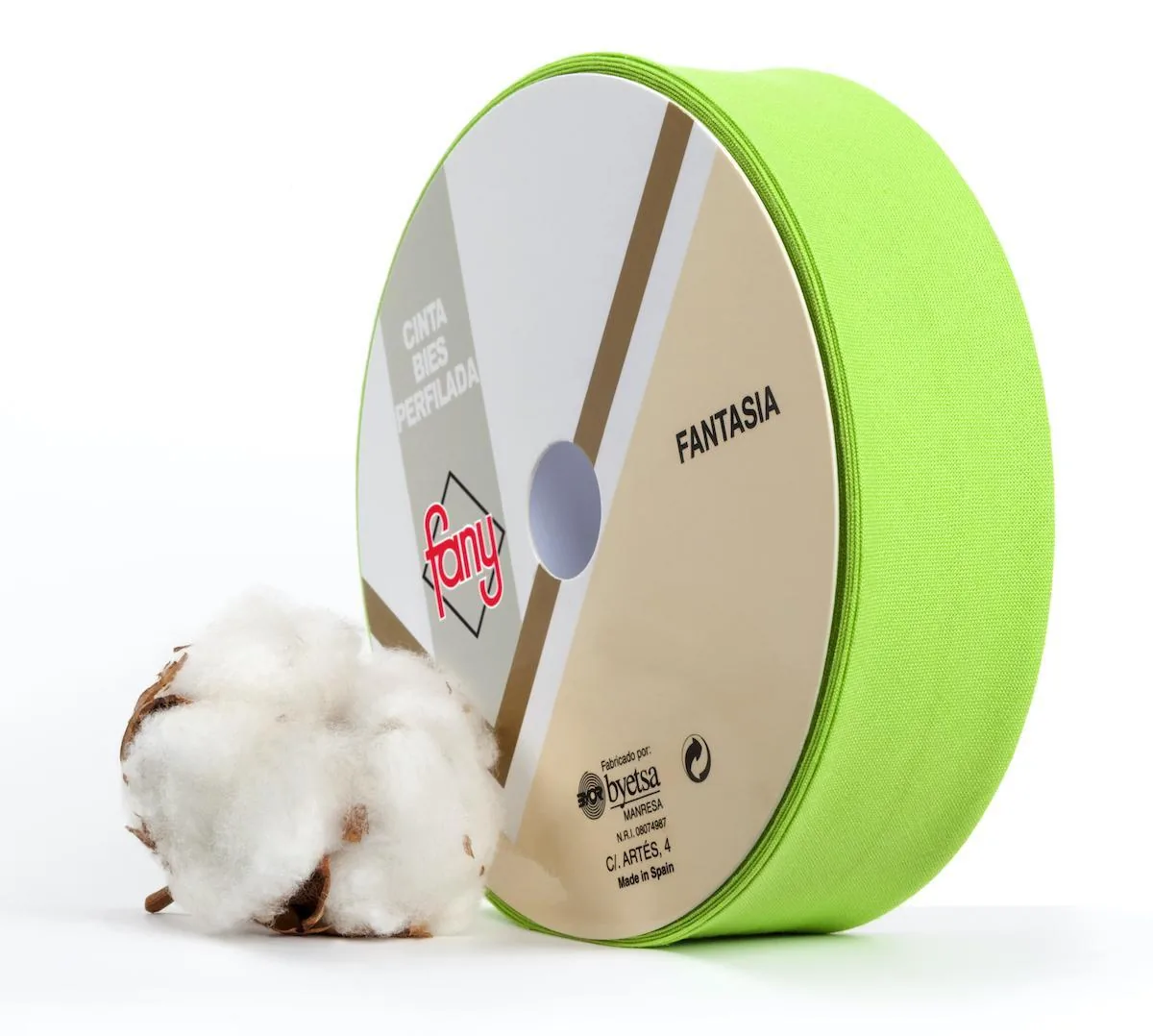
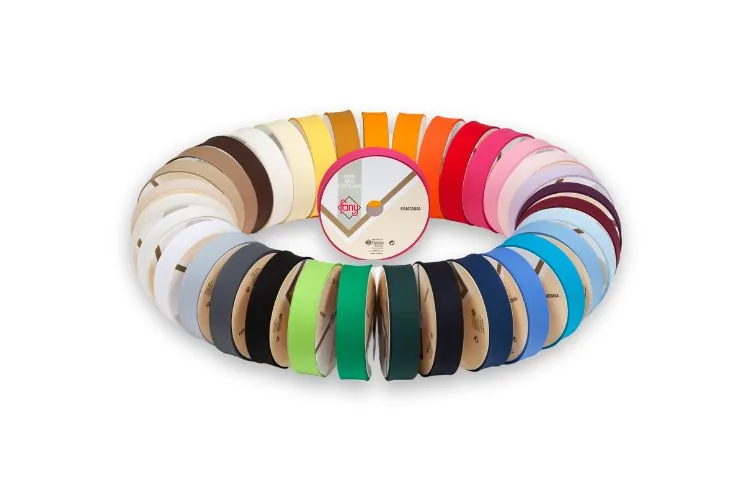
- A Fany spool can be recognised by its coloured front disc, side card and yellow diamond-shaped seal.
- Byor offers rolls of around 100 metres, special widths from 25 to 50 mm and processing of the customer’s own fabric.
- The reference changes by one digit or prefix depending on the format: industrial elastic is 0227100 and haberdashery elastic is 0727100.
Why Byetsa structures its catalogue into two brands: Fany and Byor
Byetsa is a B2B manufacturer and serves two very different channels with the same product. On the one hand, haberdasheries, retail distributors, and small workshops that need to display and sell bias tape at the point of sale; on the other, industrial manufacturers and professional workshops that consume volume and work with production lines.
The solution Byetsa adopted years ago is to structure its catalogue into two commercial brands: Fany for haberdashery and Byor for industry. The two brands share the product, manufacturing plant, and base reference nomenclature, but differ in presentation, packaging, meterage, and visual communication. In this article, we break down the Byetsa Fany vs Byor comparison: what each brand represents, how they are identified, and which format to order depending on your customer profile.
One factory, two channels: Byetsa’s dual-brand model
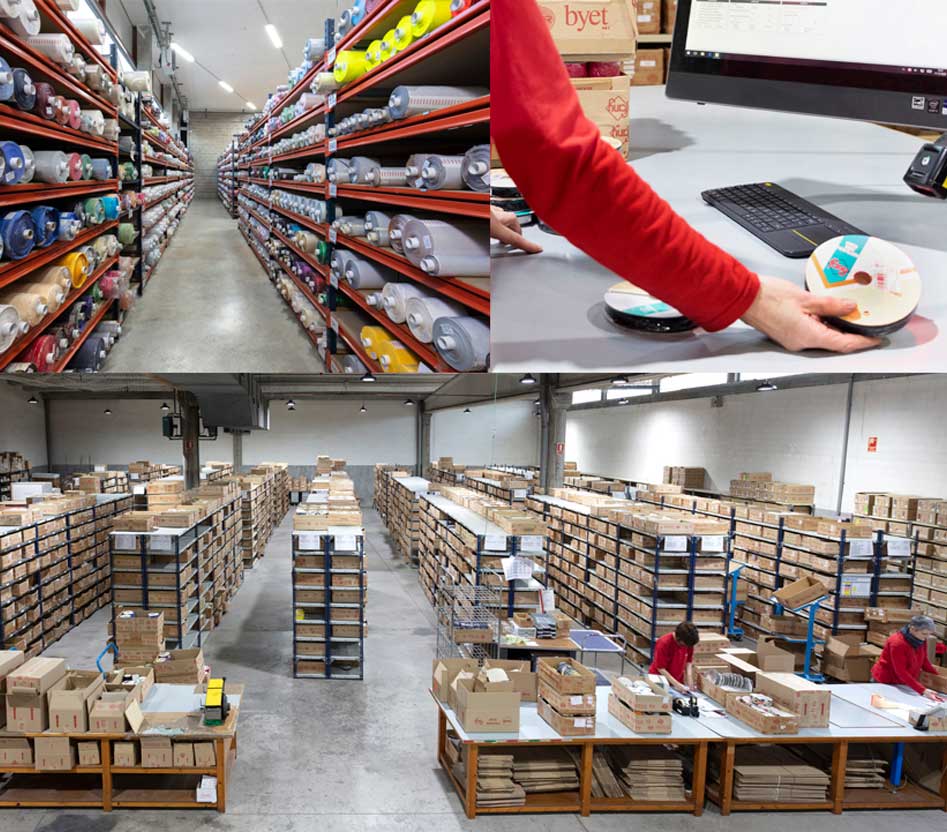
Both brands, Fany and Byor, come from the same manufacturing plant in Manresa, with the same machinery, the same threads, the same dyeing processes, and the same quality controls. The difference is not in the product; it is in how it is presented to the end channel.
This structure allows Byetsa to serve the local haberdasher and a factory purchasing manager with the same technical standards but with formats designed for each. For a haberdashery, a spool with a coloured front disc is what sells; for a sewing line, a 100-metre roll with a custom width is what keeps production running.
That logic has been consolidated over more than five decades as a European manufacturer headquartered in Manresa, and today it coexists transparently in the catalogue: each product sheet shows both the industrial presentation and the haberdashery presentation at the same time.
How Fany and Byor differ in presentation, packaging, and target
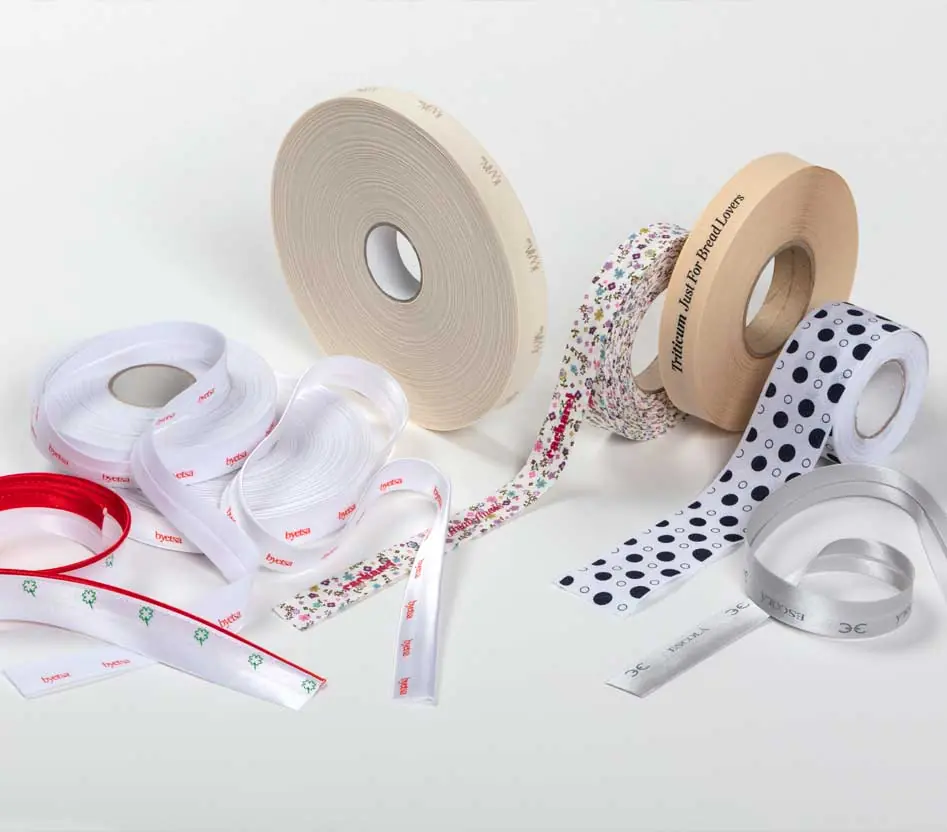
The most visible difference is the physical presentation format. Fany is presented on spools with a coloured front disc and an identifying side card, in five-metre blister packs for specific cases, or in small rolls of 10, 20, or 25 metres. Byor is presented in large-meterage industrial rolls (up to 100 metres or more), with custom widths and no retail packaging.
That difference reflects the logic of each channel. Fany is designed to be sold on a haberdashery shelf: the spool must communicate the colour at a glance, identify the range, and withstand retail turnover. Byor is designed to feed an industrial sewing line: the roll must withstand hours of unwinding, maintain constant tension, and reduce technical stoppages due to spool changes.
In terms of communication, in the Byetsa catalogue each product sheet is divided into two blocks: a blue header “Industrial Presentation” (Byor) and a pink header “Haberdashery Presentation” (Fany). This colour coding makes it easy for buyers to identify at a glance the format they need.
Same product, same base references, different final presentation
One of the keys to the model is that Fany and Byor share the base reference nomenclature. A digit or a prefix changes, but the bias tape that goes onto a Fany spool is exactly the same as what goes out on a Byor roll.
For example, in the Fluorescent range, the industrial cut bias tape is ref. P.730 and the piping is P.2730; in the haberdashery presentation they are supplied as P.7730 (25 m roll) and P.7735 (piping in a 25 m roll). In the Elastic range, the industrial reference 0227100 and the haberdashery reference 0727100 differ by one digit indicating the format, but the bias tape is the same.
This has a practical implication: a distributor can combine Fany and Byor orders without losing product consistency. If your end customer requests a restock of Fany spools for haberdashery but also places an industrial Byor order for a workshop, both batches will come from the same factory with the same quality and the same colour identity.
Fany brand: the haberdashery presentation in spools, blister packs, and small rolls
Fany is the brand through which Byetsa serves the retail and distribution channel for haberdasheries. Its purpose is for the bias tape to be displayed, seen, and sold at a physical point of sale, with a presentation designed so that the spool acts as its own display.
When we talk about Fany, we are therefore talking about visual format, moderate meterage, and communication to the end consumer. It is the brand seen on the shelves of local haberdasheries, in textile distributor catalogues, and in retail e-commerce.
Fany formats and meterage: 5 m blister packs, 10, 20, and 25 metre rolls
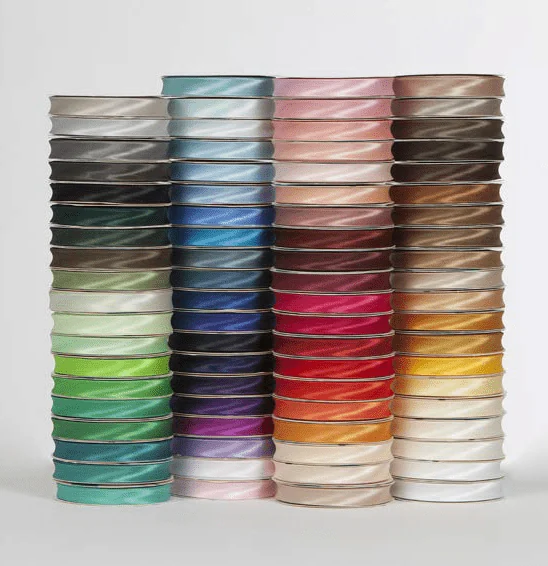
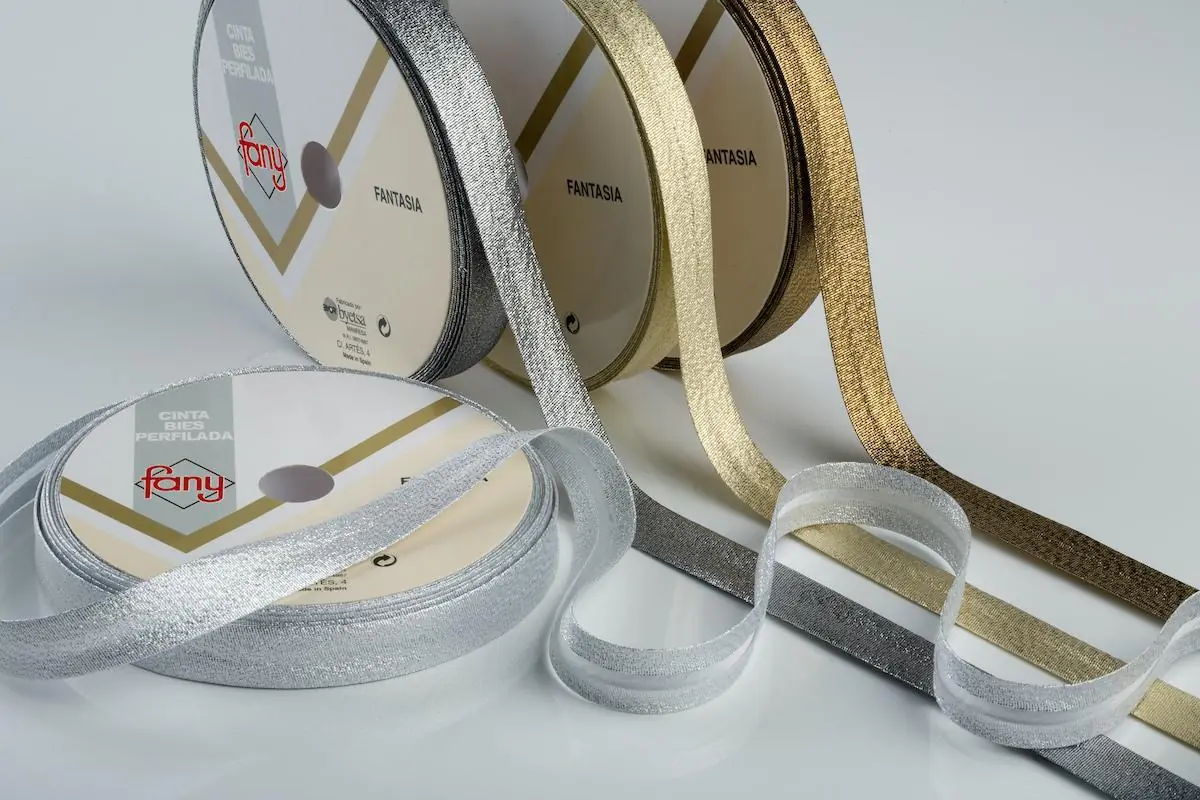
Fany is not a single format; it is a range of presentations adapted to each range. The 25 metre roll is the dominant format: it covers most ranges (batiste, satin, cotton, gingham, elastic, lamé, rayon, ottoman, prints) and is the standard spool that any haberdashery can order without surprises.
The 20 metre roll is reserved for wide or heavy ranges (linen, denim, baby bias, mini bias, piqué cord, nautic, faux leather, suede). The 10 metre roll is used for delicate or higher-cost ranges (velvet, super suede, 3M Scotchlite reflective, satin decor bias, corduroy). And the 5 metre blister pack is an occasional format, reserved for cases such as 30 mm batiste, 30 mm satin, and Quick Bias fusible bias tape.
This variety allows the distributor to build orders that match the turnover of each range: it avoids accumulating metres that will not move, while still having sufficient volume in the references that sell daily.
Visual identification: coloured front disc, side card, and the yellow Fany diamond seal
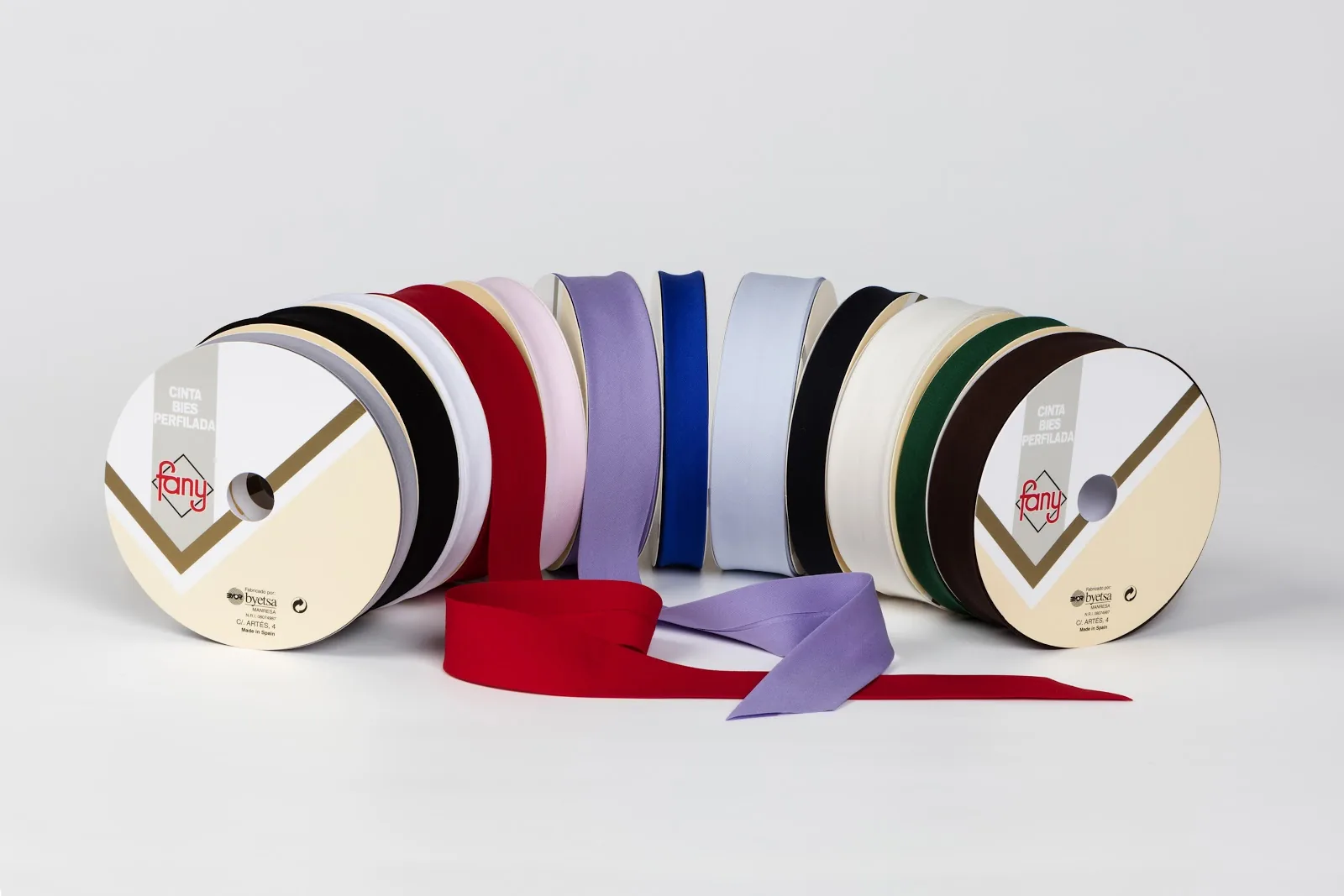
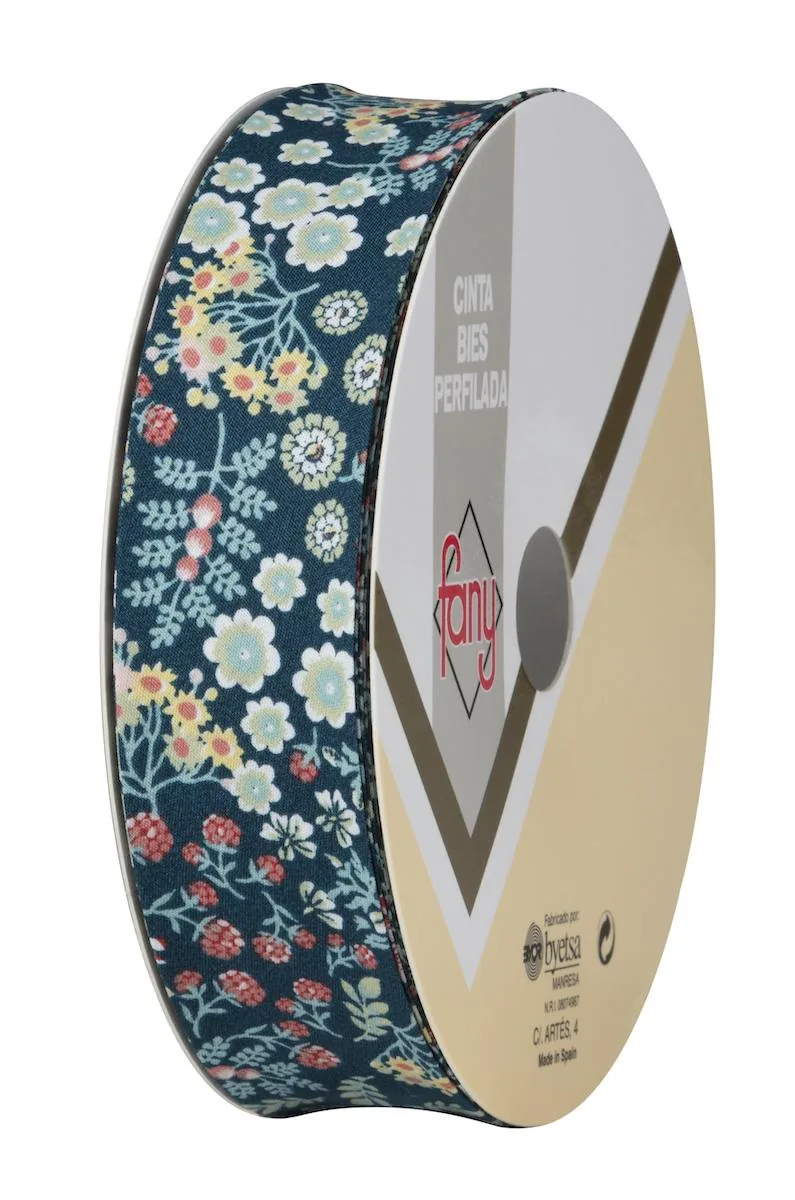
A Fany spool is recognisable at a glance by three elements. The first is the coloured front disc: the top face of the spool shows a sample of the wound bias tape, so the colour is visible without unrolling the tape. The second is the identifying side card, with the reference nomenclature, range, and composition.
The third element is the yellow diamond “fany” seal that identifies the brand, accompanied by the marking “Manufactured by Byetsa, Made in Spain”. This origin signature is key for end customers who value European traceability, and for haberdasheries that communicate local quality as a sales argument.
This entire visual system is designed so that a customer can choose their bias tape without needing to ask, speeding up the purchase decision and reducing the workload for staff.
Who it is aimed at: haberdasheries, retail distributors, and small workshops
Fany is designed for four customer profiles. The first is the traditional haberdashery that sells to the end consumer by the metre or by the full spool. The second is the textile distributor that supplies haberdasheries and needs a broad range with meterage adjusted to turnover. To understand how Byetsa markets through haberdasheries and retail distributors, the Fany catalogue is the reference.
The third is retail haberdashery e-commerce that sells online to end consumers and small professionals. And the fourth is the small workshop or self-employed professional (professional seamstresses, sewing schools, fashion studios in their first collections, local tailoring) that consumes small rolls without justifying an industrial order. In all these profiles, what is purchased is the full spool, not loose production metres.
Byor brand: the industrial format for manufacturers and professional workshops
Byor is the brand through which Byetsa serves the industrial channel. Here, sales are no longer made through a wall of spools; they are made by the metre, with custom widths, and with on-demand services. It is the brand that feeds garment production lines, leather goods plants, footwear factories, uniform suppliers, and industrial home textile providers.
When a professional buyer talks about an “industrial Byetsa order”, they are talking about Byor: the format designed so that bias tape is not a displayed item, but rather a technical input that enters the assembly line with the regularity and reliability required by serial production.
Byor industrial formats: large-meterage rolls, custom widths, and on-demand services
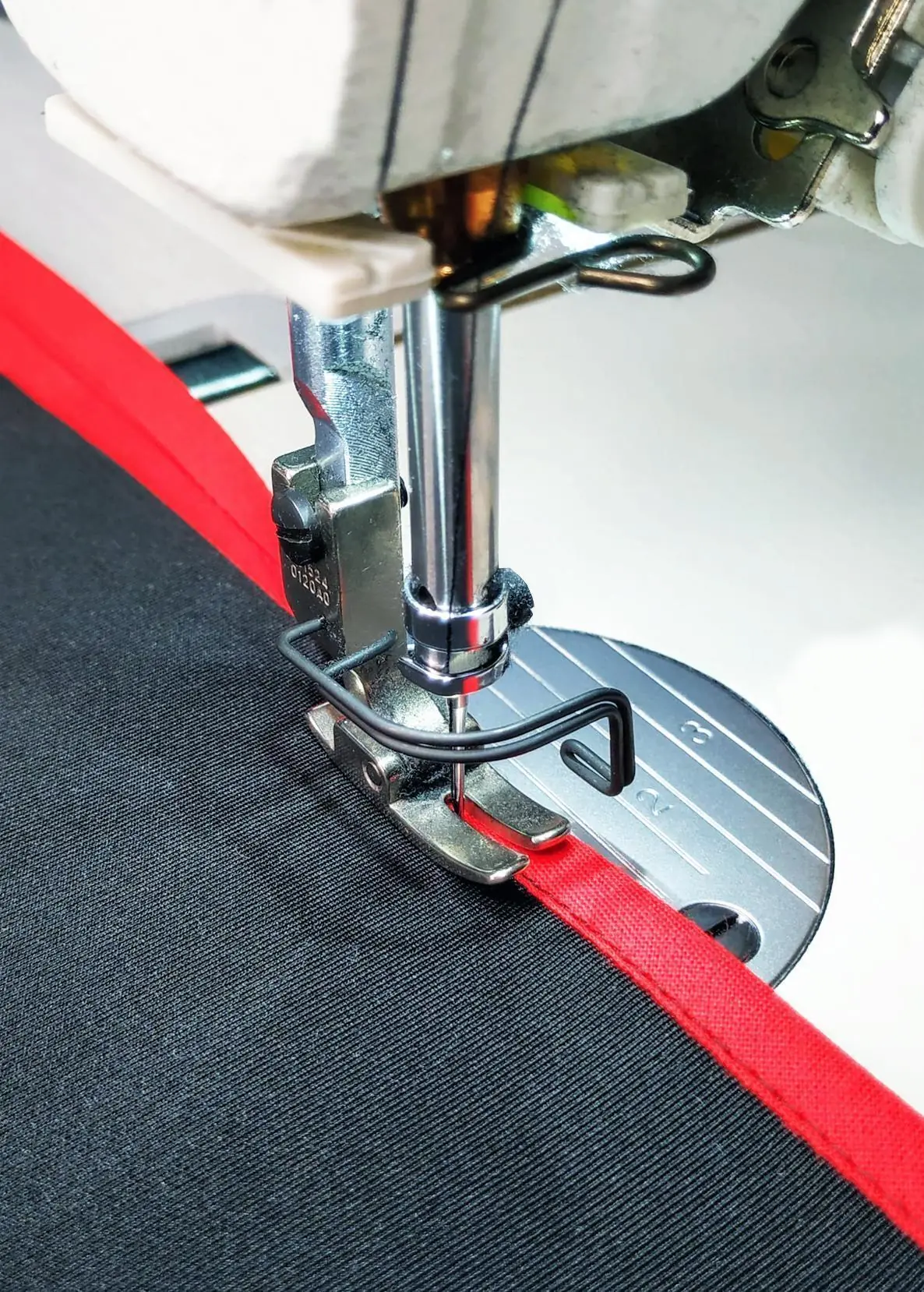
The most common Byor format is the large-meterage industrial roll (typically 100 metres, although some ranges are supplied in higher meterage). Compared to the small haberdashery spool, the industrial roll reduces technical stoppages due to spool changes, maintains constant unwinding tension, and enables the assembly line to run at a steady speed.
The second characteristic is width flexibility. Where Fany uses fixed commercial widths (12, 18, 20, or 30 mm), Byor opens the door to special widths according to the price list: 25 mm, 35 mm, 40 mm, 50 mm, or any specific width required by the production pattern. Knowing the industrial and haberdashery presentation formats available is key to planning the order.
The third is on-demand services: production of special colours, exclusive volume orders, and a service to convert the customer’s own fabric. The manufacturer sends its own fabric to Byetsa, and the Manresa plant transforms it into industrial bias tape with exact tolerances, ready to enter the line. This capability allows fashion, leather goods, and footwear brands to maintain their colour and fabric identity without relying on standard catalogues.
The Byor customer profile includes fashion and garment manufacturers, leather goods, footwear, uniforms and workwear, light automotive, industrial home textiles, and packaging companies. For more context on bias tape manufacturing for the garment industry, the Byor catalogue is the reference.
We make what you need
Looking for bias binding for your production or your haberdashery?
Frequently asked questions
01What does Fany mean and what does Byor mean within the Byetsa catalogue?
Fany is the registered brand under which Byetsa presents its range of bias tape in haberdashery format: 10, 20, or 25 metre spools, 5 metre blister packs, and small rolls identified with a coloured front disc and a side card.
Byor is the industrial brand: large-meterage rolls, custom widths, and formats designed for manufacturers. Both brands share the product and manufacturing plant; the final presentation changes.
02Can I order the same bias tape in Fany format and in Byor format?
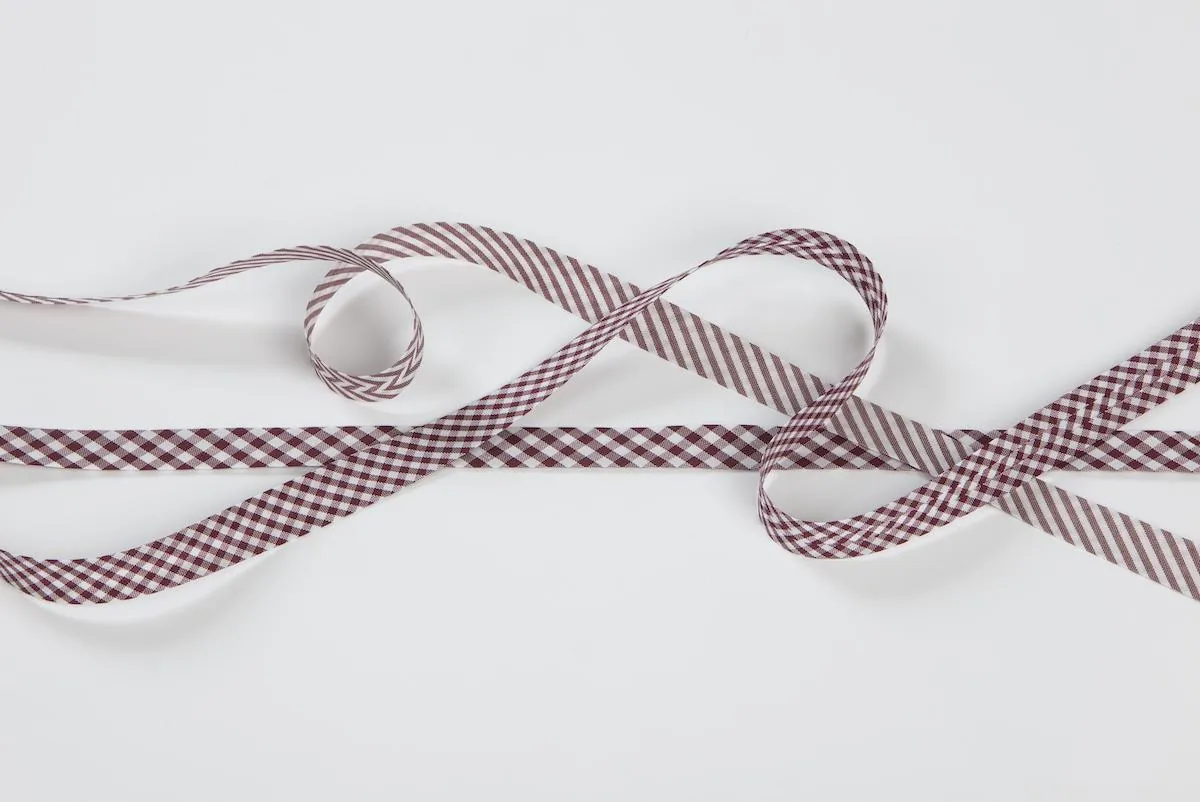
Yes. Both brands share the base reference nomenclature and the same production. If a range (for example, gingham check bias tape or elastic bias tape) is in the catalogue, you can order it in Fany format for your haberdashery and in Byor format for an industrial job. The bias tape is exactly the same; the meterage and packaging change.
03Which format should I order if I have a small haberdashery?
For a retail haberdashery, the natural channel is Fany. The spools with a front disc and identifying card are designed to be sold from the shelf without needing a catalogue. The 25 metre roll is the most common format; delicate or wide ranges are supplied in 20 or 10 metres to adjust the spool diameter.
04Which format should I order if I am a manufacturer or industrial workshop?
If you work with production lines, the channel is Byor: large-meterage industrial rolls, custom widths according to the price list, and the option to convert your own fabric. This format reduces technical stoppages due to spool changes and allows you to match the bias tape to the pattern without having to adapt the design to the standard commercial width.
05How can you visually identify Fany spools versus Byor rolls?
Fany spools feature a front disc with the colour visible, an identifying side card, and the yellow diamond “fany” seal, as well as the marking “Manufactured by Byetsa, Made in Spain”. Byor rolls are industrial with no retail packaging, and in the catalogue they appear under the blue header “Industrial Presentation”.
06Can a business combine Fany for retail sales and Byor for custom orders?
Yes, and in fact it is a common practice among advanced distributors. A haberdashery can sell Fany spools on its usual shelves and, at the same time, handle occasional orders from workshops or small manufacturers through Byor orders with custom widths. As both brands share production, there is no risk of colour variation between what is displayed and what is ordered to specification.
Related articles

How to Make Your Haberdashery’s Bias Tape Section Profitable
Learn how to sell bias tape in your haberdashery with Byetsa: Fany base assortment, displays, margins, turnover and restocking. B2B guide for distributors and retailers.
Read article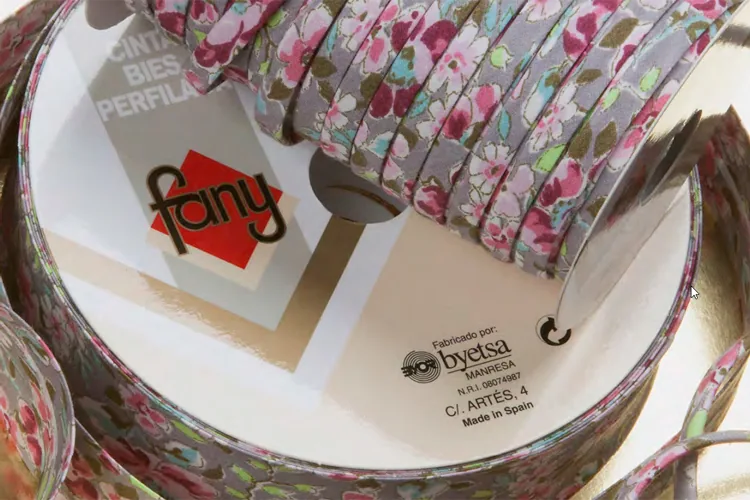
Bias Tape for Haberdasheries: How to Stock Your Store with the FANY Line
Discover how to stock your haberdashery with bias tape from Byetsa’s FANY line: colours, prints and formats from 5 to 25 m for retail sale.
Read article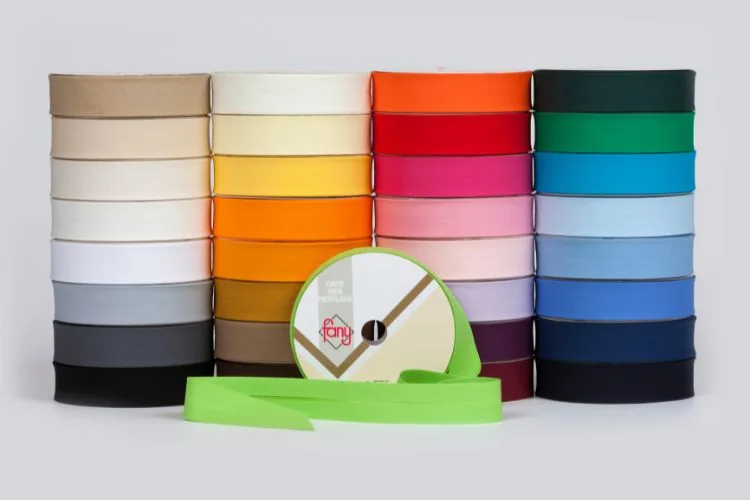
Cost Optimisation in Garment Manufacturing: Advantages of Buying Bias Tape Wholesale in Europe
Optimise costs in your workshop by purchasing bias tape wholesale. OEKO-TEX quality, European manufacturing and fast delivery. Improve your profitability with Byetsa.
Read articleDo you have a question about bias binding?
If you have any questions about our products or need personalised advice, please do not hesitate to contact our team. We are here to help you in any way we can. Write to us!
- Phone93 874 40 98
- Emailinfo@byetsa.es
- AddressC/ Artés, 4 · Pol. Ind. Els Dolors · 08243 Manresa (Barcelona)
Tell us what you need
We will reply with the right reference, format and width for your production.