

Luxury finishes: Using satin and lamé bias tape in haute couture
Lamé bias tape for haute couture. Discover its features and characteristics in this post. Request information with no obligation.
 By Francesco ZagnoniPublished on Updated on 10 min read
Quick answer
In haute couture, satin bias binding is used to bind seams, finish interiors and create piping that structures silhouettes, and lamé bias binding for metallic edges and piping. Both act as reinforcement and a precision finish without distorting curves.
Key points
- Byetsa’s satin is 100% high-tenacity polyester: low friction, abrasion resistance and dimensional stability.
- Lamé uses metallised-plastic yarns with a polyester or polyamide core, flexible enough to pass through industrial guides and folders.
- 18 or 30 mm satin bias binding allows a Hong Kong finish on interior seams without adding bulk.
- With lamé, Teflon soleplates and temperature control are recommended so as not to degrade the metallic sheen.
- Byetsa offers rolls of 50 to 100 metres, special widths and bias cutting of fabric supplied by the customer.
Technical properties of satin and lamé bias tape in luxury production
In the world of high-end industrial garment manufacturing, the choice of textile inputs is not based solely on aesthetic criteria, but on technical performance specifications. The haute couture satin bias tape and lamé produced by Byetsa is designed to meet the stability and ductility requirements that haute couture ateliers demand.
These components act as structural reinforcements and high-precision finishes, where weave uniformity and tensile strength are critical to prevent distortion in curved or bias-cut seams.
The integrity of the sheen and soft hand feel must remain unchanged after industrial steaming and pressing processes—factors that set a specialised European manufacturer apart from generalist suppliers.
Polymer composition and physical behaviour of 100% polyester satin
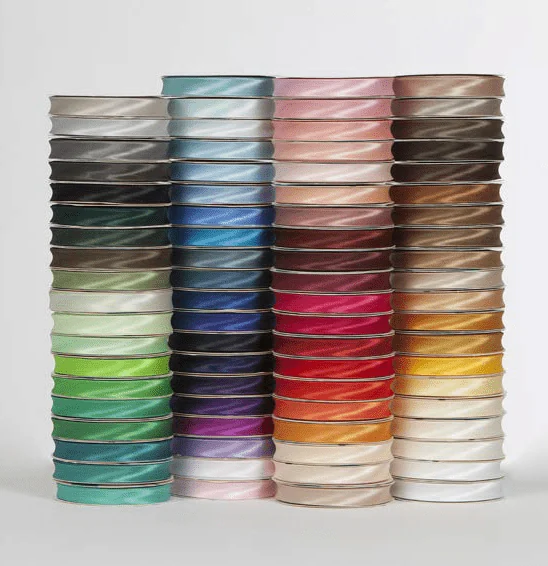
The technical satin used by Byetsa is made from high-tenacity continuous polyester filaments, ensuring a mirror-like surface with an extremely low coefficient of friction.
Unlike natural fibres, industrial-grade polyester offers superior abrasion resistance and exceptional dimensional stability, preventing residual shrinkage that could compromise the geometry of a luxury garment.
The satin weave of our tapes is characterised by long warp floats, maximising light reflection and providing the silky hand that is indispensable in corsetry and fine lingerie. When cut at an exact 45-degree angle, the fabric gains ideal mechanical stretch, allowing the bias tape to conform to complex anatomical contours without twisting defects or edge wrinkling.
Lamé bias tape: Metallic structure, flexibility and tensile strength
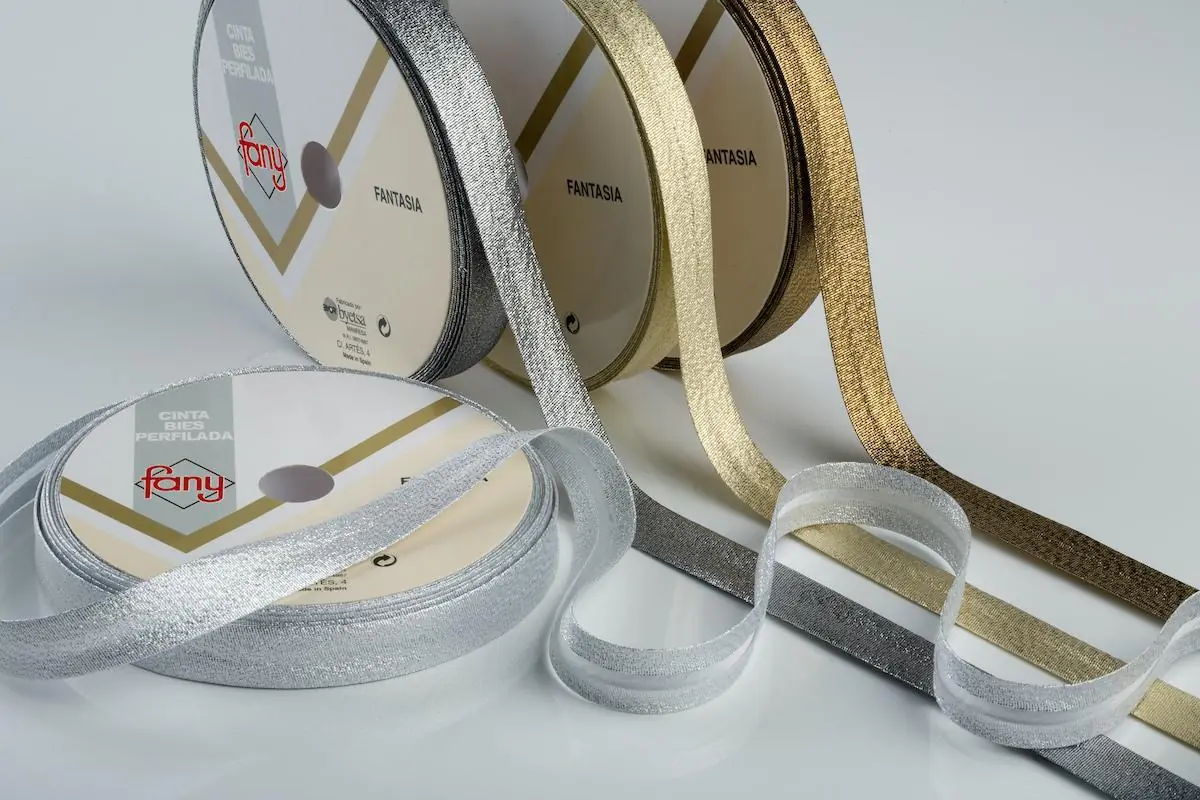
Manufacturing lamé bias tape requires specific textile engineering to balance the metallic effect with operational flexibility. Our lamé tapes incorporate metallised plastic threads that combine a polyester or polyamide core with a coating of aluminium microns or reflective synthetic materials.
This structure ensures the bias tape is not brittle, allowing it to pass through guides and funnels of industrial sewing machines without the risk of fibre breakage or coating loss. Oxidation resistance is a key factor in B2B quality, ensuring that the gold or silver sheen does not degrade through contact with ambient humidity or acidic sweat during wear.
In addition, the controlled basis weight of Byetsa’s lamé delivers crisp, well-defined metallic piping edges with shape memory superior to standard fabrics.
OEKO-TEX Standard 100 guarantee: Chemical safety in high-end finishes
For purchasing managers and quality managers, chemical safety is a regulatory requirement that is non-negotiable. All our satin and lamé bias tapes are certified OEKO-TEX Standard 100 Class I, the strictest on the market. This guarantees the complete absence of harmful substances such as heavy metals, formaldehyde or azo dyes, which could cause skin irritation.
In luxury fashion, where satin bias tape often comes into direct contact with the skin (in linings, straps or inner trims), having a certificate issued by AITEX ensures compliance with international standards (REACH).
This European traceability not only protects the end consumer, but also facilitates exporting collections to markets with stringent technical regulations, strengthening our customers’ brand reputation.
Advanced garment-making processes and optimisation with technical tapes
In luxury industrial production, workshop efficiency must not compromise the craft finish. The integration of high-quality satin and lamé bias tapes enables production units to standardise complex finishing processes.
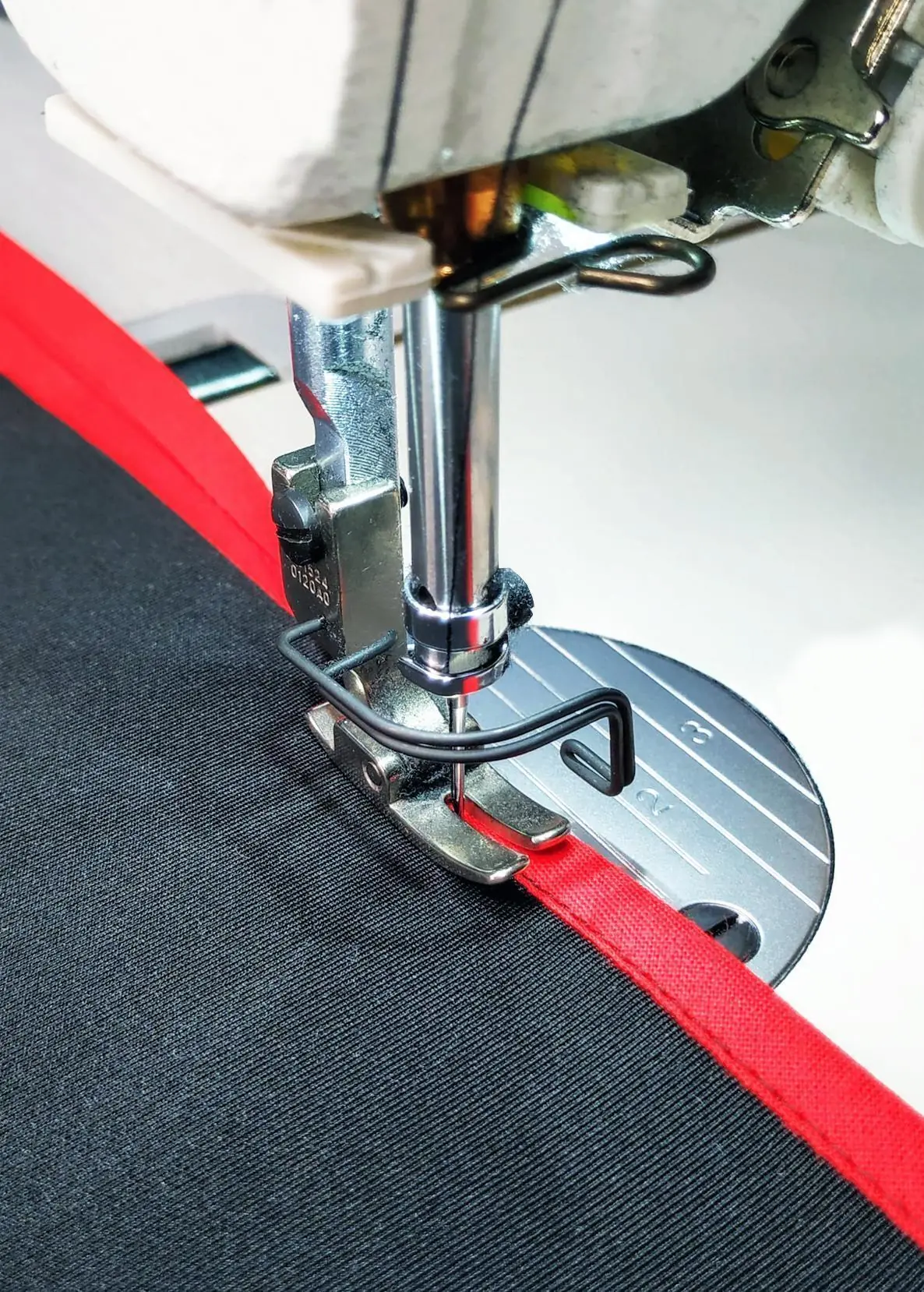
Using triple-feed machinery or specialised machines for overcasting and edge profiling requires inputs with no width variations along the roll. Byetsa bias tapes are manufactured to minimal tolerances, ensuring that industrial funnels and guides do not jam or cause skipped stitches.
This consistency is vital to maintain continuous workflow and reduce fabric scrap in garments where the cost per metre of the main material is high. Choosing a haute couture satin bias tape is not only aesthetic; it is a process-engineering decision to optimise cycle time per garment.
Satin bias tape for seam profiling and inner finishes in tailoring
Finishing inner seams is a hallmark of high-end tailoring. Using satin bias tape to bind seams (a technique known as the Hong Kong finish) provides visual cleanliness and mechanical protection superior to conventional overlocking.
By applying our 18 mm or 30 mm bias tape, an extra-fine profile is achieved that does not add excessive bulk to the join, preventing the seam from showing on the outer face of the main fabric after the final pressing. Byetsa’s polyester satin weave is designed to glide smoothly against other fabrics, eliminating static friction between the lining and the garment, improving drape and wearer comfort.
For workshop managers, the stability of the bias tape ensures that armhole and neckline curves retain their original shape without unwanted stretching during sewing.
Satin-cord piping: Silhouette structuring and edge precision
Implementing corded piping using our technical satin is essential for silhouette structuring in corsetry and occasion dresses. The Byetsa satin piping incorporates an inner cord (filler) of constant gauge that provides a defined, firm edge—ideal for outlining anatomical cuts or highlighting design lines with a satin sheen.
In industrial garment manufacturing, cord uniformity is critical: a micron-level variation in the cord could shift the piping presser-foot guide, resulting in an uneven seam. Our piping allows controlled twisting, adapting to sharp angles and tight curve radii without creating folds in the outer fabric.
In addition, the colour fastness of our dyes ensures that the piping does not experience pigment migration into the base fabric during industrial steaming.
Heat-setting and pressing management for metallic lamé bias tapes
Working with lamé bias tape requires rigorous control of thermodynamic variables in the assembly line. Due to its metallised-plastic composition, lamé has a melting point and heat sensitivity different from natural fibres.
At Byetsa, we recommend using Teflon soleplates on industrial irons and precise control of the heat-setting temperature to prevent degradation of the metallic sheen. Excess heat can cause the aluminium film to shrink or the protective polymer to yellow.
However, the technical quality of our lamé allows intermediate steaming processes without losing shape memory or tape flexibility. It is imperative that quality technicians carry out pressure tests to ensure the bias tape maintains its structural integrity after passing through the finishing press, guaranteeing a final product that conveys luxury and durability.
Competitive differentiation and traceability in B2B supply
The supply chain in the luxury sector allows no traceability errors. Choosing a European supplier such as Byetsa ensures that haute couture satin bias tape meets the most demanding quality standards in the international market.
Domestic manufacturing allows us to offer thorough quality control in every production batch. This is vital to avoid colour variations between different lots within the same order, a common issue with long-distance imports.
For a purchasing manager, the assurance of stable stock and agile logistics drastically reduces operational risks. The geographic proximity of our plant ensures a fast response to demand peaks or last-minute changes to the collection.
Our industrial capacity is designed to serve garment makers operating with lean production. Certification of origin and compliance with REACH regulations are assets that add value and legal certainty to the final garment.
Industrial formats and width customisation for large-scale production
At Byetsa, we understand that versatility is key to production efficiency. We offer optimised industrial formats that minimise downtime on sewing lines.
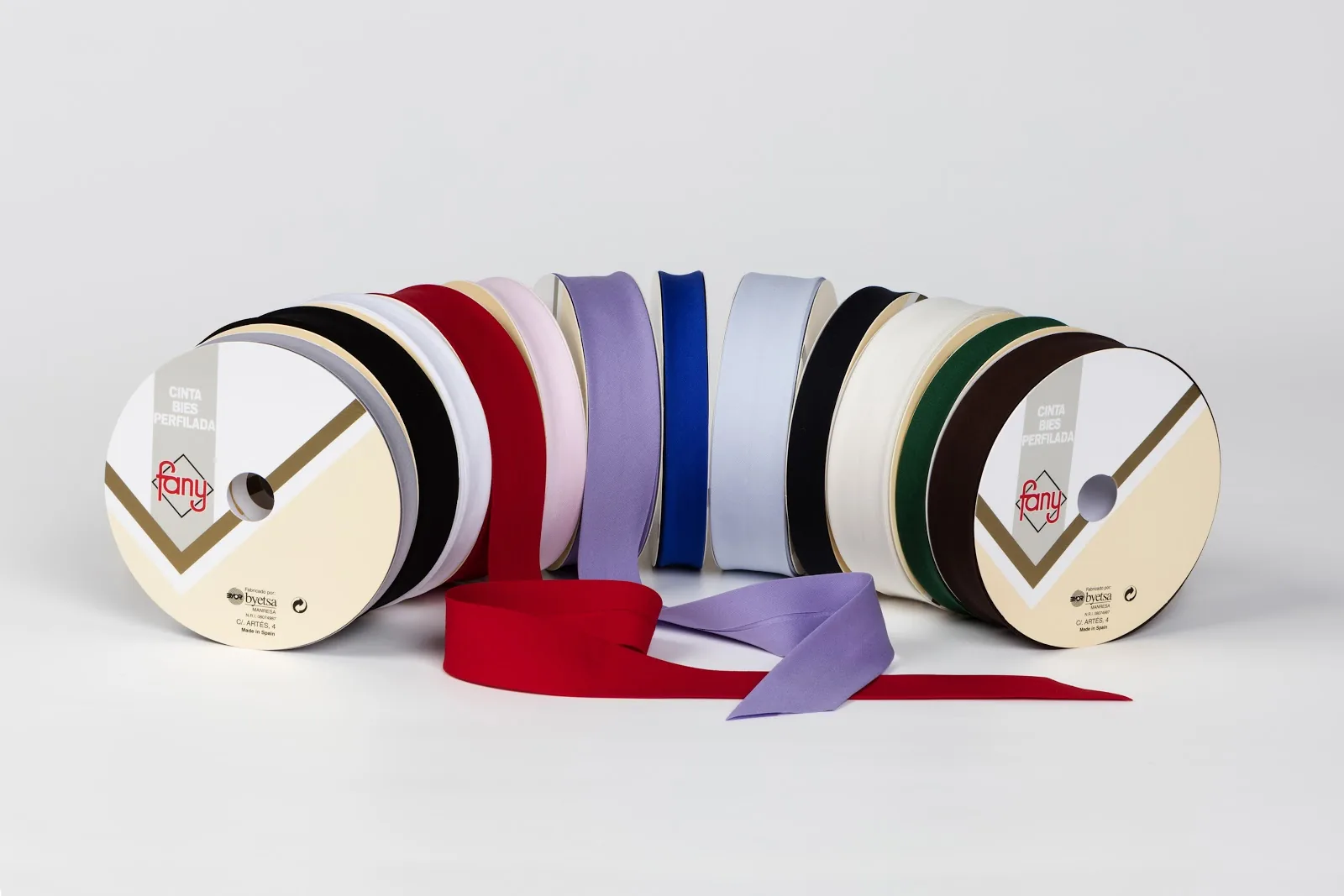
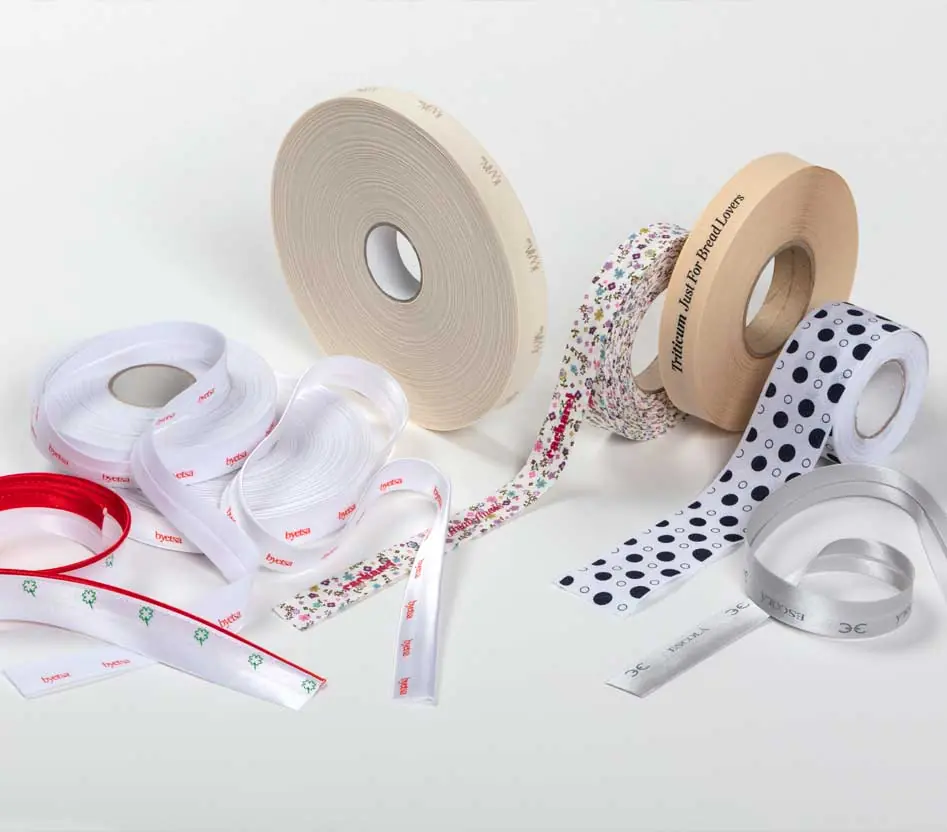
We supply long rolls, from 50 to 100 metres, which facilitate workshop automation. In addition, our precision cutting machinery allows width customisation beyond standard commercial sizes.
We can produce satin bias tapes in special widths, from 12 mm up to large-format sizes, depending on the technical needs of the design. This flexibility helps optimise fabric consumption and reduce raw-material waste.
We also offer customer fabric processing. We transform your own materials into technical bias tapes, maintaining the aesthetic consistency of the entire collection through a professional cutting process.
We make what you need
Looking for bias binding for your production or your haberdashery?
Frequently asked questions
01What is the most efficient satin bias tape width for finishing French seams?
For a high-quality finish on fine fabrics, a width of 18 mm is the most recommended, thanks to its balance between coverage and structural flexibility. This width allows a clean profile without adding unnecessary bulk to the join. In silk or chiffon garments, an 18 mm satin bias tape ensures a natural drape and prevents excessive bulk in the internal seam allowances.
02How does using lamé bias tape affect industrial machinery maintenance?
Byetsa’s lamé bias tape uses a protective coating that reduces the shedding of metallic microparticles during sewing. This is essential to prevent clogging of hooks and thread guides in high-speed machines. The flexibility of our tape ensures that there is no premature wear on steel funnels, extending the service life of sewing accessories.
03Do Byetsa satin bias tapes withstand industrial washing processes without loss of sheen?
Yes, our 100% high-tenacity polyester composition guarantees excellent resistance to hydrolysis and cleaning chemicals. The mirror-like sheen of the satin bias tape remains intact even after industrial washing cycles at 40°C. Dye fastness ensures there is no colour transfer to adjacent fabrics, meeting rub fastness standards.
04What dimensional stability differences are there between satin bias tape and cotton bias tape?
Polyester satin bias tape offers superior stability, with residual shrinkage that is virtually zero, generally below 1%. Unlike cotton, satin does not deform due to moisture during steam pressing. This shape memory is critical to maintain the original geometry of necklines and armholes in industrial fashion production.
05Is it possible to manufacture custom satin bias tape using customer-supplied fabric?
Absolutely. At Byetsa, we have specialised for decades in third-party cutting and folding services. The manufacturer can send us their own satin fabrics so we can cut on the bias and carry out technical pressing. This guarantees a perfect colour match and texture between the garment body and its internal finishes, maintaining exclusivity.
06How does Byetsa guarantee colour continuity in high-volume orders for luxury fashion?
We have an advanced colorimetry laboratory that ensures minimal deviation between different dye baths (controlled Delta E). For purchasing managers, this means they can place repeat orders with the assurance that the shade will be identical to the previous season’s. Our lot traceability allows us to identify and replicate exact formulas for each catalogue reference.
Related articles
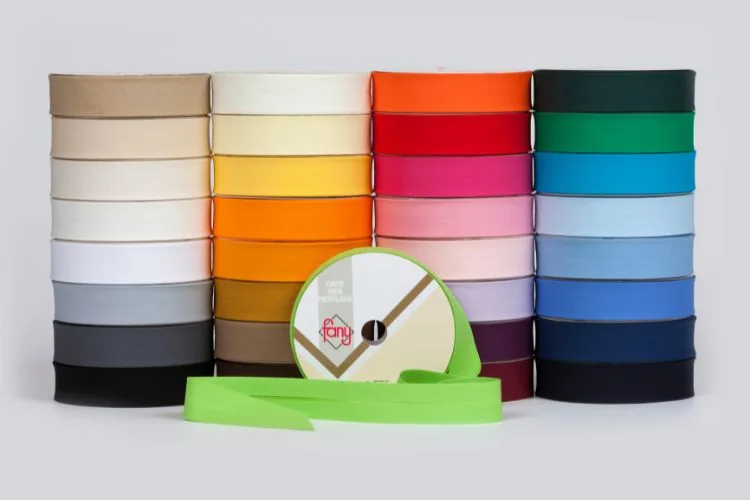
Cost Optimisation in Garment Manufacturing: Advantages of Buying Bias Tape Wholesale in Europe
Optimise costs in your workshop by purchasing bias tape wholesale. OEKO-TEX quality, European manufacturing and fast delivery. Improve your profitability with Byetsa.
Read article
The Importance of OEKO-TEX Certification in Children’s Textiles
Discover why OEKO-TEX Standard 100 Class I certification is vital in children's textiles. Ensure chemical safety and industrial competitiveness with Byetsa.
Read article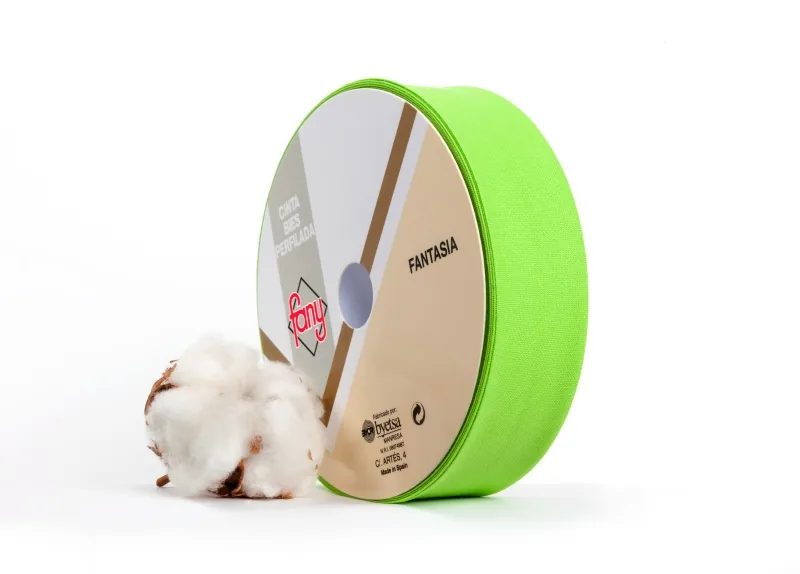
Cotton vs. Polyester Bias Tape: Technical Guide for Industrial Garment Manufacturing
Cotton or polyester bias tape? We analyse technical differences, properties and industrial performance. Choose the best tape for your garments with Byetsa.
Read articleDo you have a question about bias binding?
If you have any questions about our products or need personalised advice, please do not hesitate to contact our team. We are here to help you in any way we can. Write to us!
- Phone93 874 40 98
- Emailinfo@byetsa.es
- AddressC/ Artés, 4 · Pol. Ind. Els Dolors · 08243 Manresa (Barcelona)
Tell us what you need
We will reply with the right reference, format and width for your production.