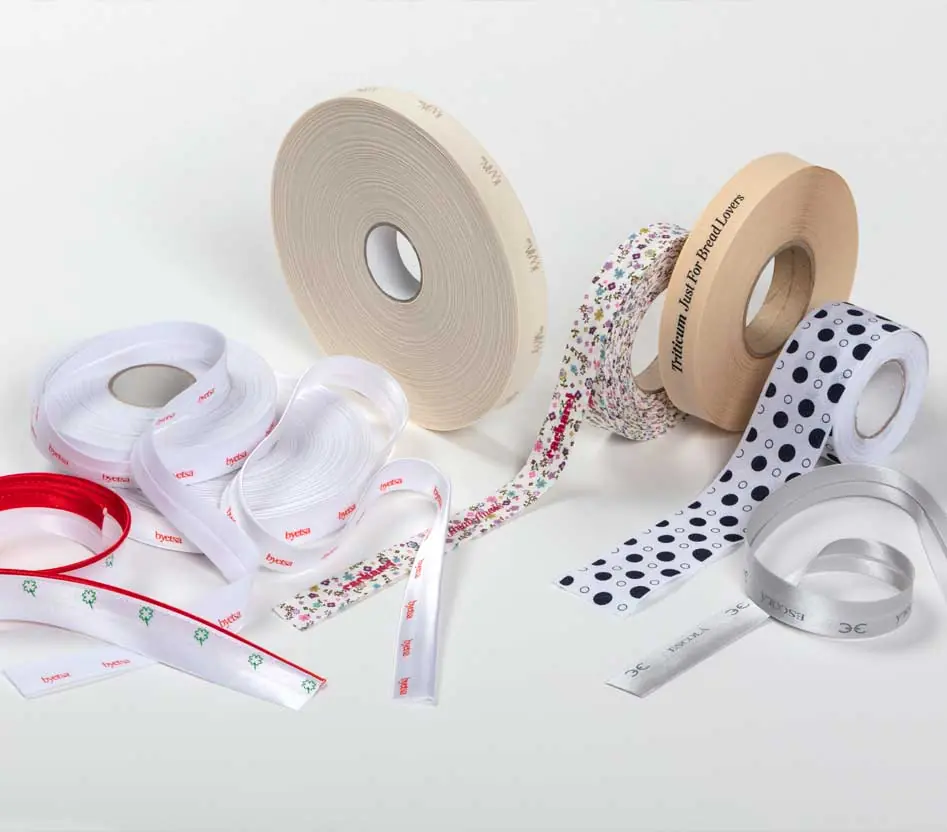
Technical differences between bias tape, corded piping and flat piping
We analyse the technical differences between bias tape, corded piping and flat piping. Choose the perfect finish for your industrial sewing project with Byetsa.
 By Francesco ZagnoniPublished on Updated on 8 min read

Quick answer
Bias binding wraps the raw edge to close it and give it a clean finish; piping is inserted between two fabrics to define and reinforce the seam. Corded piping has an inner cord that gives it relief; flat piping is flat.
Key points
- Bias binding, cut at 45°, stretches and adapts to curves, armholes and necklines without forming pleats.
- Bias binding wraps and protects the raw edge; piping is inserted between two layers and shows along the seam.
- The cord in piping can be twisted cotton, polyester, polypropylene or rubber, depending on the stiffness required.
- Corded piping is used in upholstery, cushions, bags and jackets; flat piping in shirts, children’s clothing and lingerie.
- Corded piping requires a grooved presser foot or a single-toe foot; bias binding is applied with folders or binders.
The anatomy of textile profiling: understanding fabric cutting geometry
In the world of industrial garment manufacturing, choosing the right trim is a matter of textile engineering. Terms such as bias tape and piping are often used interchangeably in everyday language, but technically, they represent radically different constructive solutions.
Understanding the difference is not just a matter of semantics. It directly affects garment behaviour, production costs, and the durability of the final product. An error in specifying these components can lead to serious defects, such as twisted seams, unwanted tensions, or premature wear in friction areas.
For professionals, it is imperative to master the "anatomy" of these tapes. It's not just about embellishing, but about structuring. The geometry of the fabric cut, whether along the grain (parallel to the selvedge) or on the bias (45 degrees), determines the mechanical elasticity of the piece.
While some profiles are designed to finish and close edges, others have the function of reinforcing joins or adding volume. In this article, we will break down the critical differences between bias tape, corded piping, and piping without cord, from a purely technical and functional perspective.
Technical definition of bias tape: mechanical elasticity and adaptability
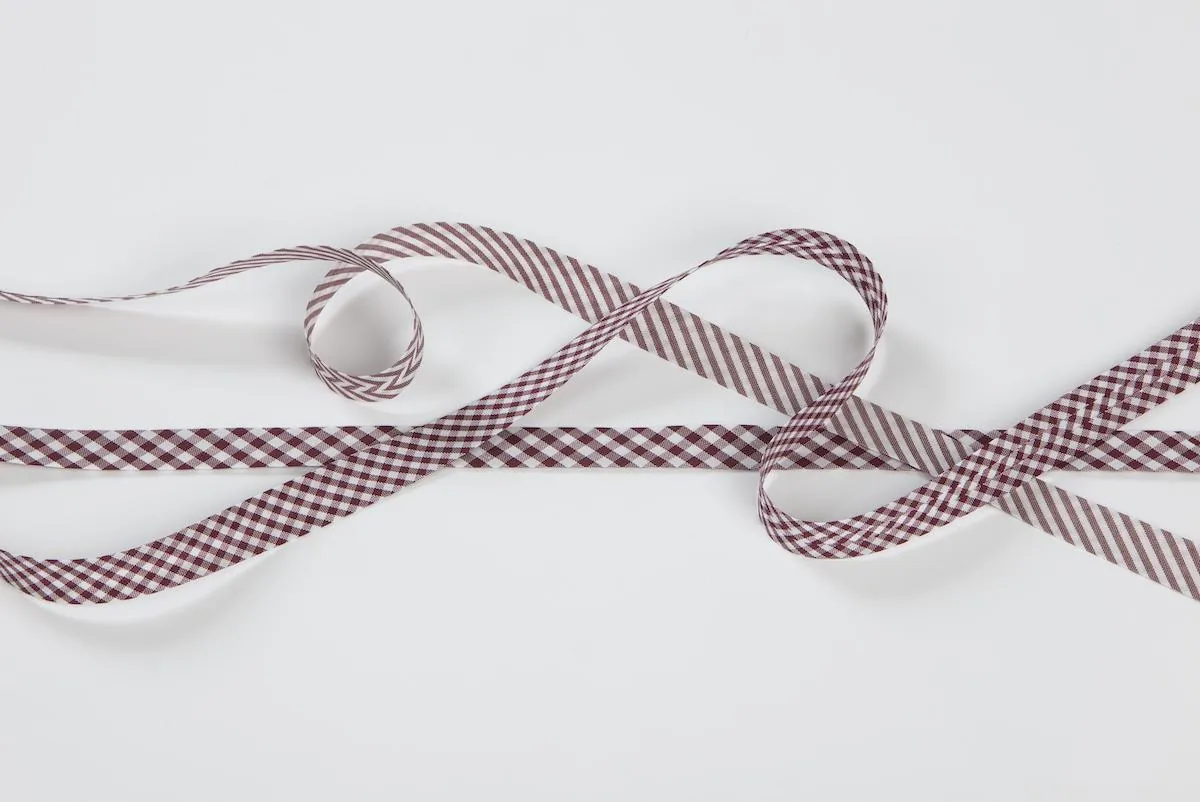
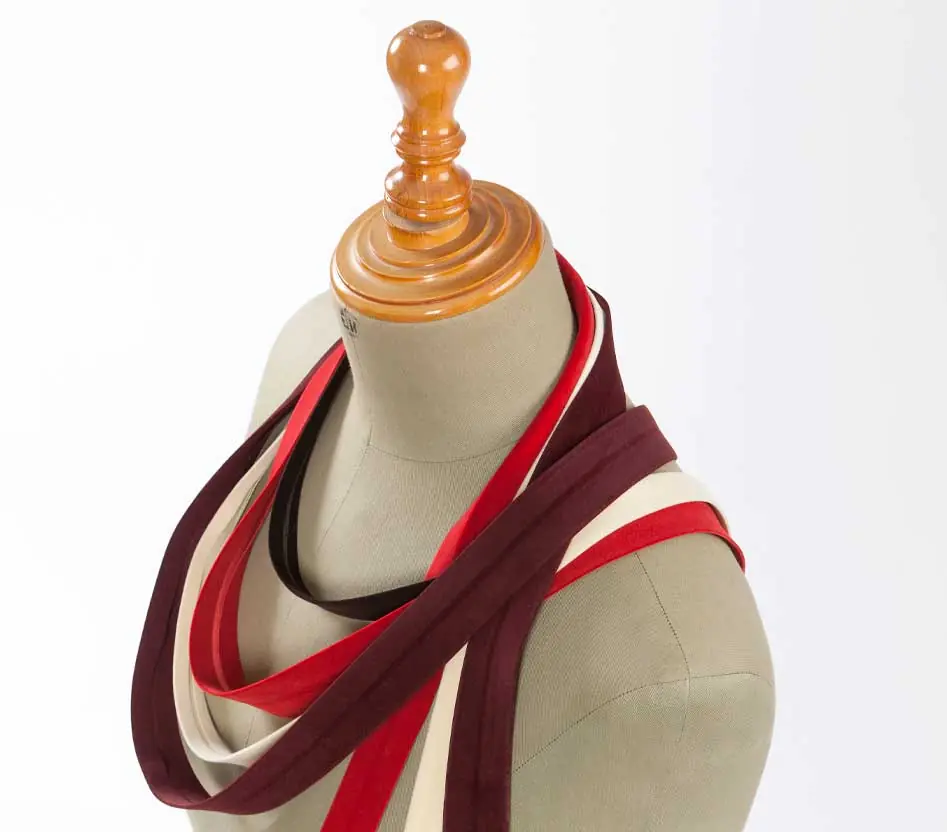
Bias tape is, by definition, a strip of fabric cut at a 45-degree angle to the warp and weft. This orientation is the key to its technical functionality: it gives the fabric—even if flat and stiff (like cotton poplin)—a natural mechanical elasticity.
This property allows the tape to stretch and shape itself to fit curves, armholes, and necklines without forming folds or wrinkles. Unlike a straight-cut tape, which is dimensionally stable and stiff, bias tape has "memory" and recovery ability.
In industrial applications, bias tape is mainly used to "bind" or trim raw edges. Its primary function is to cover the seam allowance, protecting it from fraying and providing a clean finish both inside and outside the garment.
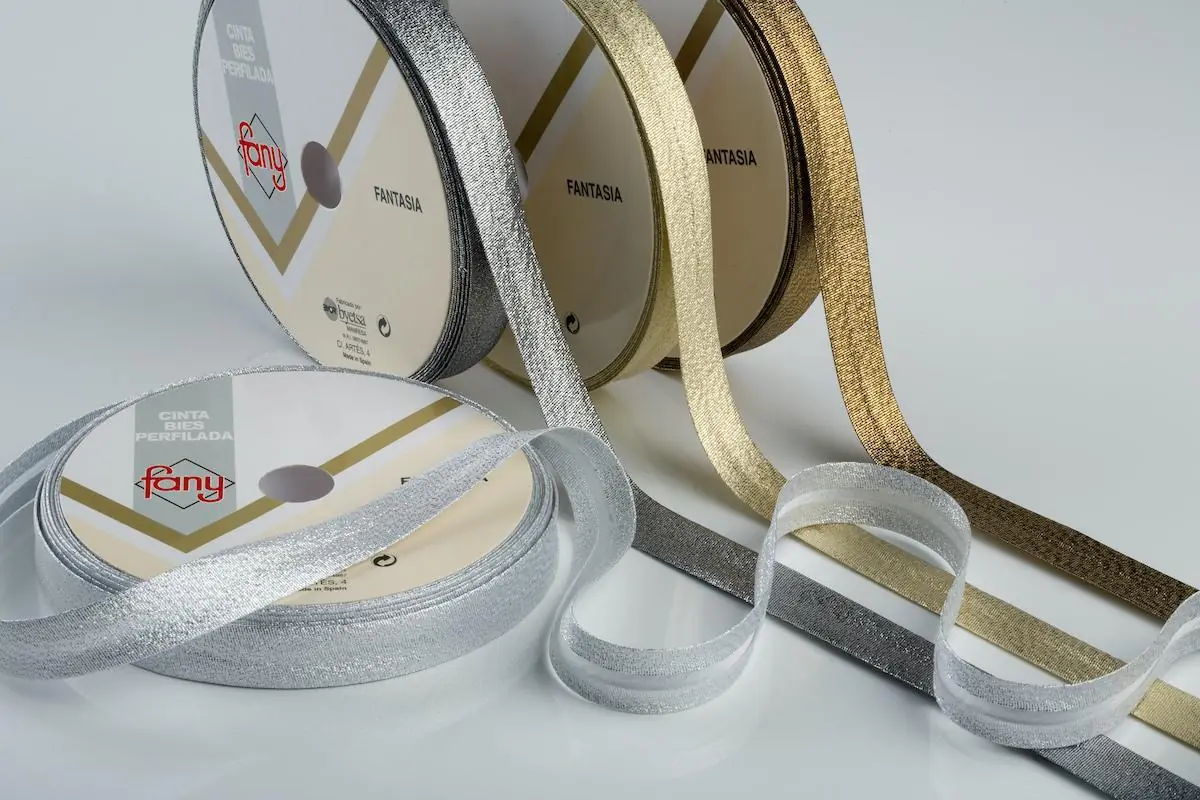
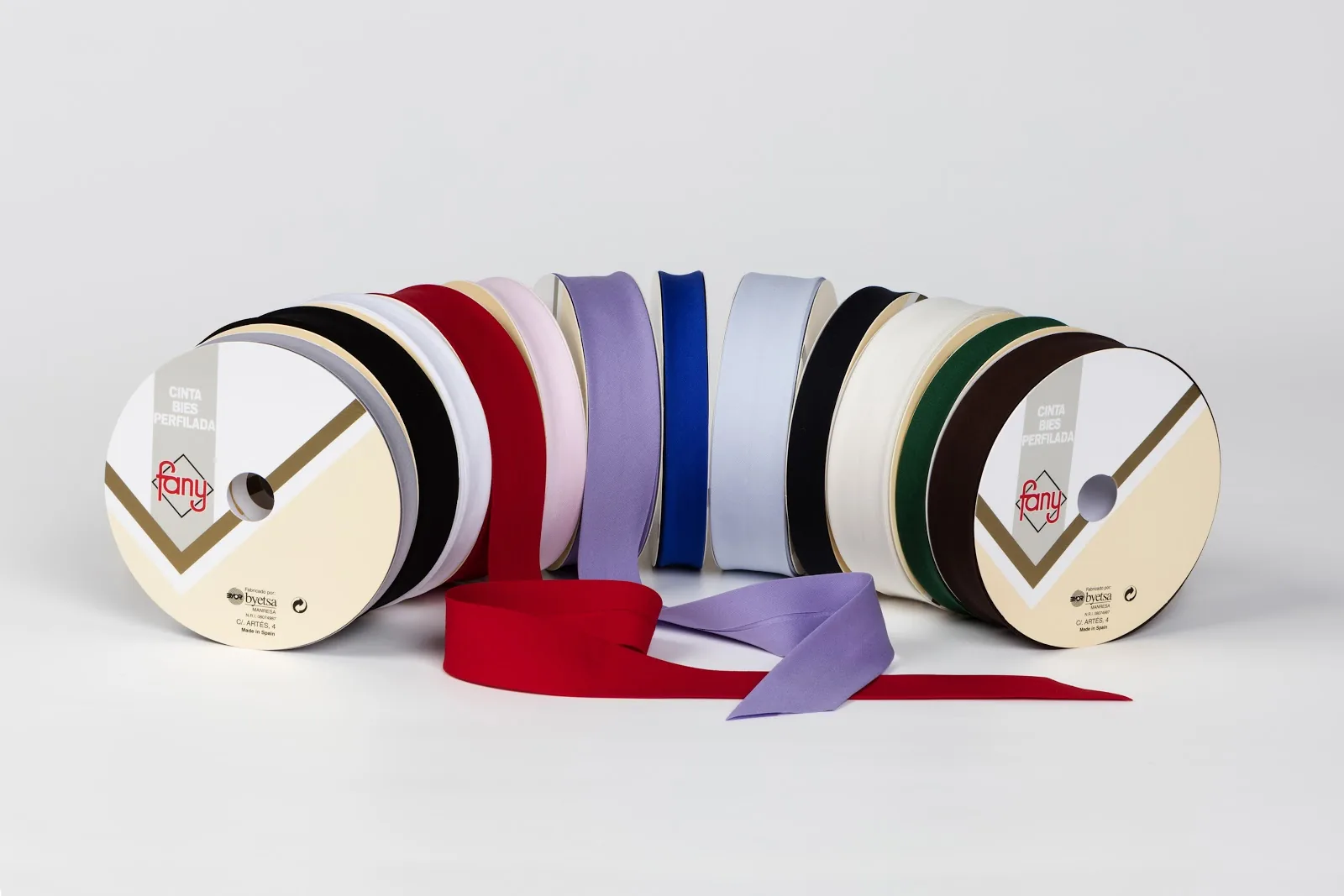
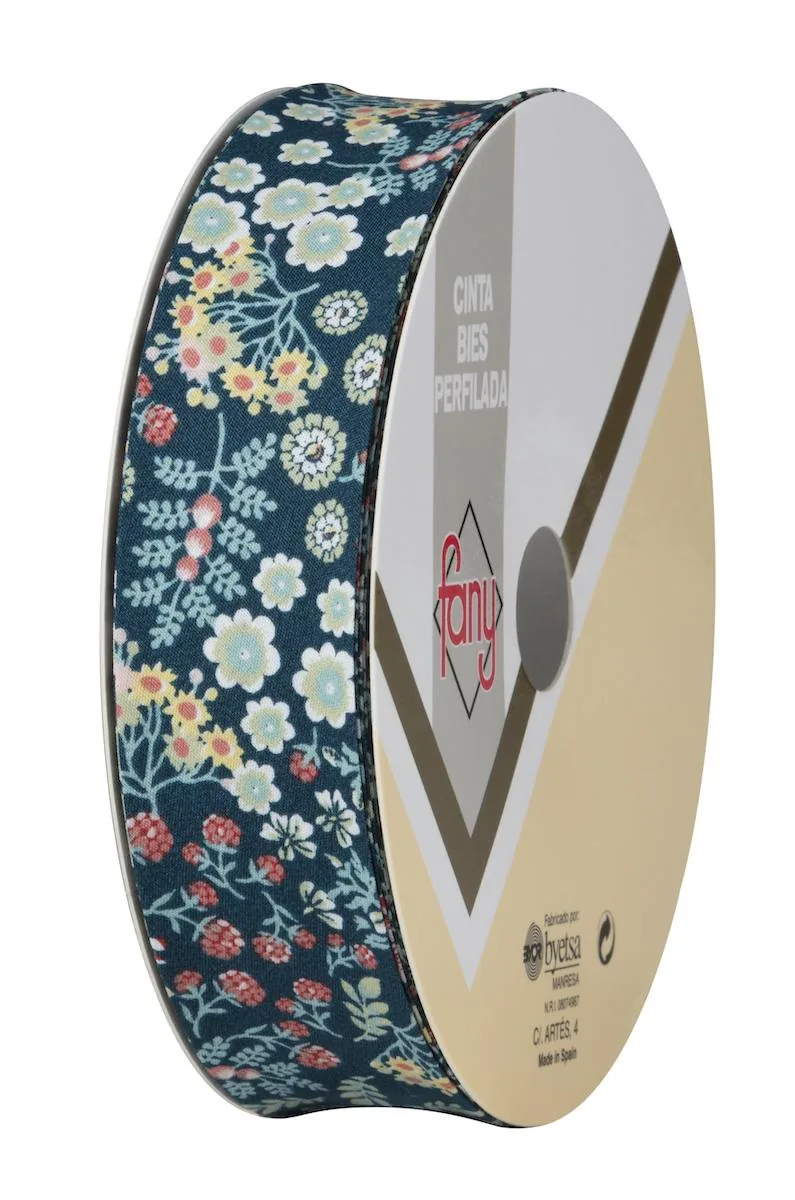
It is a closing and cleaning element. At Byetsa, we manufacture bias tapes with different folding types (centre, lateral or pre-formed) to facilitate their insertion into sewing machines, thus optimising cycle times on the production line.
What is piping: the insert element to highlight seams
Piping (also called piping in English) is conceptually different from bias tape. While bias tape wraps an edge, piping is inserted between two layers of fabric to be joined. It is a "sandwich" element.
Technically, piping is a strip of fabric folded in half (also usually bias-cut to facilitate curves) that shows at the joining seam. Its main purpose is not to close a raw edge (although it can hide it), but to define the silhouette and reinforce the structure of the seam.
Piping acts as a bumper on the perimeter of cushions, bags, or upholstery, absorbing friction and protecting the main seam thread. In fashion manufacturing, it's used to accentuate design lines, such as on the pockets of classic pyjamas or on the seams of a sports jacket.
The main difference lies in its internal construction. Piping can be flat (just folded fabric) or have volume (filled). Here is where the critical distinction between "with cord" and "without cord" comes in—a decision that completely changes aesthetics and the machinery required for its application.
The fundamental distinction: structural function versus aesthetic function
We could summarise the technical difference by saying that bias tape is a solution for coverage and containment, while piping is a solution for architecture and reinforcement. Bias tape embraces the edge; piping emerges from it.
When a technical designer specifies bias tape, they seek flexibility and cleanliness in one operation. It's ideal for finishing curved areas that are in contact with the skin, since being flat and elastic, it doesn't create uncomfortable thicknesses.
On the contrary, when piping is specified, the goal is rigidity, visual definition, or abrasion resistance on edges. Piping adds visual and tactile weight to the garment.
In high-end projects, it’s common to see both elements working together: a piping inserted in a decorative seam and bias tape finishing the inside seams for a luxury finish. The correct combination of both denotes a higher level of garment construction.
Industrial comparison: piping with cord versus piping without cord
Within the category of piping, the choice to use "cord" (internal core) or not depends strictly on the final use of the product. It is not a trivial decision, as it implies changes in the stitching line setup.
Piping with cord provides a three-dimensional cylindrical structure. Piping without cord, on the other hand, creates a smooth, flat relief—like a flange. Both have highly defined industrial applications and different thread tension requirements.
At Byetsa, we supply both types with a wide variety of base materials, from satins and cottons to faux leathers, adapting to each client’s technical specs. Let’s analyse their operational differences in depth.
Piping with cord: dimensional reinforcement, cord materials and resistance
Piping with cord incorporates an inner cord that fills the tape fold. This cord, technically called the "core," can be made from various materials: twisted cotton, polyester, polypropylene, or even rubber, depending on the desired stiffness.
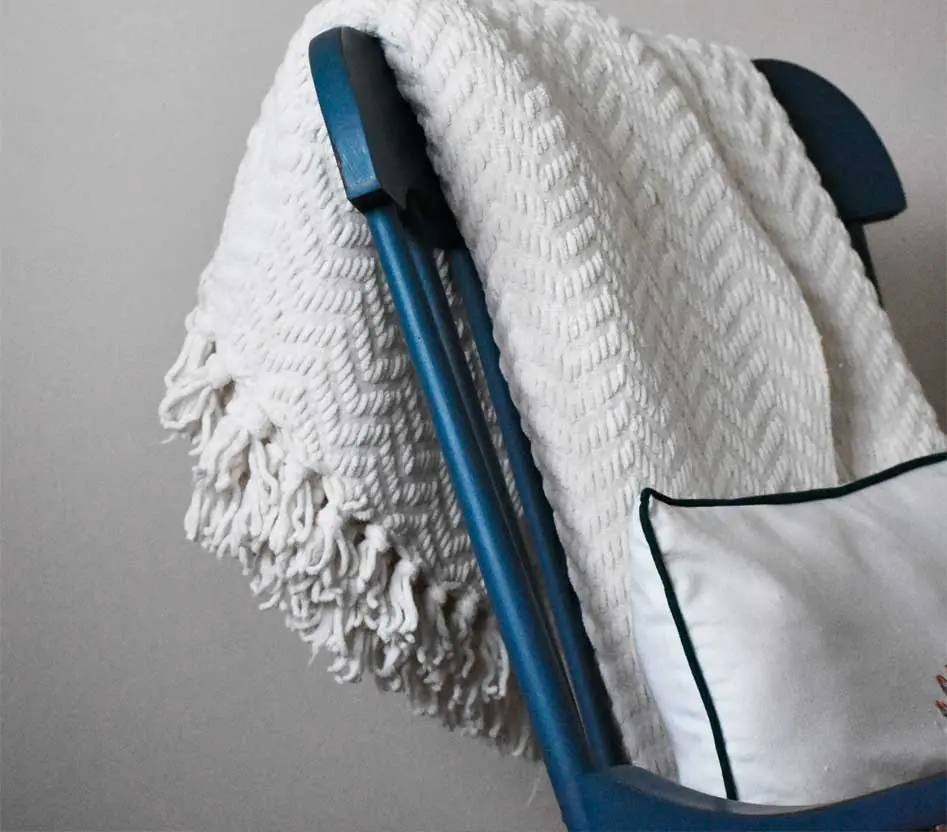
The core’s function is to maintain the piping’s round shape even under pressure. In upholstery and leather goods, piping with cord is standard because it gives structure to the product. It maintains the shape of cushions, defines the edges of a bag, and protects corners from wear.
From a technical point of view, the diameter of the cord is a critical variable. Cotton core that's too thick in a thin fabric will cause gathers and tearing. A core that's too thin in a heavy fabric will disappear visually.
Also, the core material must be compatible with the garment's washing treatment. A cotton core in a garment that shrinks can deform the whole seam if it wasn't pre-shrunk correctly. At Byetsa we guarantee dimensional compatibility between the tape and the cord to avoid post-wash defects.
Piping without cord: visual subtlety and reduced garment thickness
Piping without cord, sometimes called "flat piping" or "faux piping," is simply a strip of folded and pressed fabric, ready to be inserted into the seam. Lacking an inner cord, its relief is much more subtle and soft to the touch.
This variant is preferred in lightweight garment manufacturing, such as shirts, children’s clothing, or lingerie. The reason is technical: it avoids excessive bulk at the joins. Piping with cord at the neckline of pyjamas could be too stiff and uncomfortable to sleep in.
Piping without cord provides the desired colour contrast without compromising the fabric’s drape. It also greatly facilitates sewing in tight corners, since without a rigid core it can bend to acute angles without deep notching that could weaken the fabric.
It's an elegant, minimalist solution. It allows you to play with contrasts in texture (matte/shiny) or colour without altering the garment’s flexible structure.
Machinery implications: presser feet and guides for each type
The choice between bias tape, piping with or without cord directly affects the setup of industrial sewing machinery. You cannot sew them all with the same standard presser foot if you want a professional, consistent finish.
To ensure efficient and defect-free production, workshop managers must consider the following technical aspects in the machinery:
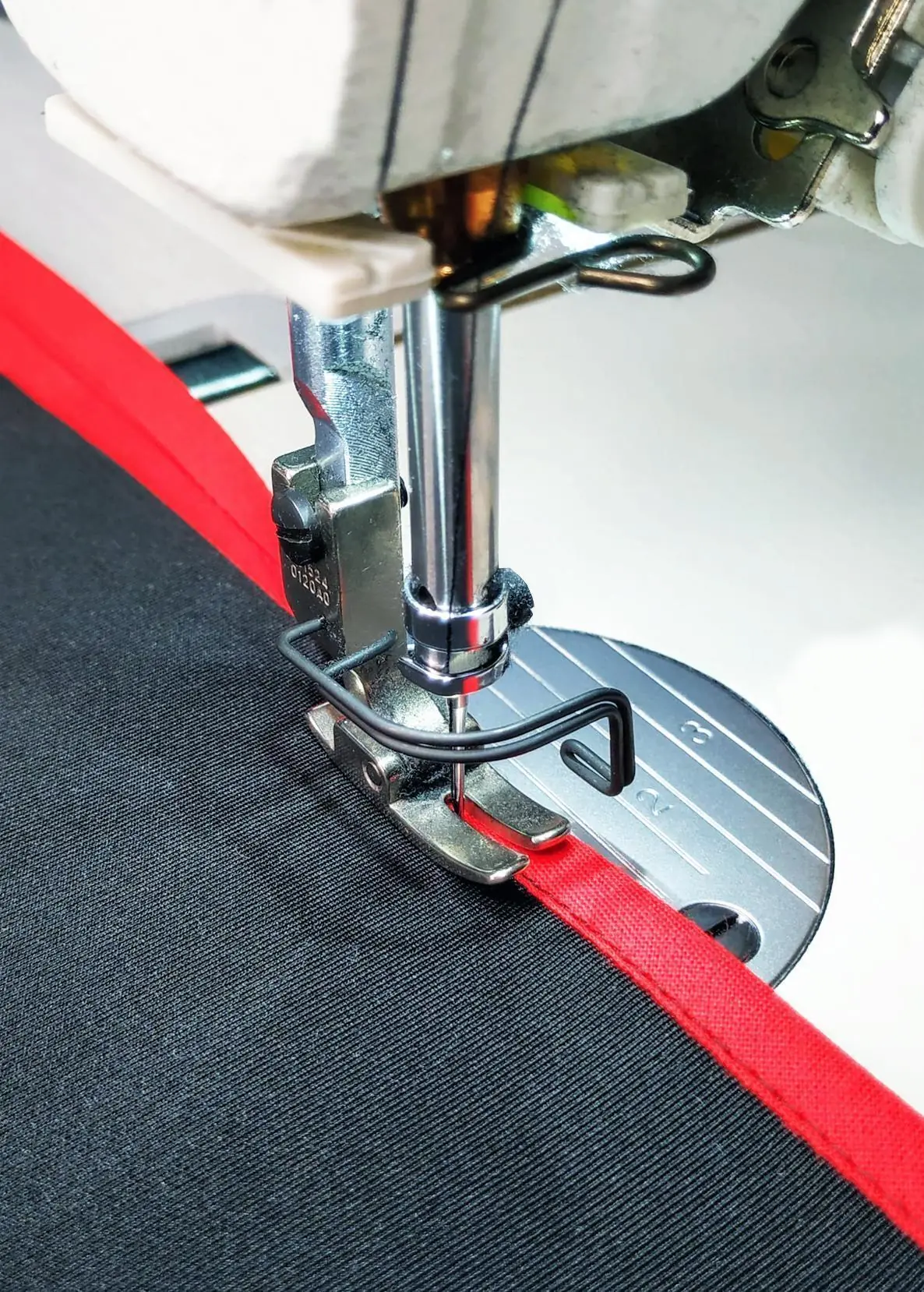
- Piping-with-cord presser foot: Requires a special presser foot with a groove or channel on its underside. This channel lets the cord slide smoothly while the needle stitches close to the edge without flattening the relief. The channel size must exactly match the piping diameter.
- Needle adjustment: When stitching piping with cord, it's crucial to use a single-toe (zip) or adjustable foot to stitch as close as possible to the cord, ensuring it is securely "trapped" and firm.
- Bias tape guides and folders: For bias tape application, funnels or folders are used to automatically fold the tape before it reaches the needle. This is vital for keeping a consistent width throughout.
- Thread tension: Piping without cord usually requires slightly less thread tension to prevent the seam from "biting" the flat fold. Piping with cord can handle higher tensions thanks to the core.
- Feed system: For thick upholstery piping, you often need a double or triple feed machine to prevent layers from shifting when going over the cord’s bulk.
Selection criteria according to the requirements for the final product
The final decision should be based on a matrix of functionality, aesthetics, and cost. There is no "better" option; only the technically suitable choice for each project.
At Byetsa, we advise clients by analysing the product’s lifecycle. Will it be washed frequently? Will edge abrasion occur? Does it need structure or drape? These questions define the component.
Cost also plays a role. Piping with cord involves extra material (the core) and a slower or more specialised sewing operation. Bias tape, being a closing operation, often optimises costs by eliminating the need for prior serging (overlocking) edges.
Decision matrix: when to use bias tape, flat piping, or dimensional piping
To simplify decision-making in the technical design department, we can establish three clear scenarios of preferred use.
Bias tape is the undisputed choice for finishing necklines, armholes, and curved hems where the tape should visually disappear or blend with the garment, providing cleanliness and comfort. It is functional and essential.
Piping without cord is ideal for subtle decoration on garments that will be in direct contact with the skin or require drape. It is the aesthetic choice for silk pyjamas, robes, or pocket details on shirts where volume would be excessive.
Finally, corded piping is king when it comes to structure. It is mandatory in upholstery, decorative cushions, bags, and outerwear where the design line needs to be defined with authority and seams protected from physical wear. At Byetsa, we have the technical capability to manufacture any of these options with utmost precision and certified quality.
We make what you need
Looking for bias binding for your production or your haberdashery?
Frequently asked questions
01Can piping be used instead of bias binding to finish a neckline?
For necklines, armholes and curved hems, the right option is bias binding. It wraps the seam allowance, protects it from fraying and, because it is flat and flexible, does not create uncomfortable bulk against the skin. Piping, on the other hand, is inserted into a joining seam: its function is to define and reinforce the line, not to close the edge.
02What material is the cord in corded piping made of?
The cord can be twisted cotton, polyester, polypropylene or even rubber, depending on the stiffness required. Its diameter must suit the fabric: a cord that is too thick in a fine fabric causes puckering and tears, and one that is too thin in a heavy fabric disappears visually. It must also be compatible with how the garment is washed.
03Why can corded piping become distorted after the garment is washed?
If the cord is cotton and has not been properly pre-shrunk, it can shrink in the wash and distort the whole seam. That is why the cord material must be compatible with the washing treatment planned for the garment. Byetsa guarantees dimensional compatibility between the tape and the cord to prevent this kind of defect after washing.
04Which presser foot do you need to sew corded piping on an industrial machine?
You need a presser foot with a groove or channel underneath whose size matches the diameter of the piping, so that the cord glides without being flattened. A single-toe foot, zip-type or adjustable, is also used, as it lets you sew very close to the cord. For thick upholstery piping, it is best to work with double or triple feed.
05Which is more economical in production, bias binding or corded piping?
Corded piping tends to make production more expensive because it adds an extra material, the cord, and requires a slower or more specialised sewing operation. Bias binding, being a closing operation, often optimises costs because it removes the need to overlock or serge the edges beforehand. The final choice depends on the function, the look and the use of the product.
Related articles
Width Guide: Which Bias Tape Sizes Are Most in Demand by Consumers?
Discover which bias tape sizes are most requested by consumers. A technical guide on widths and formats to choose the perfect binding with Byetsa.
Read article
Cotton vs. Polyester Bias Tape: Technical Guide for Industrial Garment Manufacturing
Cotton or polyester bias tape? We analyse technical differences, properties and industrial performance. Choose the best tape for your garments with Byetsa.
Read article
What is bias binding tape used for?
Bias binding tape is a strip of fabric cut at 45° that finishes, reinforces and decorates edges. Find out what it is, what it’s used for and its main uses by sector.
Read articleDo you have a question about bias binding?
If you have any questions about our products or need personalised advice, please do not hesitate to contact our team. We are here to help you in any way we can. Write to us!
- Phone93 874 40 98
- Emailinfo@byetsa.es
- AddressC/ Artés, 4 · Pol. Ind. Els Dolors · 08243 Manresa (Barcelona)
Tell us what you need
We will reply with the right reference, format and width for your production.