

Width Guide: Which Bias Tape Sizes Are Most in Demand by Consumers?
Discover which bias tape sizes are most requested by consumers. A technical guide on widths and formats to choose the perfect binding with Byetsa.
 By Francesco ZagnoniPublished on Updated on 9 min read

Quick answer
The most in-demand bias binding width in haberdashery is 18 mm: it covers most home sewing and light garment-making uses, is easy to handle on domestic machines and adapts to tight curves on necklines and armholes.
Key points
- Distinguish the cut width, the unfolded strip, from the usable or finished width, which is the binding visible on the garment.
- 18 mm bias binding comes from a 30 to 35 mm cut and leaves about 8-9 mm visible on each side.
- 12-18 mm for children’s wear, lingerie and lightweight fashion; 25-30 mm for home textiles and leather goods; 40-50 mm for decoration and DIY.
- The type of fold (symmetrical centre fold, asymmetrical or open single-fold) determines the final measurement and the production speed.
- In industry, the width must match the machine’s folder to avoid jams, stoppages and defects.
The Geometry of Bias Tape: Differentiating Cut Width and Useful Width
In the haberdashery and industrial garment sector, one of the most frequent questions we receive in the technical department relates to dimensions. What width are we talking about when we order bias tape? The answer, although it seems simple, hides a technical duality that often causes confusion in orders.
To understand market demand, we first need to master the product's geometry. There is a critical difference between the cut width (the measurement of the fabric strip laid flat before processing) and the useful or finished width (the visual measure of the tape once folded and ironed).
This distinction is vital because the final consumer, whether a sewing enthusiast or a garment workshop, always thinks about the finished width: the size of the binding that will be seen on the garment. However, manufacturers and wholesalers often manage their inventories based on cut widths to optimise fabric consumption.
At Byetsa, as specialists in textile transformation, we handle this nomenclature with precision to avoid supply errors. Our catalogue clearly specifies both dimensions, ensuring that when a client requests binding, they receive exactly the coverage their design requires. Understanding our company and its technical capacity is key to selecting the right supplier who speaks your industrial language.
The Leading Size in Haberdashery: The Dominance of 18 mm Bias Tape
If we analyse overall sales statistics in haberdashery and retail distribution, there is a clear winner dominating the market with an overwhelming share: 18 mm bias tape. This measurement has become the de facto standard for the vast majority of domestic and light garment applications.
Why 18 mm? The reason is a perfect balance between functionality and aesthetics. An 18 mm bias tape (folded width) usually comes from a fabric cut between 30 and 35 mm, depending on fabric thickness and the type of fold. Once applied to the fabric edge, it provides a visible trim of about 8-9 mm on each side.
This size is wide enough to be easily handled by domestic sewing machines without the need for complex binders, but narrow enough to adapt to tight curves on necklines and armholes without causing excessive puckering.
It's the "all-purpose" size. It's suitable for finishing a baby's bib, hemming a skirt, or decorating a tablecloth. That's why it's the reference every distributor must have in stock to meet the massive demand of the average consumer.
Reading the Tech Sheet: 12 mm, 25 mm, and 30 mm Bindings
Although 18 mm is king, the professional market demands a much wider variety to cover specific needs. This is where specialisation comes into play. At the ends of the demand bell curve, there are sizes that, although less frequently rotated, are irreplaceable for certain niches.
12 mm bindings are extremely technical. Once sewn, they leave a visible seam margin of just 5-6 mm. They are the preferred choice for high fashion and lingerie, where the finish needs to be almost invisible, subtle, and extremely delicate. They require millimetre precision in sewing, as the margin for error is minimal.
On the other hand, we move to 25 mm and 30 mm widths. These measurements fall into the realm of decoration and visual reinforcement. A 30 mm bias tape offers a strong visual presence on the garment. It is no longer just a functional trim; it's a design statement. It is used to create strong, defined colour contrasts.
Our range of products covers the full range of sizes. From the finest, most delicate bias to wide, structured tapes capable of shaping coats or upholstery. Each width has its own technical "personality" and ideal usage moment.
Types of Industrial Folds: Central, Asymmetrical, and Their Impact on Final Measurement
The final width of the tape depends not only on the fabric cut but on the fold architecture. This is a variable purchasing managers must know in detail. There are various formats of folding that alter the tape's functionality.
The most common is the symmetrical central fold, where both edges of the tape are folded towards the centre, touching or leaving a small gap. This makes it easy, when folding the tape in half for binding, for both sides to have the same length, ensuring the seam catches both the front and back.
However, in the industry, we also work with asymmetrical folds. In these cases, one of the flaps is slightly wider than the other. The goal? To ensure that, when sewing from the right side of the garment, the needle always catches the lower flap, avoiding the dreaded "missed seam" on the reverse.
There are also pre-folded or open bindings, supplied without central folds, ready to be fed into automatic single or double folding binders. Choosing the right format is as important as choosing the width, as it directly impacts production speed.
Segmenting Demand: Which Width to Prescribe for Each Project
To help our clients optimise their orders, we have developed a segmentation based on the final application. Not all widths work equally for all fabrics. The density and thickness of the base fabric dictate which bias tape size is technically viable.
Prescribing tape that's too narrow for a thick fabric (such as wool or denim) is a serious technical mistake. The tape will not have enough “path” to wrap the edge, causing it to open or burst. Conversely, using a tape that's too wide on a lightweight silk will add excessive weight, deforming the garment's drape.
Narrow Widths (12-18 mm): Precision for Children's and Lightweight Fashion
The children's fashion and childcare segment is the main consumer of narrow widths. In garments for newborns, every millimetre counts. A thick trim on the neckline may be uncomfortable and irritate the baby's sensitive skin.
That's why 12 mm and 18 mm measurements are the absolute standard in this sector. They allow for very tight curves, typical of baby bodysuits, bibs, and hats, without creating bulk.
Additionally, for lightweight women's fashion (blouses, summer dresses), these widths provide a clean finish without taking attention away from the print or garment style. They are the perfect "supporting actor": they fulfil their finishing function without attracting attention themselves.
Demand here centres on natural materials, mainly cotton and soft blends, where the flexibility of narrow tape is maximised.
Medium and Wide Widths (30 mm+): Solutions for Home, Leather Goods, and Outer Binding
As we increase the base fabric weight, demand shifts to wider sizes. In the home textile sector (tablecloths, bedding, towels), 25 mm and 30 mm widths are key players.
On thick terry towels or blankets, you need a bias with enough "mouth" or opening capacity to encompass the entire thickness of the material. A 30 mm bias tape, once applied, provides a visual border of 14-15 mm, giving a robust finish that withstands frequent washing.
In leather goods and bag making, larger widths are essential not only for aesthetics but also for mechanical resistance. They are often used to cover internal seams that bear tension or for binding the edges of rigid materials like canvas or faux leathers.
Here, the bias acts as a bumper, protecting edges from abrasion. Demand in this segment prioritises synthetic materials or high-tenacity blends.
The 'Wide Bias' Trend in Creative Décor and Crafts
In recent years, we've seen an interesting resurgence in demand for extra-wide sizes (40 mm, 50 mm, and even larger), driven by the DIY and creative décor sectors.
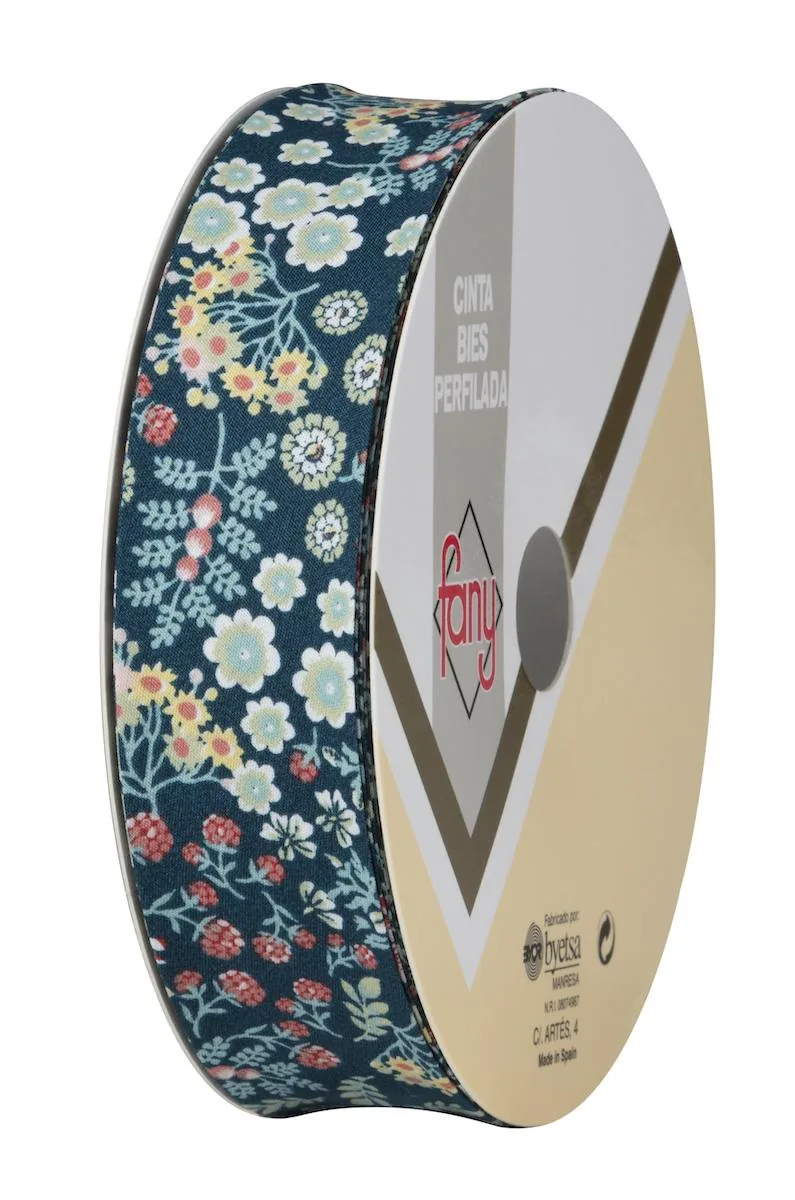
Consumers want to personalise their creations quickly and visually. A wide printed bias tape can transform a basic garment or home accessory into a unique piece in minutes. It's used to lengthen curtain hems, decorate pillow edges, or even as a patchwork element.
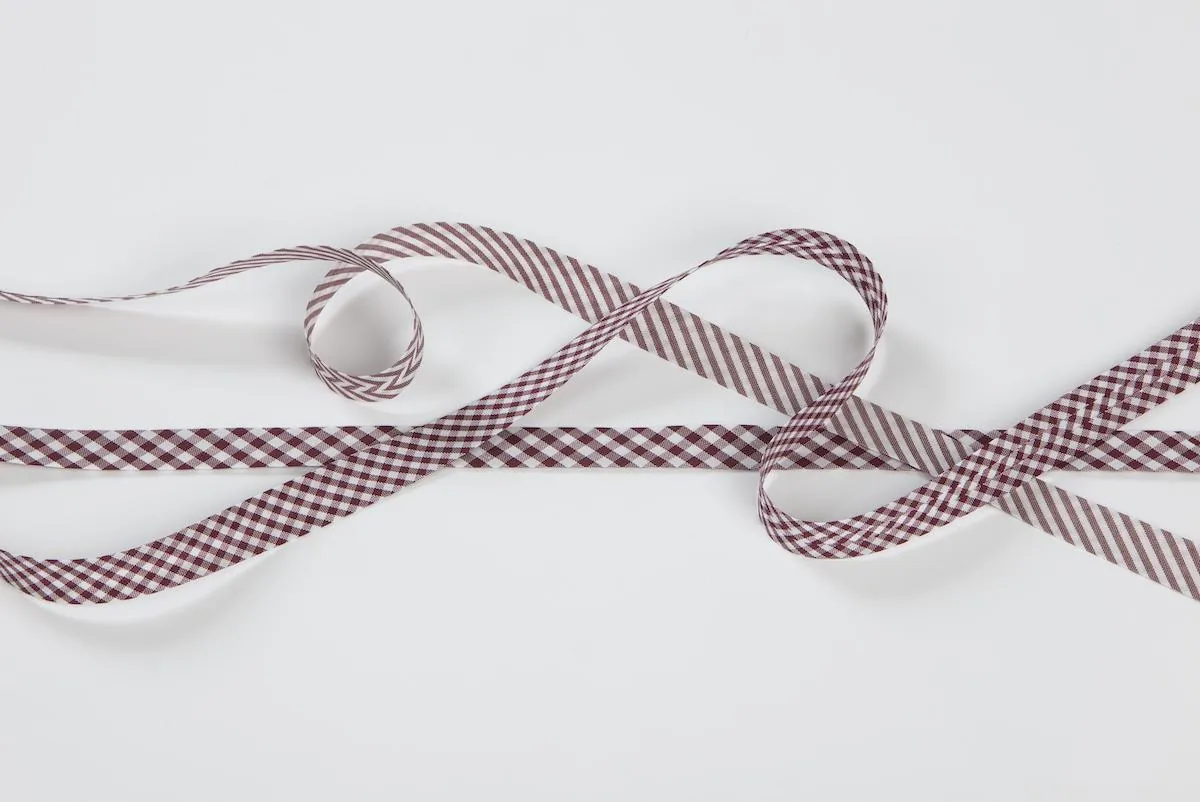
This trend has forced distributors to widen their offerings. It’s no longer enough to have basic colours in 18 mm; the creative market asks for prints, plaids, and patterns in wide formats to allow for playful visual design. It is a high-value-added niche.
Compatibility Between Tape Width and Sewing Binders
Finally, from a purely industrial B2B perspective, choosing the width is a matter of process engineering. Every industrial sewing machine equipped with a binder is calibrated for a specific feed measurement.
If a workshop's machines are set up with 35 mm feed binders, they cannot efficiently use 30 mm or 40 mm tape without risking machine stoppages and quality defects. The tape will move inside the guide or get stuck.
How to Avoid Bottlenecks by Choosing the Right Tape Width for Your Machinery
Standardisation is the key to efficiency. Before defining a new collection, we recommend that our industrial clients check the availability of machinery and accessories for the desired bias width.
Often, it is more profitable to slightly adapt designs to the standard tape width available (and to their machines) than to request a special custom-size production run.
At Byetsa, we provide guidance at this critical stage. We help match the designer's desired aesthetics with the workshop's reality. We offer:
- Format Consulting: Analysis of the best fold option for your equipment.
- Validation Samples: To ensure the chosen width runs smoothly through guides.
- Batch Consistency: We guarantee the width stays stable (with minimal tolerances) in each delivery, avoiding constant machine adjustments.
Choosing the right size is not just a matter of taste; it's a strategic decision affecting production profitability.
We make what you need
Looking for bias binding for your production or your haberdashery?
Frequently asked questions
01What is the difference between the cut width and the finished width of a bias binding?
The cut width is the measurement of the strip of fabric unfolded and flat before processing; the usable or finished width is the visible measurement of the tape once folded and pressed. Consumers think in terms of finished width, while manufacturers and wholesalers usually manage stock by cut width. Byetsa specifies both measurements in its catalogue.
02What bias binding width is recommended for baby clothes?
In babywear and children’s fashion, 12 and 18 mm widths are used above all. They allow very tight curves on bodysuits, bibs and baby hats without bulk, and prevent a thick binding at the neck from bothering or chafing the baby’s skin. In this segment, demand is mainly for cotton and soft blends.
03What bias binding width is suitable for towels, blankets or table linen?
In home textiles, 25 and 30 mm widths take centre stage. A thick fabric, such as a terry towel or a blanket, needs a bias binding with enough opening to enclose its full thickness. A 30 mm bias binding leaves a visible frame of about 14-15 mm and provides a robust finish that withstands frequent washing.
04What happens if you use a bias binding that is too narrow on a thick fabric?
The tape does not have enough reach to wrap around the edge and ends up opening or bursting. The opposite is also a mistake: a very wide bias binding on a lightweight silk adds weight and distorts the drape of the garment. The density and thickness of the base fabric determine which width is technically viable.
05How do you choose the bias binding width to suit the folders on your workshop machinery?
Each industrial folder is calibrated for a specific input measurement; with a tape of a different width, it wanders in the guide or jams. Before defining a collection, check which widths your machinery accepts. Byetsa offers format consultancy, validation samples and width consistency between batches to avoid machine readjustments.
Related articles

Technical differences between bias tape, corded piping and flat piping
We analyse the technical differences between bias tape, corded piping and flat piping. Choose the perfect finish for your industrial sewing project with Byetsa.
Read article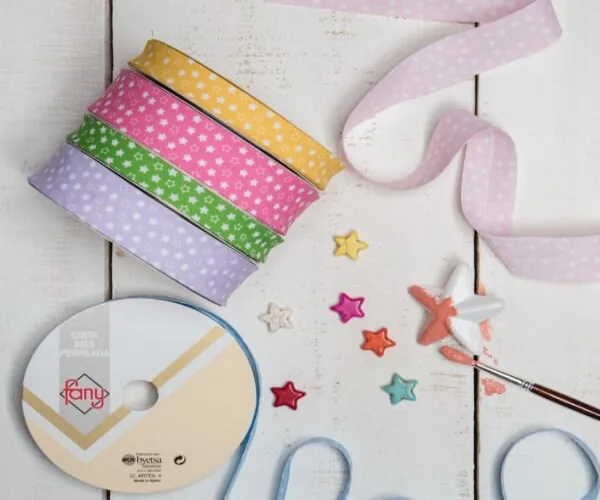
The Importance of OEKO-TEX Certification in Children’s Textiles
Discover why OEKO-TEX Standard 100 Class I certification is vital in children's textiles. Ensure chemical safety and industrial competitiveness with Byetsa.
Read article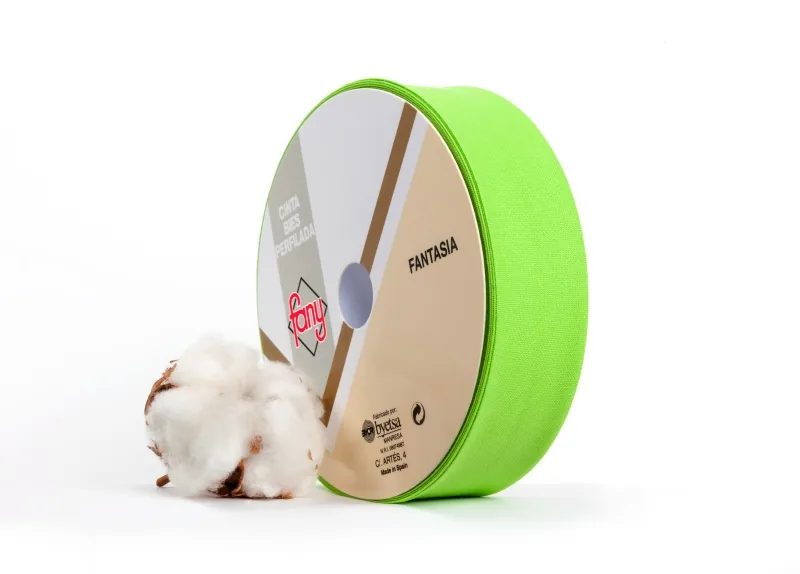
Cotton vs. Polyester Bias Tape: Technical Guide for Industrial Garment Manufacturing
Cotton or polyester bias tape? We analyse technical differences, properties and industrial performance. Choose the best tape for your garments with Byetsa.
Read articleDo you have a question about bias binding?
If you have any questions about our products or need personalised advice, please do not hesitate to contact our team. We are here to help you in any way we can. Write to us!
- Phone93 874 40 98
- Emailinfo@byetsa.es
- AddressC/ Artés, 4 · Pol. Ind. Els Dolors · 08243 Manresa (Barcelona)
Tell us what you need
We will reply with the right reference, format and width for your production.