Bias tape: Everything you need to know to master this essential element
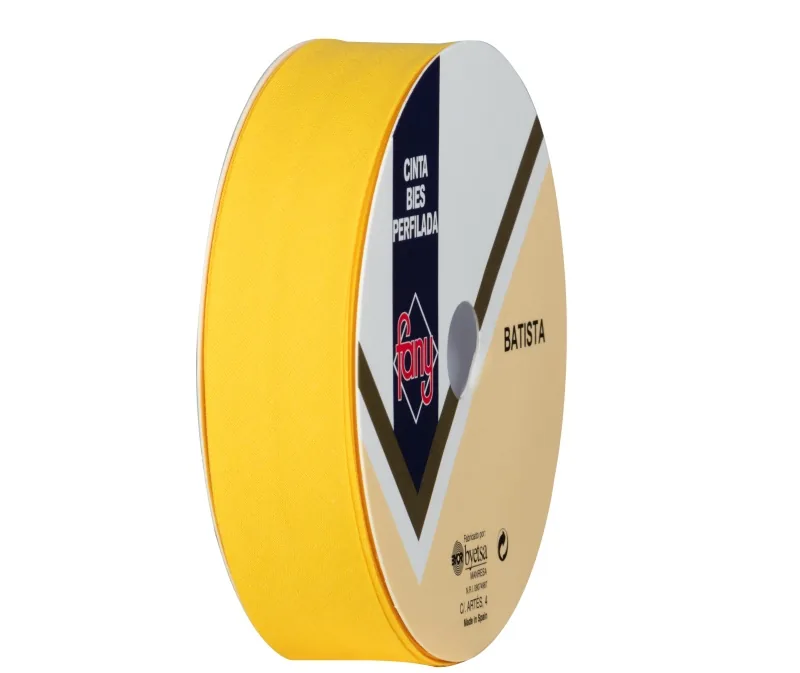
Bias tape is an essential element in the world of sewing. Discover why Byetsa’s bias tape is the best choice.
 By Francesco ZagnoniPublished on Updated on 11 min read
Quick answer
Bias binding is a strip of fabric cut at 45 degrees to the straight grain of the fabric. That cut gives it the stretch to adapt to curves and irregular edges, reinforce edges, prevent fraying and add a decorative finish.
Key points
- The 45-degree cut gives bias binding a natural stretch so it can adapt to curved or irregular edges.
- Most widely used types: cotton, polyester-cotton, satin, printed and elastic, each with specific applications.
- Basic application: press, sew the unfolded bias binding onto the edge, fold it to the other side and secure it with a second seam.
- Common mistakes: incorrect cutting, uneven tension, unsuitable material, not pressing the bias binding and poorly finished ends.
- Byetsa manufactures bias binding in a range of materials and supplies everything from small runs to large industrial volumes.
Bias tape is one of the most versatile and essential elements in the world of sewing. This small yet powerful accessory not only provides impeccable finishes to your projects but also offers a practical solution to reinforce edges, prevent fraying, and add a unique decorative touch. From garments to home accessories, bias tape is an indispensable resource for achieving professional and durable results.
In sewing, bias tape is not just a strip of fabric cut on the diagonal; it is a creative and functional ally that expands design possibilities. Its flexibility allows it to easily adapt to curved or irregular edges, providing a clean finish that stands out in both technical and decorative projects. Moreover, with the wide variety of materials, colours, and patterns available, bias tape becomes a key tool for personalising and giving character to any creation.
Whether you’re a sewing enthusiast or an experienced professional, understanding how to use bias tape and selecting the right one for each project is essential to optimise results. Throughout this article, we will explore in depth the different types of bias tape, its practical applications, and useful tips to make the most of this resource.
What is bias tape in sewing?
Bias tape is a strip of fabric cut at a 45-degree angle to the straight grain of the fabric. This diagonal cut provides natural elasticity, allowing the bias tape to easily adjust to curved shapes or irregular edges, making it ideal for finishing garments, decorative projects, and home textiles.
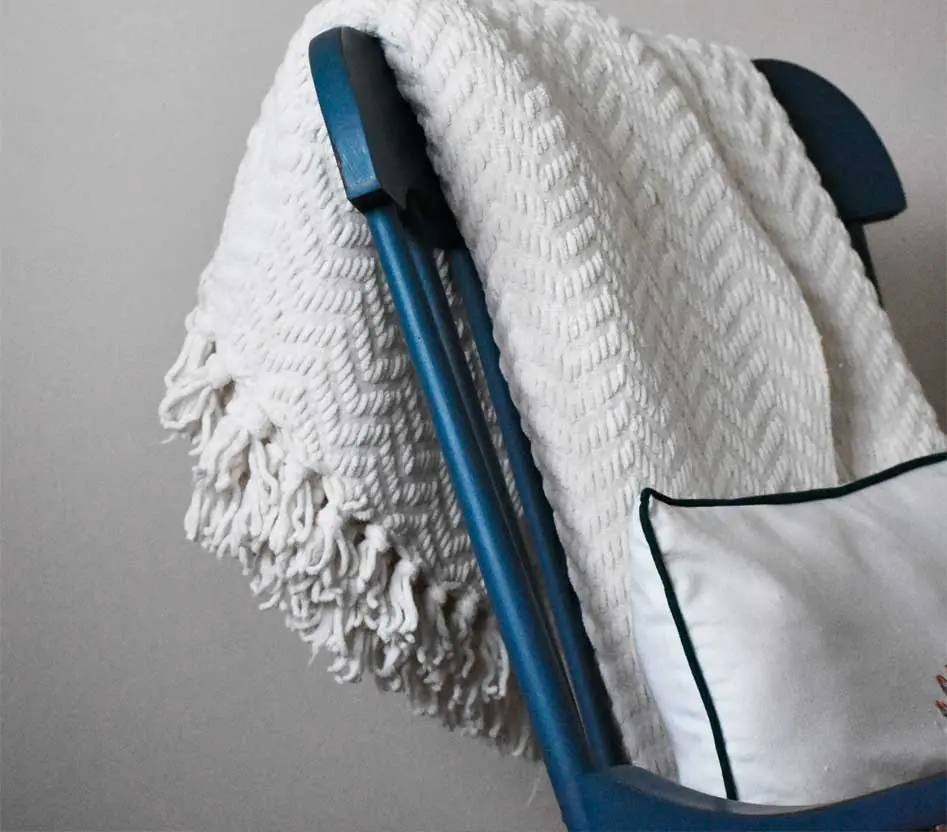
In practice, bias tape acts as reinforcement and a protector for fabric edges, preventing fraying from use or washing. Additionally, its ability to combine functionality and aesthetics makes it an essential element in any sewing project. Whether used to cover seams, add decorative details, or reinforce high-friction areas, bias tape offers practical solutions for a variety of needs.
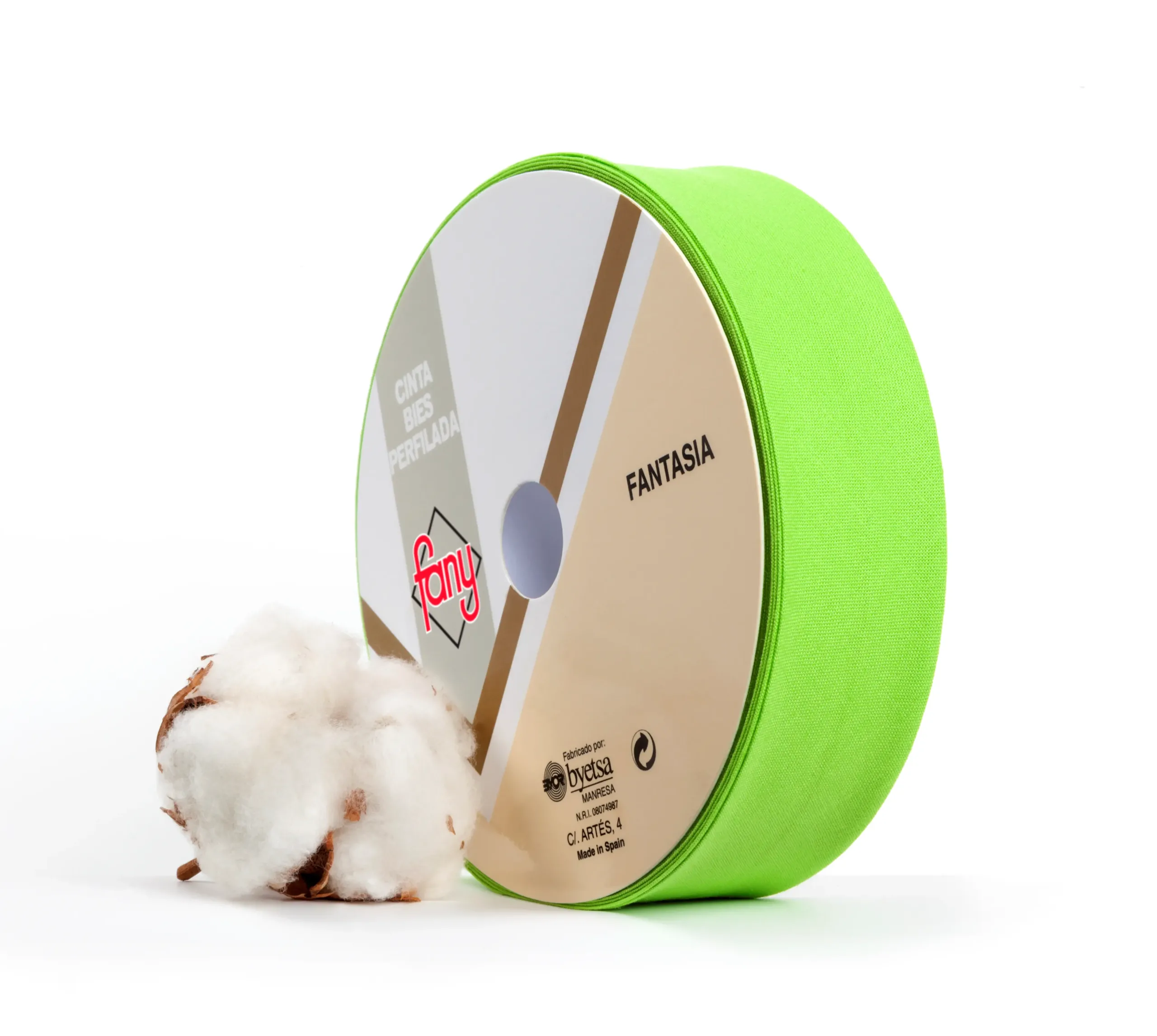
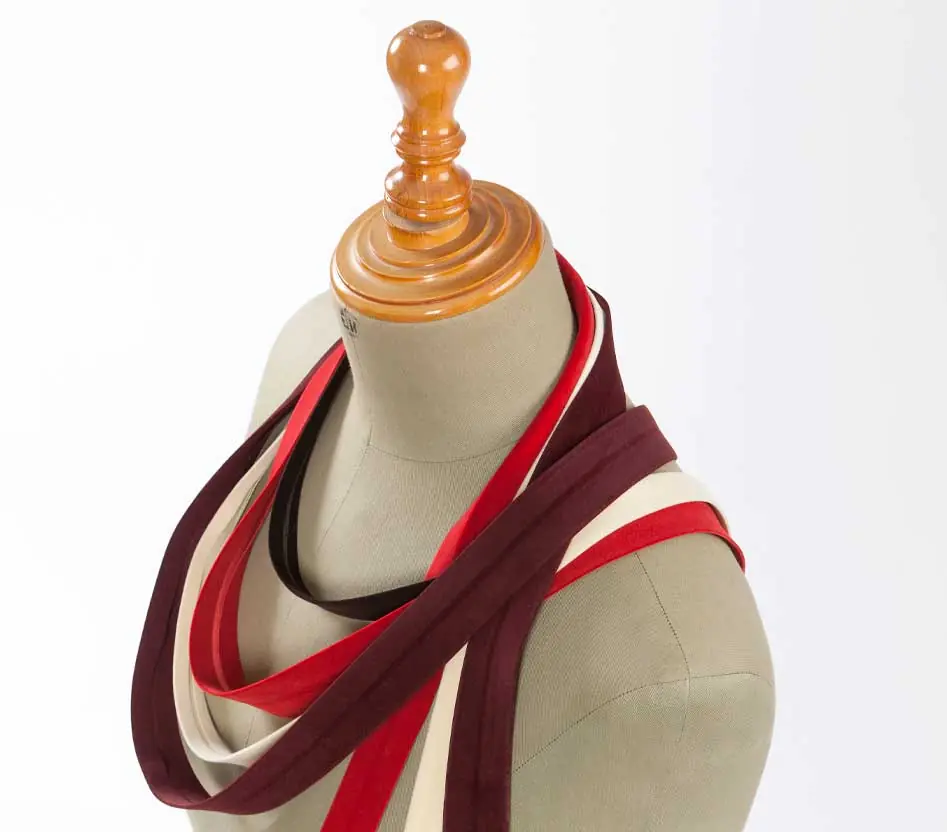
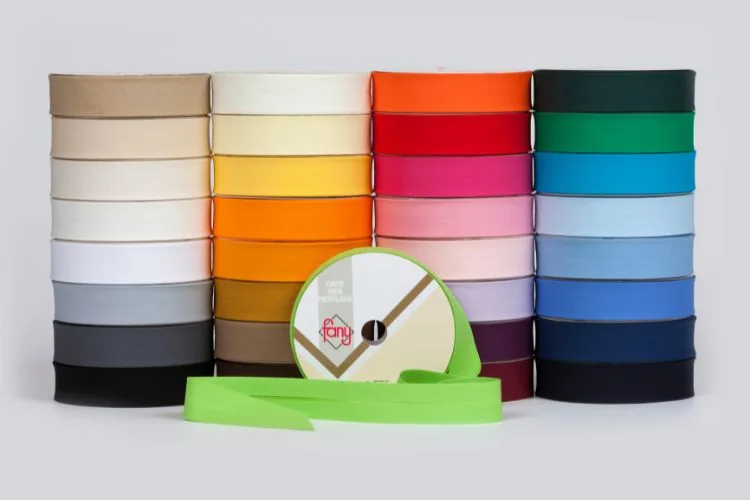
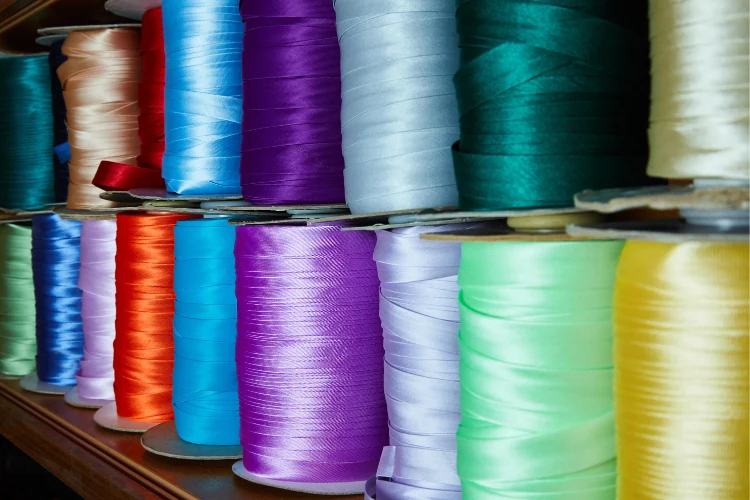
Bias tape is available in a wide range of materials, such as cotton, polyester, satin, and printed fabrics, allowing it to adapt to projects with different styles and technical requirements. This versatility has solidified its role as a fundamental tool in the textile and fashion industry.
Most commonly used types of bias tape in sewing
Bias tape is an incredibly versatile resource that adapts to multiple applications thanks to the variety of materials and designs available on the market. Each type of bias tape has specific characteristics that make it suitable for certain projects, whether in the fields of garment making, decoration, or crafts. Below, we explore the most commonly used types and their main applications:
Cotton bias tape
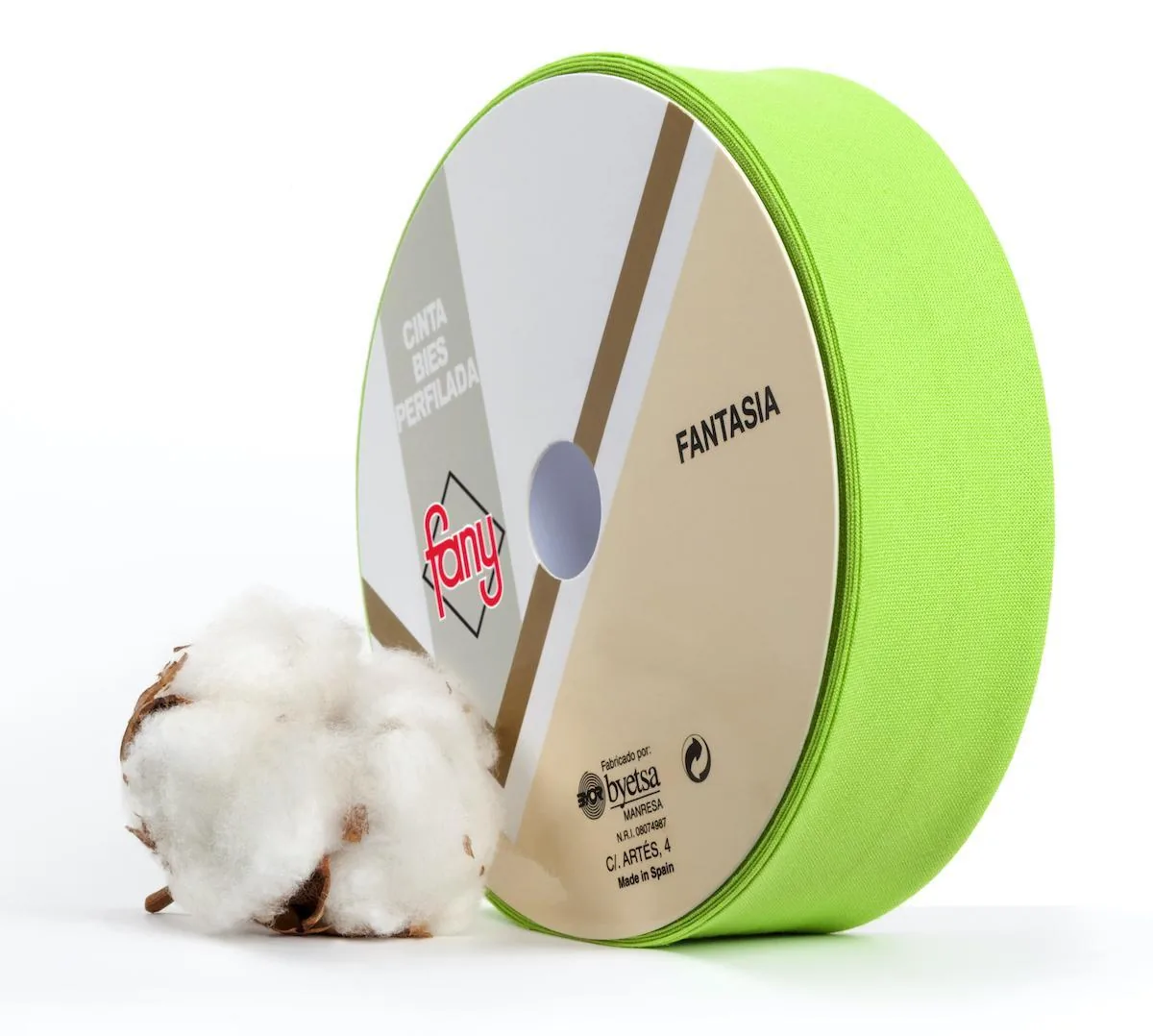
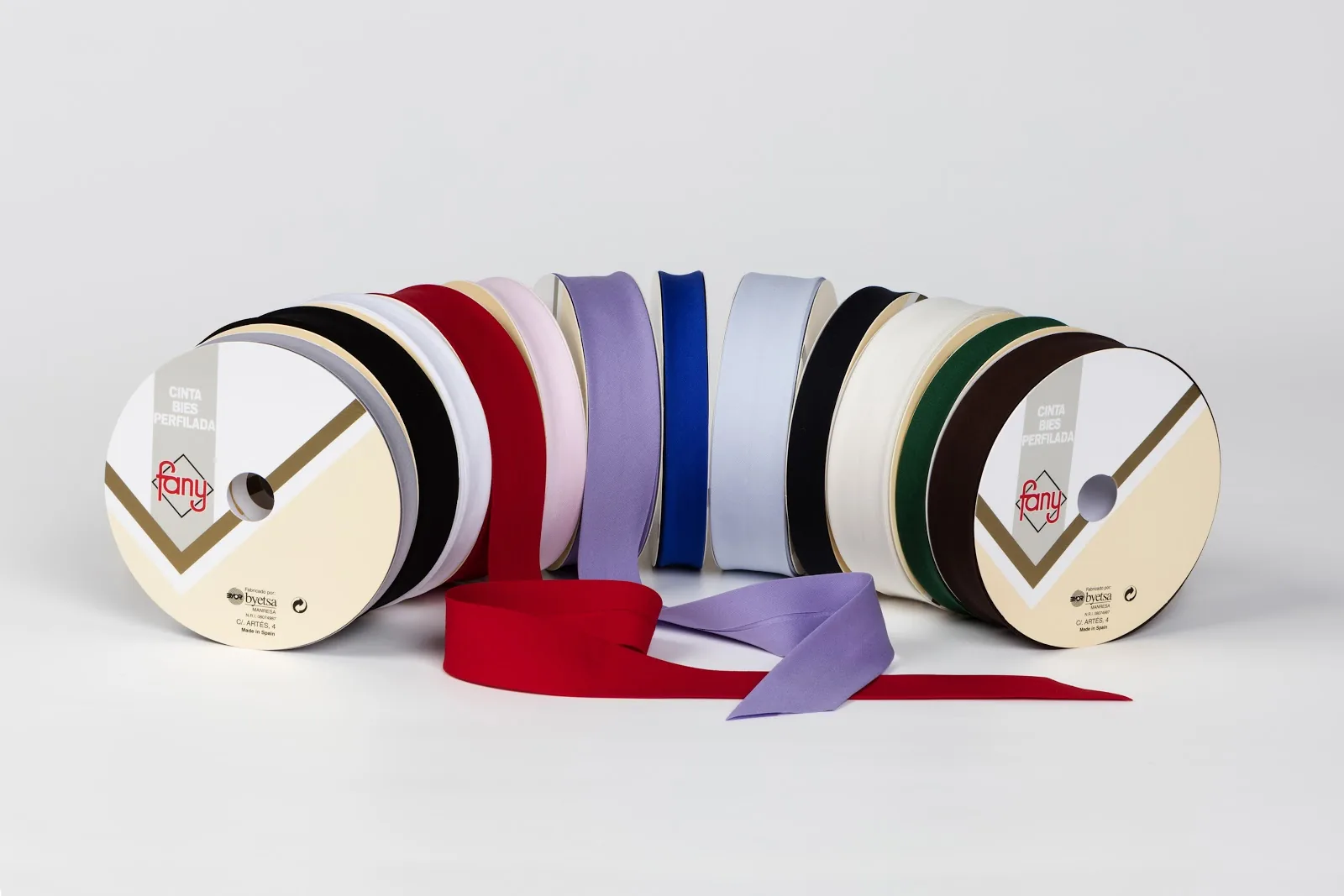
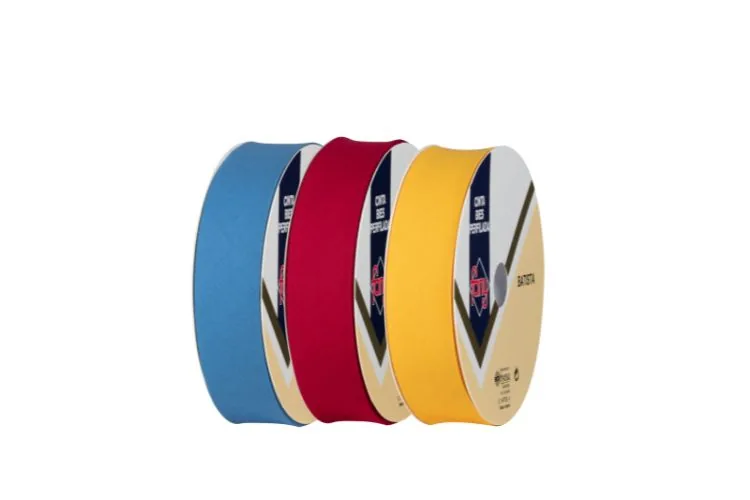
Cotton bias tape is a classic choice, made from 100% natural fabrics. Its softness and durability make it perfect for everyday garments, children’s clothing, and craft projects. Additionally, its natural texture allows for easy dyeing, achieving vibrant and uniform colours.
Polyester and cotton bias tape
Polyester and cotton bias tape combines the durability of polyester with the softness of cotton, offering a long-lasting and easy-to-maintain solution. It is ideal for home textiles such as curtains and tablecloths, as well as industrial applications requiring high wear resistance.
Satin bias tape
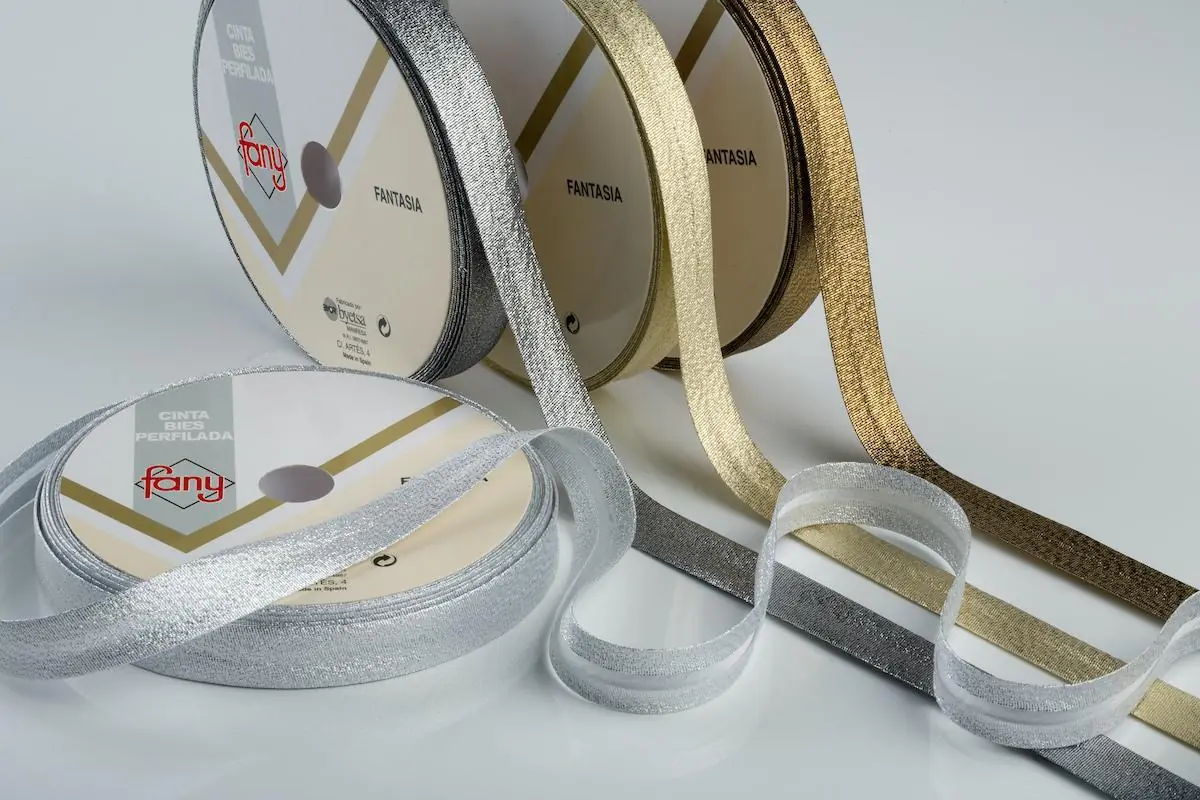
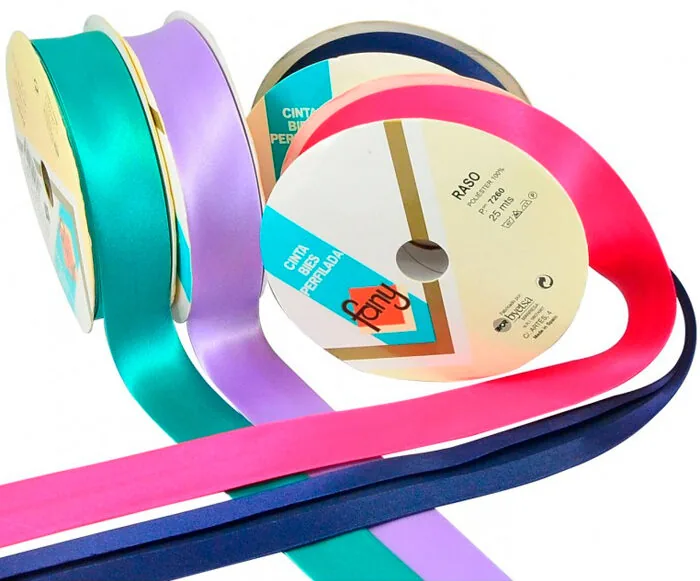
Elegant and sophisticated, satin bias tape stands out for its shine and smooth texture. It is a preferred choice for high-fashion projects and luxury decor, such as evening gowns, gift wrapping, and fashion accessories that require a distinctive touch.
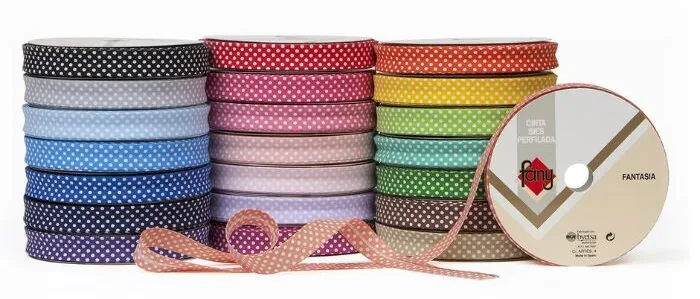
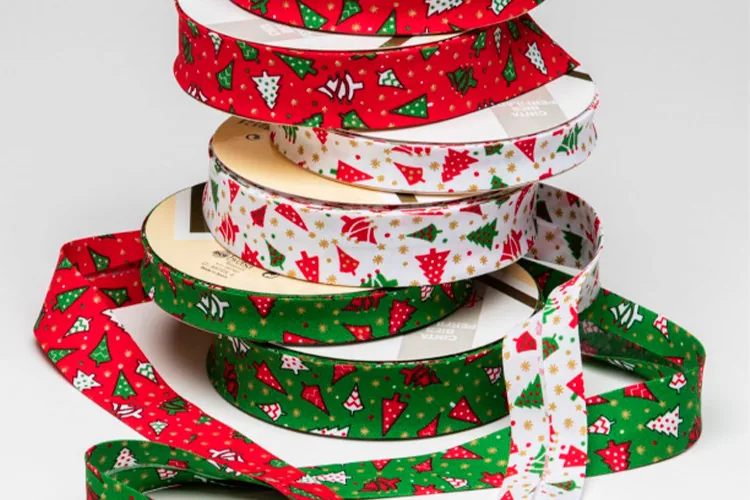
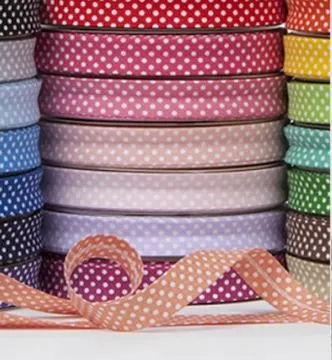
Printed bias tape
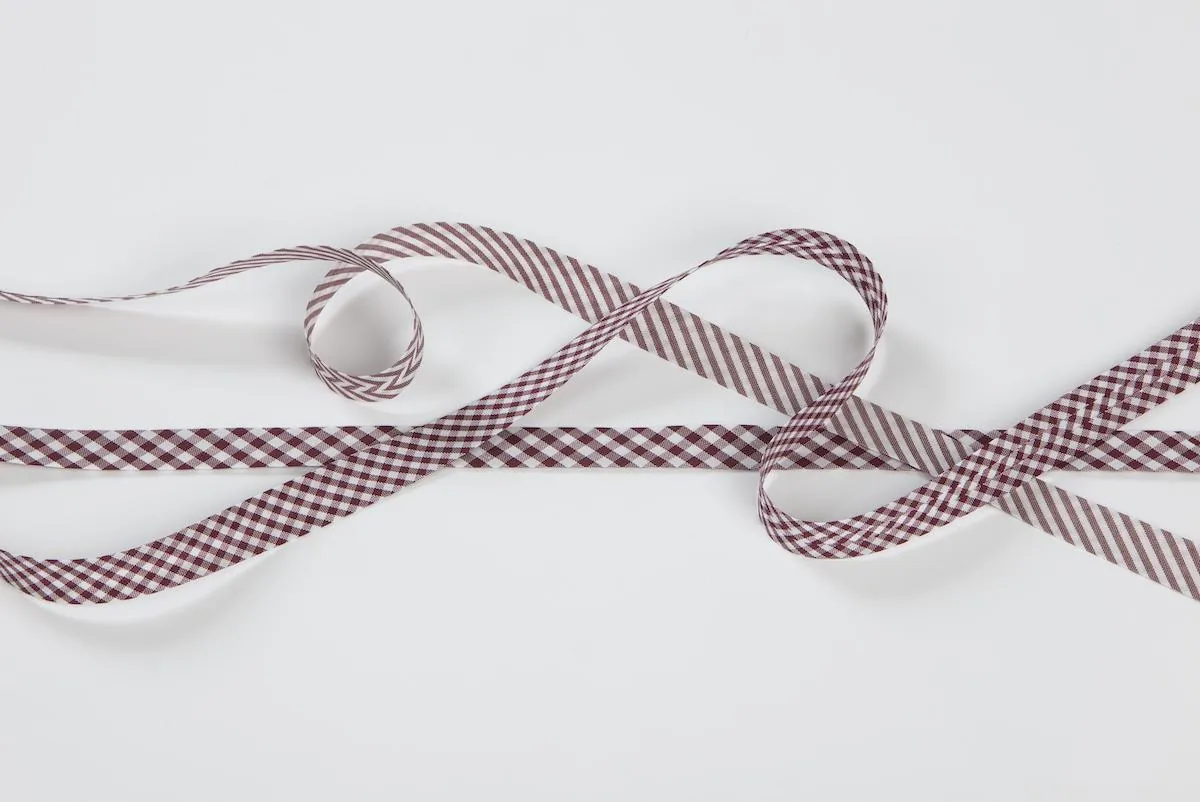
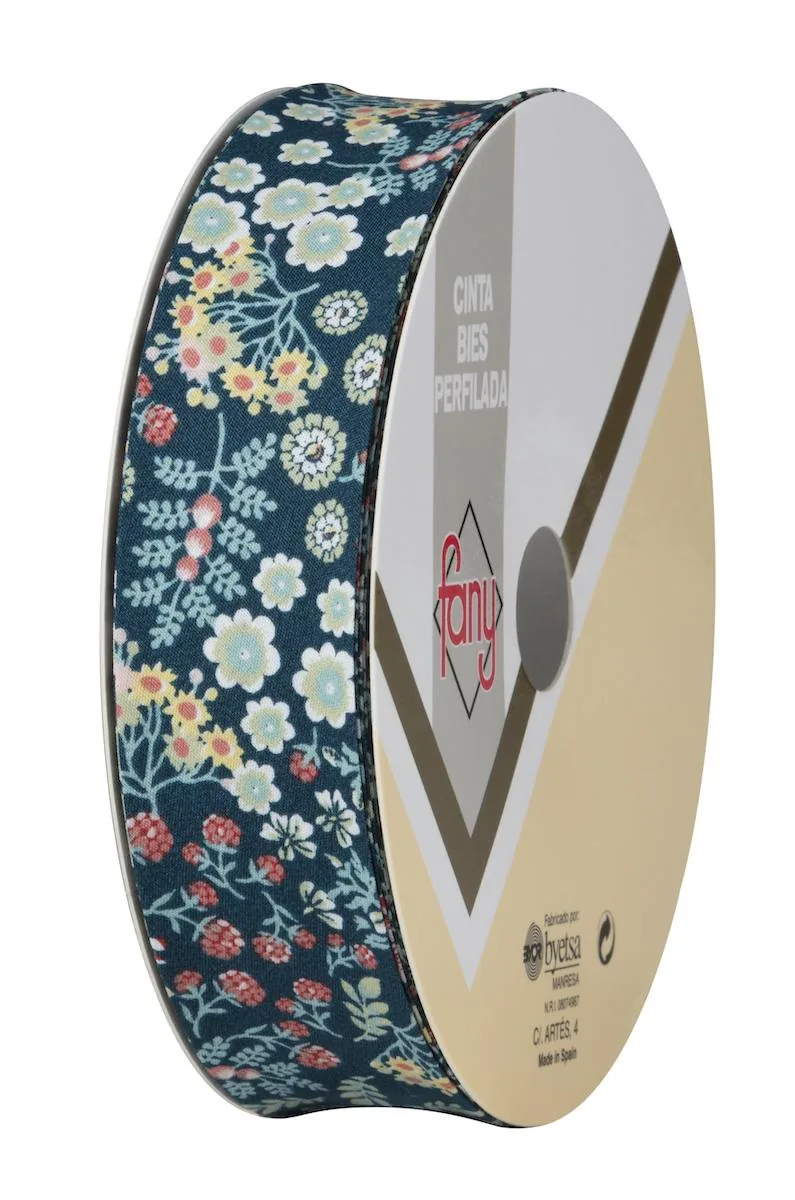
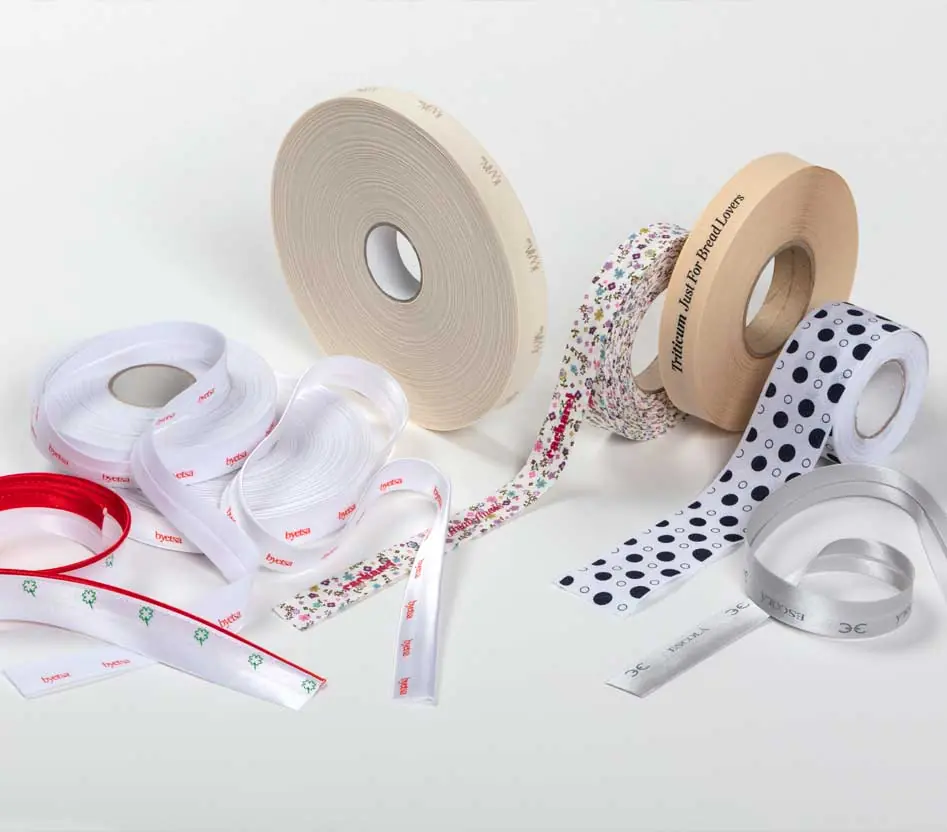
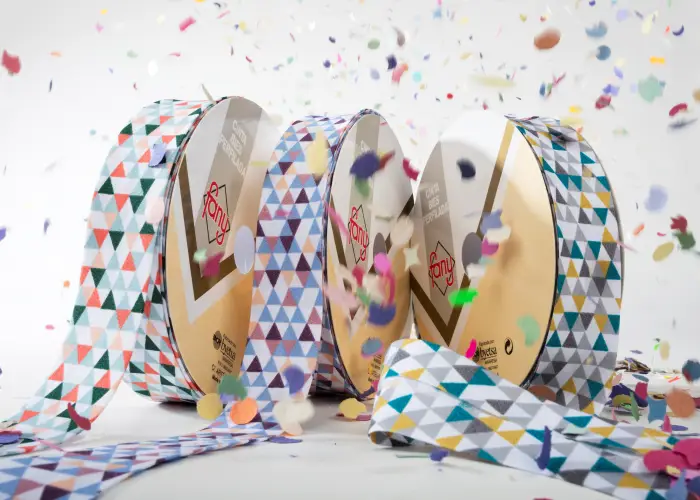
Designed to add creativity and dynamism, printed bias tape is available in a wide variety of patterns, including classic, modern, and children’s designs. It is perfect for customising garments, accessories, and decorative items, adding character and style to each project.
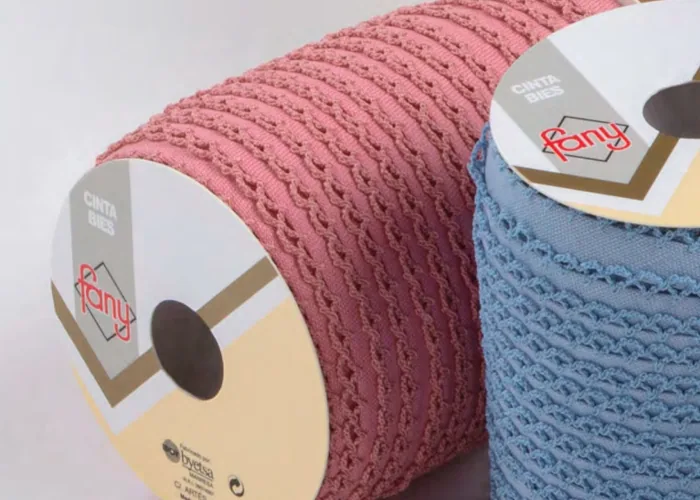
Stretch bias tape
Designed for fitted and flexible garments, elastic bias tape is essential for sportswear, swimwear, and any project that requires adaptability without compromising the finish.
Each of these types of bias tape offers a specific solution for different sewing needs, ensuring that every project achieves the perfect balance between functionality and design.
How to use bias tape in sewing?
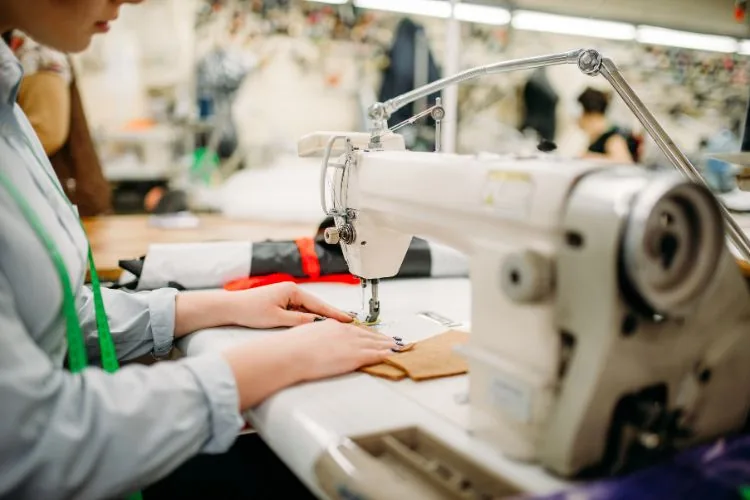
Working with bias tape in sewing may seem challenging at first, but with the right techniques and tools, it becomes a simple task that ensures professional and durable finishes. Below, we explain the basic steps to use bias tape, practical tips, and the most useful tools to achieve flawless results.
Basic steps to apply bias tape
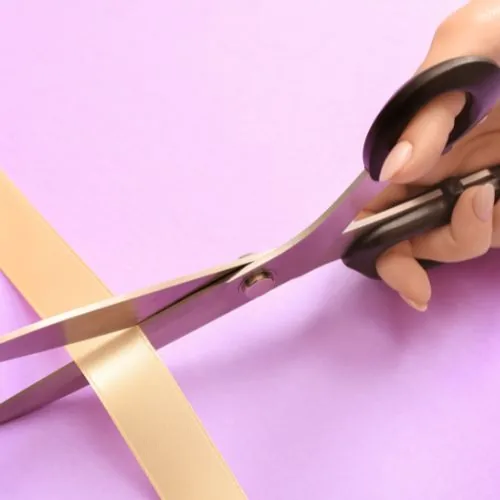
- 1 Cutting the bias: If you’re not using pre-made bias tape, cut a strip of fabric at a 45-degree angle to the straight grain. This will ensure the flexibility needed to fit curves and edges.
- 2 Edge preparation: Before applying the bias, iron the fabric to smooth out any wrinkles. Ensure that the edge is clean and straight.
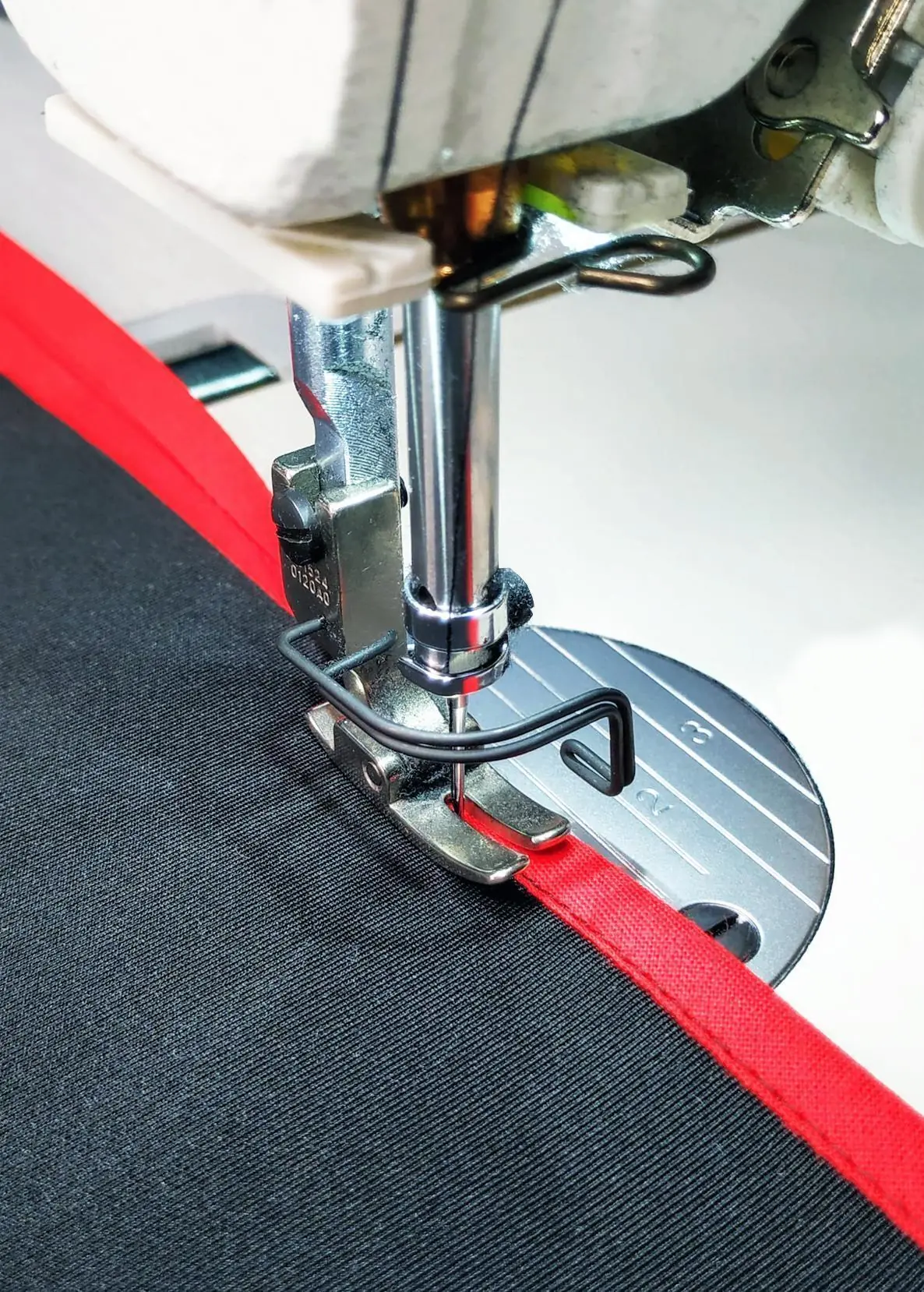
- 3 Placing the bias: Place the unfolded bias on the fabric’s edge, aligning the edges. Sew the bias to the fabric using a sewing machine or hand stitches for greater control.
- 4 Folding and securing: Fold the bias to the opposite side of the edge and secure it with pins or clips. Sew a second seam to fix it in place.
- 5 Edge finishing: On curves or corners, make small cuts in the bias to ease its adaptation without causing wrinkles.
Tips for working with bias:
- Always press the bias before applying it: This makes it easier to handle and ensures a cleaner finish.
- Use pins or clips: These tools help keep the bias in place without distorting the fabric.
- Choose the right thread: Make sure the thread colour matches the bias and fabric to achieve a uniform appearance.
- Work slowly on curves and corners: This is where the bias requires more precision to avoid folds or distortions.
Recommended tools:
- Bias foot: This sewing machine accessory simplifies the placement of bias tape, especially on long edges.
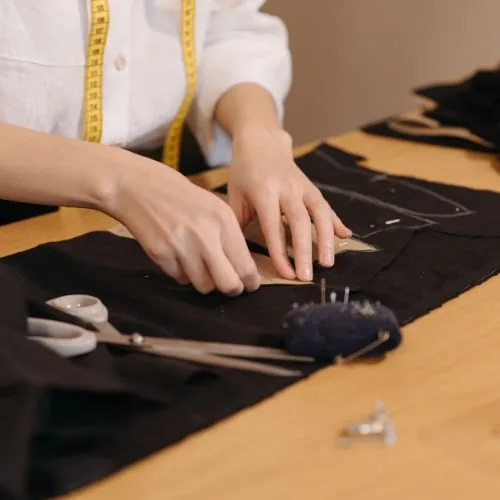
- Rotary cutter and cutting ruler: Ideal for cutting uniform and precise bias strips.
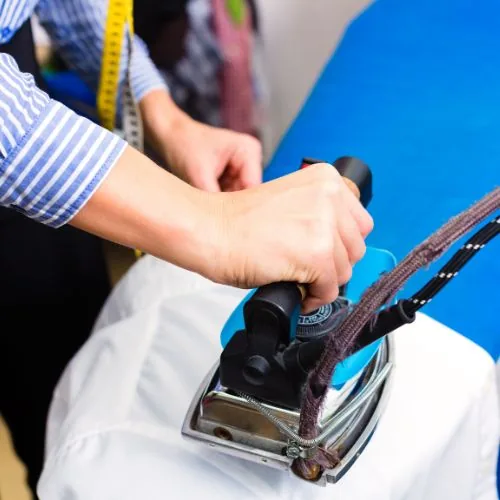
- Steam iron: An essential tool for smoothing the bias and shaping it as needed.
- Bias tape guides: They help create homemade bias tape with a consistent width.
With these techniques and tools, working with bias tape becomes a much smoother experience, ensuring high-quality results that elevate any sewing project.
Benefits of using bias tape in your sewing projects
The use of bias tape in sewing not only improves the functionality and durability of garments and accessories but also adds an aesthetic finish that elevates the quality of any project. Below, we explore the main benefits that bias tape can offer:
Professional finishes
Bias tape allows you to cover unfinished edges and give them a polished, uniform appearance. This is essential for projects where presentation is key, such as garments, home textiles, or decorative accessories. Additionally, its flexibility makes it ideal for working with curved edges, ensuring a clean finish even in the most complex designs.
Fabric protection
Applying bias tape to the exposed edges of the fabric not only beautifies the piece but also prevents the fabric from fraying with use and washing. This additional reinforcement extends the lifespan of garments and keeps them in perfect condition for longer.
Personalisation and creativity
With the wide variety of materials, colours, and prints available, bias tape is a versatile tool that allows designers to personalise their creations. From vibrant prints to sophisticated textures, bias tape adds a unique touch that reflects the style and intention of the project.
Adaptability to different fabrics
Thanks to its natural elasticity, bias tape easily adapts to rigid, delicate, or stretchy materials. This makes it a practical and aesthetic solution for projects that require precision and adaptability.
Time optimisation
Pre-made bias tape simplifies the sewing process, reducing the time needed to prepare and finish edges. This is especially useful in high-volume projects or for those working with tight deadlines.
Using bias tape in your sewing projects not only improves the aesthetics and functionality of the pieces, but also ensures results that stand out for their professionalism and attention to detail.
Common mistakes when working with bias tape and how to avoid them
Although working with bias tape can be easy with practice, there are common mistakes that can affect the quality of the final result. Identifying them and learning how to avoid them is key to achieving flawless finishes in every project.

1. Incorrect cuts
One of the most common mistakes is not cutting the bias at a 45-degree angle to the straight grain of the fabric. This can reduce the elasticity of the bias, making it difficult to apply to curved edges and compromising the quality of the finish.
How to avoid it:
Use a cutting ruler and rotary cutter to ensure the cut is precise.
If working with pre-made bias, check that the diagonal cut is correctly made.
2. Uneven stitching tension
Applying too much tension when sewing the bias can cause the fabric to gather, while insufficient tension can leave loose and unstable edges.
How to avoid it:
Adjust the thread tension on your sewing machine before starting.
Practise on a scrap of fabric to calibrate the appropriate tension based on the type of bias and fabric.

3. Choosing the wrong material
Selecting a type of bias tape that is not compatible with the fabric or the project’s purpose can affect both the aesthetics and the functionality of the final result. For example, using a rigid bias tape on an elastic material can hinder the mobility of the garment.
How to avoid it:
Choose cotton bias tape for soft and natural projects, polyester bias tape for greater durability, or elastic bias tape for fitted garments.
Check the project specifications and select the bias tape that best suits your needs.
4. Lack of bias preparation
Not pressing or smoothing the bias before application can make it harder to handle and result in uneven edges.
How to avoid it:
Always press the bias before placing it, using steam if necessary to better adapt it to curved edges or small details.
If using pre-made bias, check that it is in perfect condition before starting.

5. Not securing the bias properly
Sometimes, when applying the bias, the ends may not be properly secured, leading to fraying or messy edges.
How to avoid it:
Make sure to fold and finish the ends of the bias properly before doing the final stitching.
Use pins or clips to hold it firmly in place.
Avoiding these mistakes will allow you to work with bias more efficiently and ensure that your sewing projects look flawless and are durable.
Discover the best bias tapes for sewing at Byetsa
At Byetsa, experience and commitment to excellence have positioned us as leaders in the manufacture of bias tapes for sewing. Our range combines tradition and innovation to provide products that meet the needs of all types of projects, from high fashion garments to functional textiles.
Variety of materials and designs
At Byetsa, we offer a wide range of bias tapes designed to meet the needs of every customer. Our collection includes options such as:
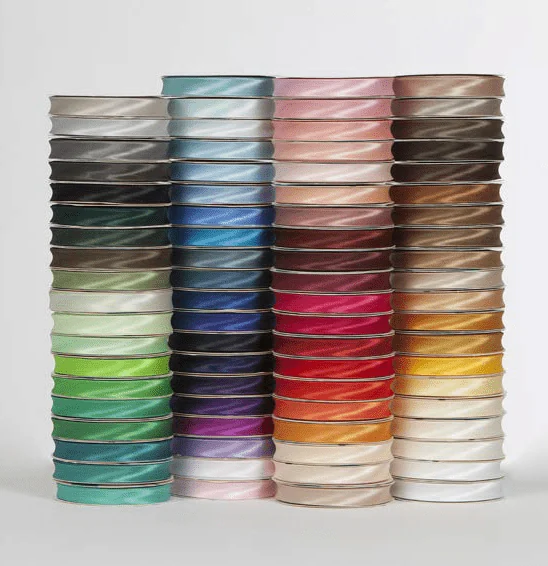
- Cotton bias binding: Perfect for natural and comfortable projects.
- Polyester and cotton bias binding: A combination that offers durability and versatility.
- Printed bias binding: Ideal for adding personality and dynamism.
- Satin bias: Elegance and softness in every detail.
- Elastic bias: Adaptable to fitted and flexible garments.
Thanks to our variety of designs, textures, and colours, each customer can find the perfect option for their project.
Advanced technology for exceptional quality
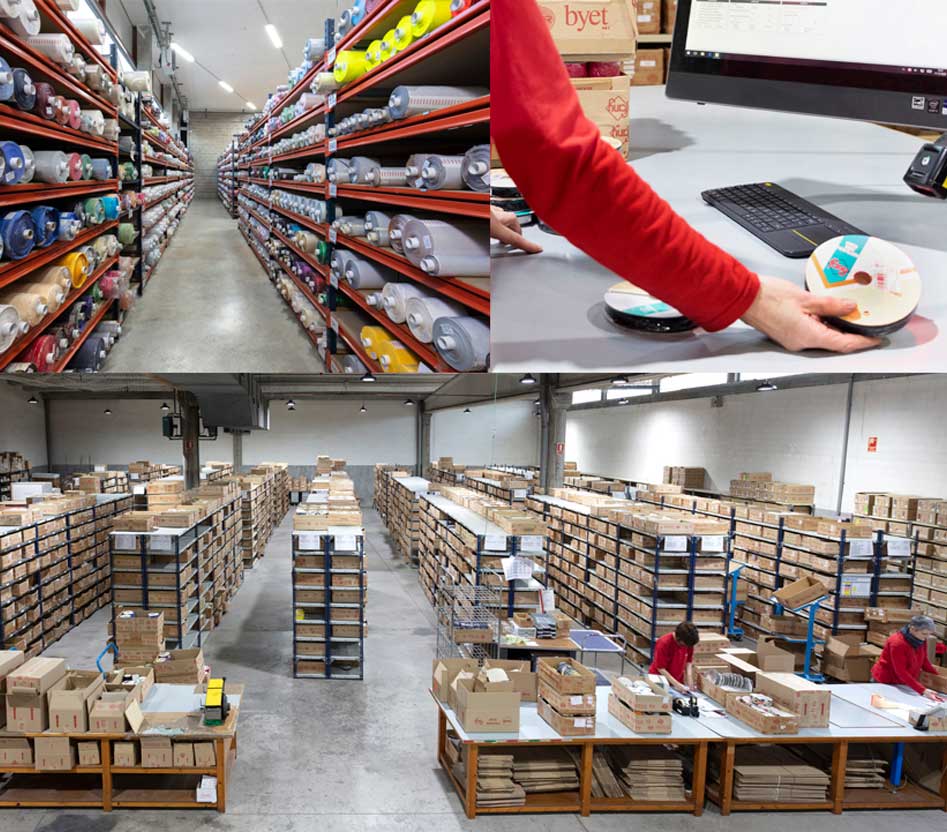
The manufacturing of our bias tape uses state-of-the-art technology that ensures uniformity in colours, precise cuts, and consistent finishes. This automated process guarantees that every roll of bias tape meets the highest standards in the textile industry.
Personalised advice
We know that each project has unique needs. That’s why our team is available to advise you on choosing the most suitable bias tape, helping you maximise the results of your creations.
Commitment to Sustainability
Sustainability is a fundamental pillar at Byetsa. That’s why many of our products are made with certified materials, such as organic cotton, and we follow environmentally responsible production processes.
Availability and accessibility
We have an infrastructure that allows us to supply both small productions and large industrial volumes. This ensures that our customers always find the bias binding they require in the quantity needed.
At Byetsa, bias binding is not just a product; it’s a tool that transforms and enhances any project. If you’re looking for quality, variety, and a customer-oriented service, Byetsa is your best ally.
The importance of bias in sewing
Bias binding is much more than just a strip of fabric. It is an essential tool for sewing enthusiasts, both beginners and experts, who seek to improve the functionality and aesthetics of their creations. From protecting fabric edges to adding a unique decorative touch, bias binding serves multiple functions that make it a key element in any textile project.
In this article, we have explored what bias binding is, its different types, how to apply it, and the common mistakes to avoid. Additionally, we have highlighted how Byetsa positions itself as a leader in bias binding manufacturing, offering a range of products that combine tradition, innovation, and a commitment to sustainability.
Whether you are working on garments, home textiles, or decorative projects, bias binding is your best ally for achieving professional finishes and customising your designs. With a wide variety of materials, colours, and styles, Byetsa offers the perfect solutions to bring your ideas to life.
If you are looking for the ideal bias binding for your next project, don’t hesitate to contact Byetsa. Our team is here to help you find the product that suits your needs and ensure that your creations are a complete success.
We make what you need
Looking for bias binding for your production or your haberdashery?
Frequently asked questions
01Why is bias binding cut diagonally rather than on the grain?
Because cutting at 45 degrees to the straight grain of the fabric provides a natural stretch that a straight-grain cut does not have. Thanks to this, bias binding fits collars, armholes and other curved or irregular edges without wrinkling. If the angle is not correct, the binding loses stretch and the finish on curves suffers.
02Which bias binding should you use on stretch garments or sportswear?
For close-fitting garments, sportswear and swimwear, elastic bias binding is recommended, as it moves with the fabric without compromising the finish. Using a rigid bias binding on a stretch material is a common mistake because it restricts the garment’s movement. For soft, natural projects cotton is preferred and, when durability is the aim, polyester.
03How do you stop the fabric puckering when sewing bias binding?
Puckering is usually caused by excessive thread tension; if the tension is too low, the edge is left loose. It is best to adjust the machine tension before starting and do a test on an offcut with the same bias binding and fabric. On curves and corners, work slowly and make small snips so the bias binding adapts without pleats.
04Which tools make working with bias binding easier in a workshop?
A bias binding presser foot simplifies application on long edges; a rotary cutter and cutting ruler give you uniform strips; a steam iron helps smooth and shape the bias binding, and bias tape makers make it easy to produce home-made bias binding of a consistent width. Pins or clips hold the binding in place without distorting the fabric.
05What are the advantages of ready-made bias binding over cutting it yourself?
Ready-made bias binding cuts the time spent preparing and finishing edges, which is especially useful in high-volume production or with tight deadlines, and saves you having to cut strips at 45 degrees. Even so, it is worth checking that the diagonal cut has been done properly and pressing it before applying it to achieve a clean finish.
Related articles
How to apply bias binding on curves: our recommendations
Learn step by step how to apply bias tape on curves and achieve perfect, professional finishes. Best tips and techniques at Byetsa.
Read article
What is bias cutting, and how do we do it at Byetsa?
Bias cutting involves cutting fabric at a 45° angle to the grain to give it elasticity and drape. Discover what it is, what it's for, and how to cut it step by step.
Read article
Bias tape wholesale: the best quality for your production plant
Over 70 years of experience in wholesale bias tape, a variety of models, and top quality for the textile industry, fashion, decoration, and more.
Read articleDo you have a question about bias binding?
If you have any questions about our products or need personalised advice, please do not hesitate to contact our team. We are here to help you in any way we can. Write to us!
- Phone93 874 40 98
- Emailinfo@byetsa.es
- AddressC/ Artés, 4 · Pol. Ind. Els Dolors · 08243 Manresa (Barcelona)
Tell us what you need
We will reply with the right reference, format and width for your production.