Types of bias tape available on today’s market
Types of bias binding by material: cotton, Batiste, satin, lamé, gingham, elastic and printed. Discover the characteristics of each and which to choose.
 By Francesco ZagnoniPublished on Updated on 11 min read
Quick answer
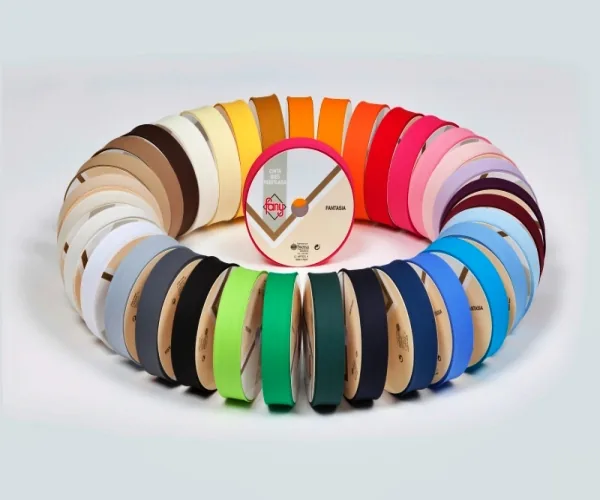
The main types of bias binding are differentiated by their material: cotton-polyester (Batiste), 100% cotton, satin, lamé, gingham, elastic and printed.
Key points
- How to choose: according to use (fashion, home, childcare products, elastic garments) and the desired finish (natural, shine, festive or decorative).
- Widths: standard widths of 12, 18, 25 and 30 mm, with the possibility of custom manufacturing.
- Byetsa: manufactures all these types and advises on the most suitable for each project.
Bias binding is not a single product: there are different types, each with a different composition, feel and ideal use.
Choosing the right one makes all the difference in the finish of any sewing or garment-making project. In this guide we review the main types of bias binding in the Byetsa catalogue—by material—and help you decide which best fits what you need.
What is bias binding?
Bias binding is a strip of fabric cut diagonally, at 45° to the grain, used to finish, reinforce and decorate the edges of a garment or piece of work.
That diagonal cut gives it elasticity and allows it to adapt to curves and contours. From that common base, bias binding is manufactured in different materials, which define each type.
Types of bias binding by material
In the following table we summarise the main types of bias binding you will find in the Byetsa catalogue, with their composition and the use for which each works best, so you can compare all the options at a glance and easily choose the most suitable for your sewing, garment-making or decoration project:
| Type of bias binding | Composition | Ideal use |
|---|---|---|
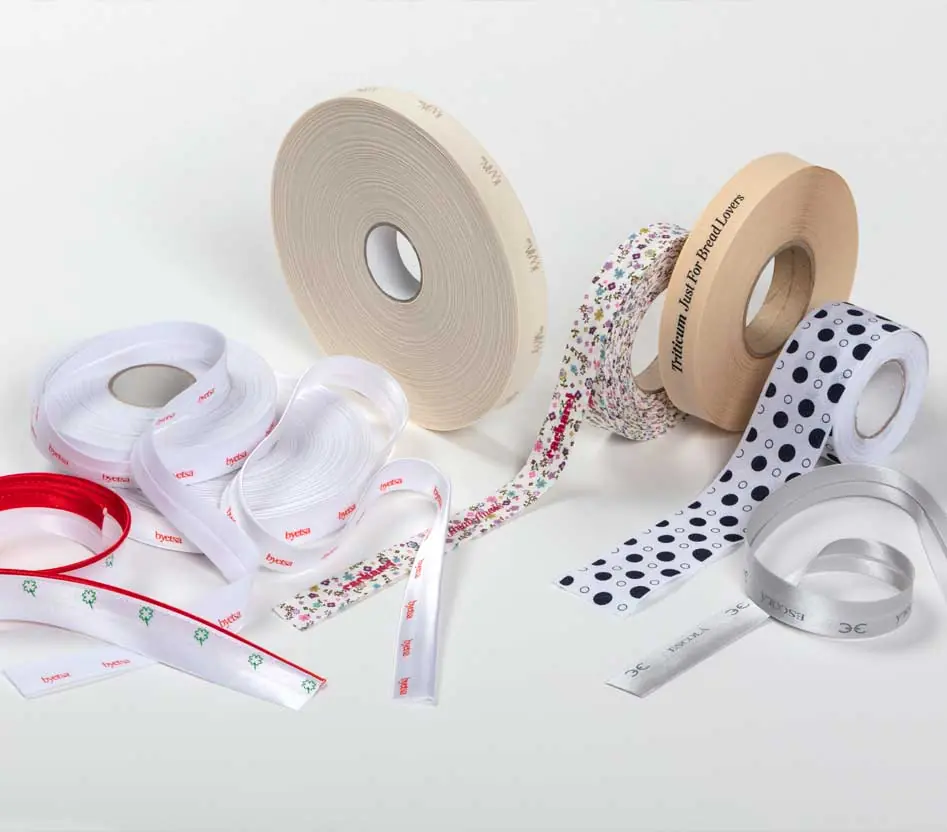
| Cotton-polyester (Batiste) | 50% cotton / 50% polyester | Silky and versatile feel; garment-making and decoration. |
| 100% cotton | Natural cotton | Daily use, childcare products and textile industry. |
| Satin | 100% polyester | Fashion and elegant finishes (collars, cuffs); +80 colours. |
| Lamé | 70% polyester / 30% lamé | Festive details with metallic shine (gold, silver, bronze). |
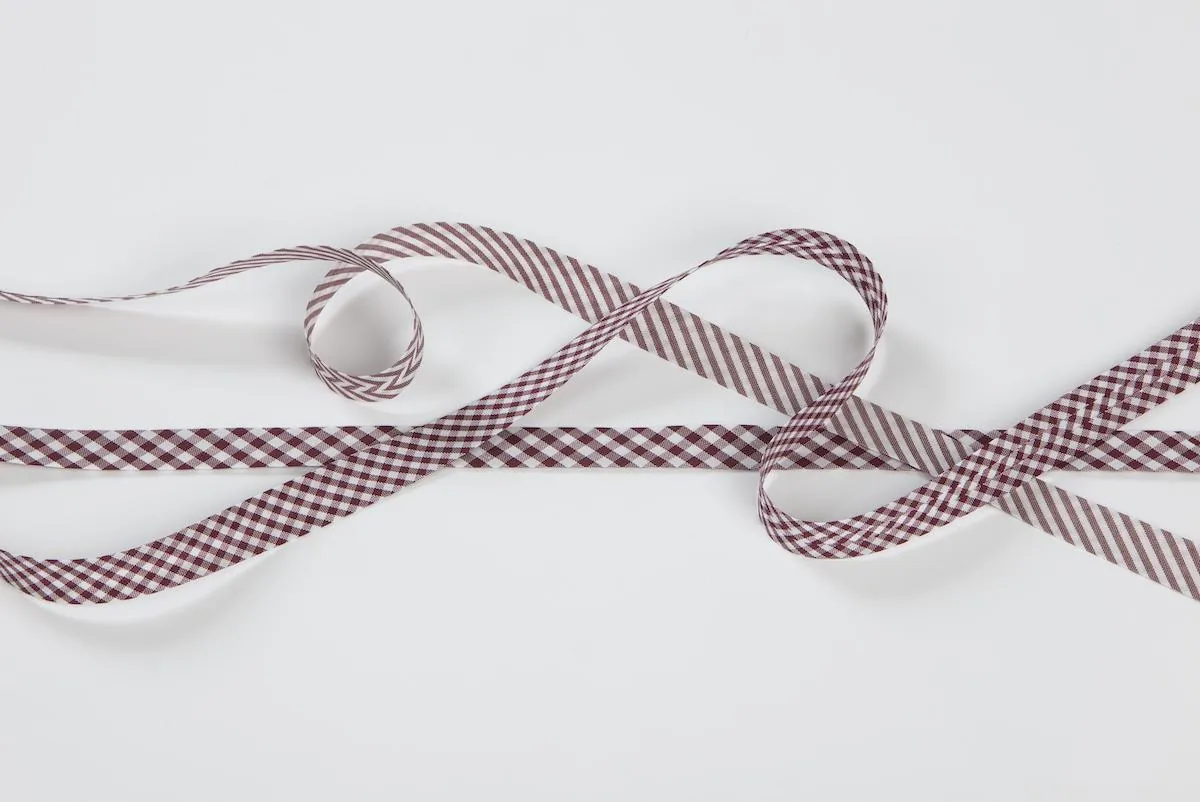
| Gingham | Cotton | Classic check, mini-check and stripe style; home and children's. |
| Elastic | 97% cotton / 3% elastane | Garments that need to give and adapt. |
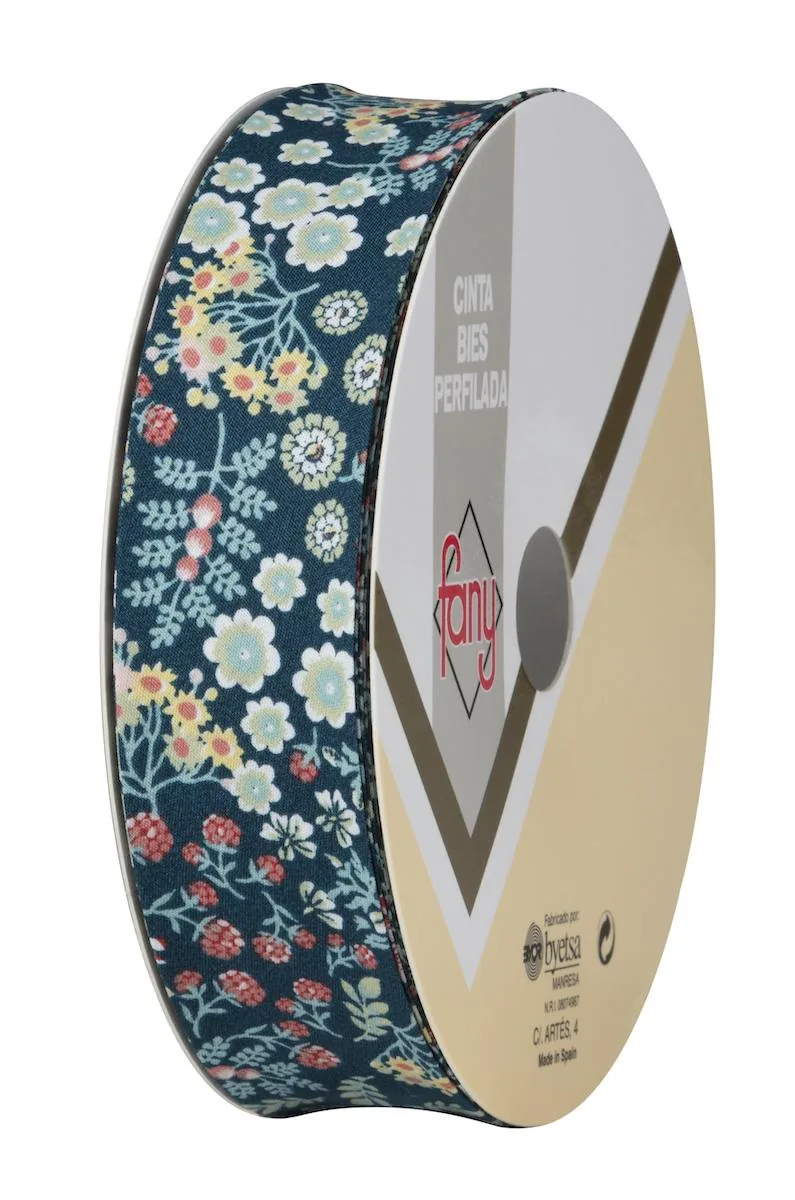
| Printed | Cotton (often organic) | +250 designs; children's and decorative products. |
Cotton-polyester bias (Batiste)
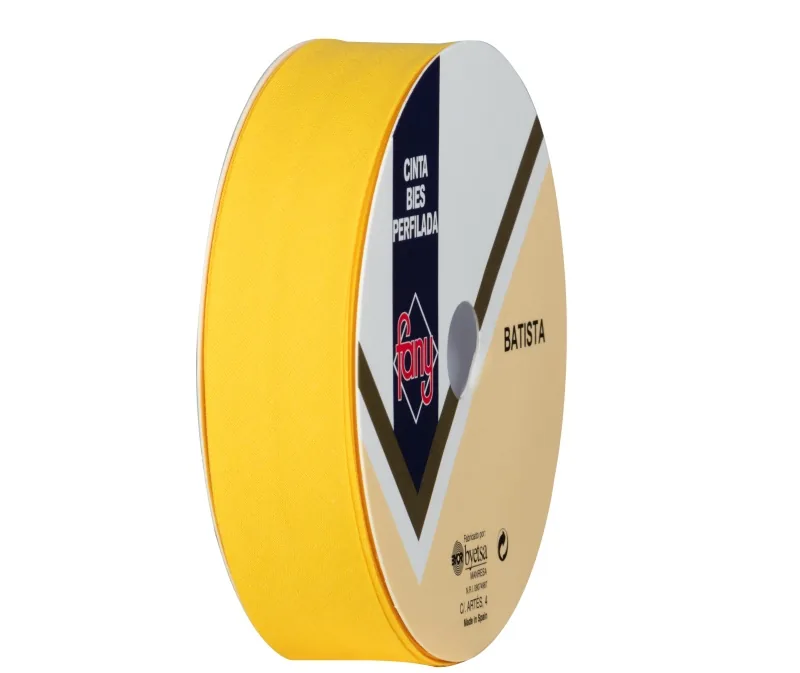
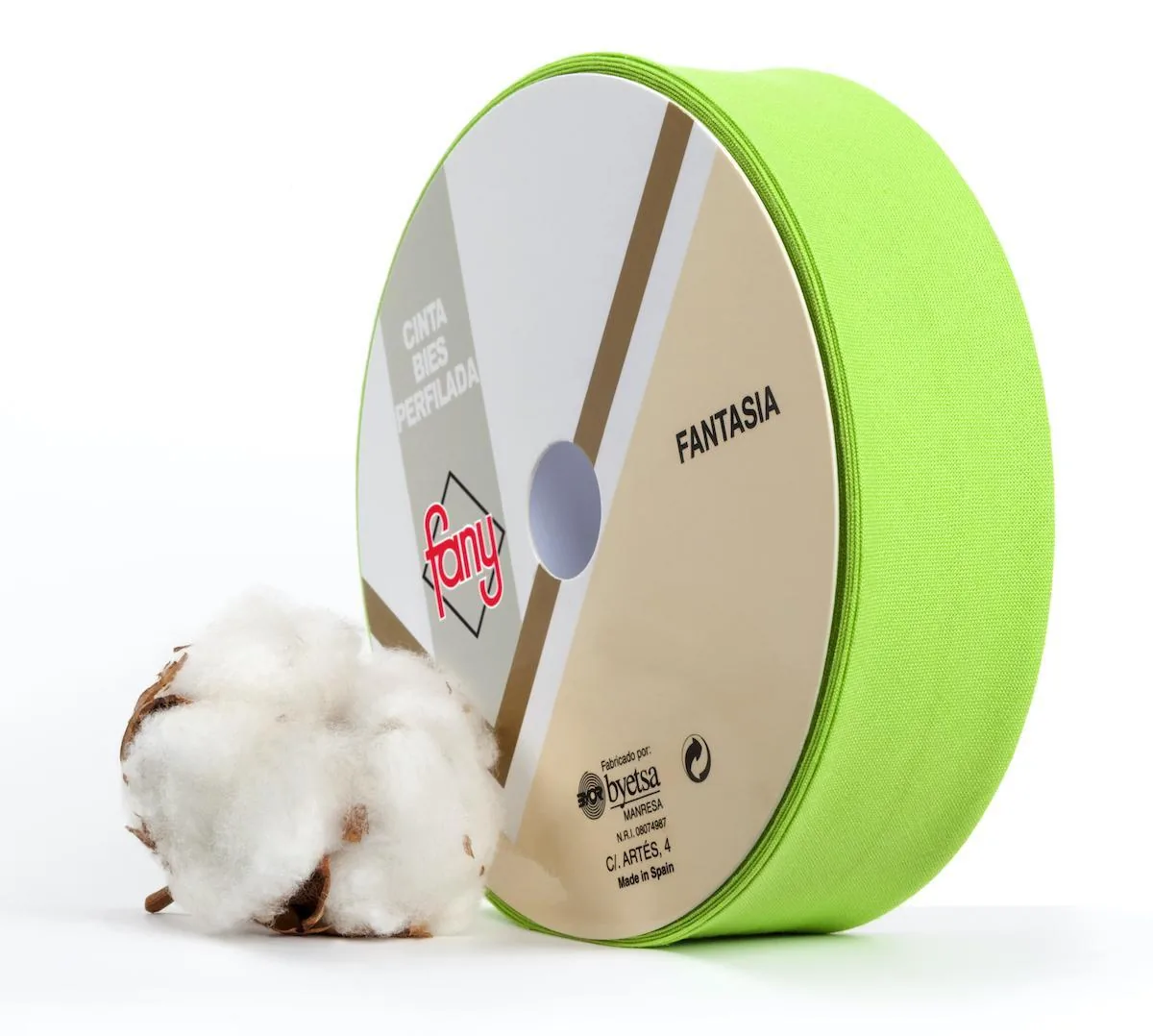
Known as Batiste, it combines 50% cotton and 50% polyester. It stands out for its silky and soft feel, thanks to the use of non-textured polyester threads that maintain a smooth and uniform surface.
It is one of the most versatile: it works for both garments and home decoration and accessories.
100% cotton bias tapes
A natural bias appreciated for its quality, with dyeing processes carried out in Barcelona. It has countless applications, from childcare products to the textile industry, and is available in the standard widths of 12, 18, 25 and 30 mm, customisable according to need.
Satin bias tape
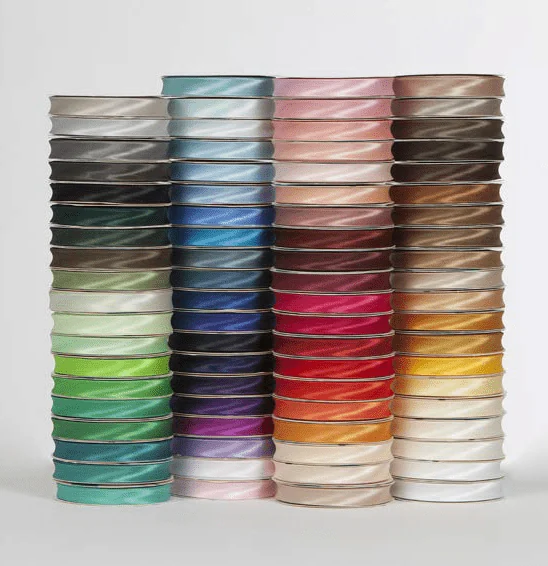
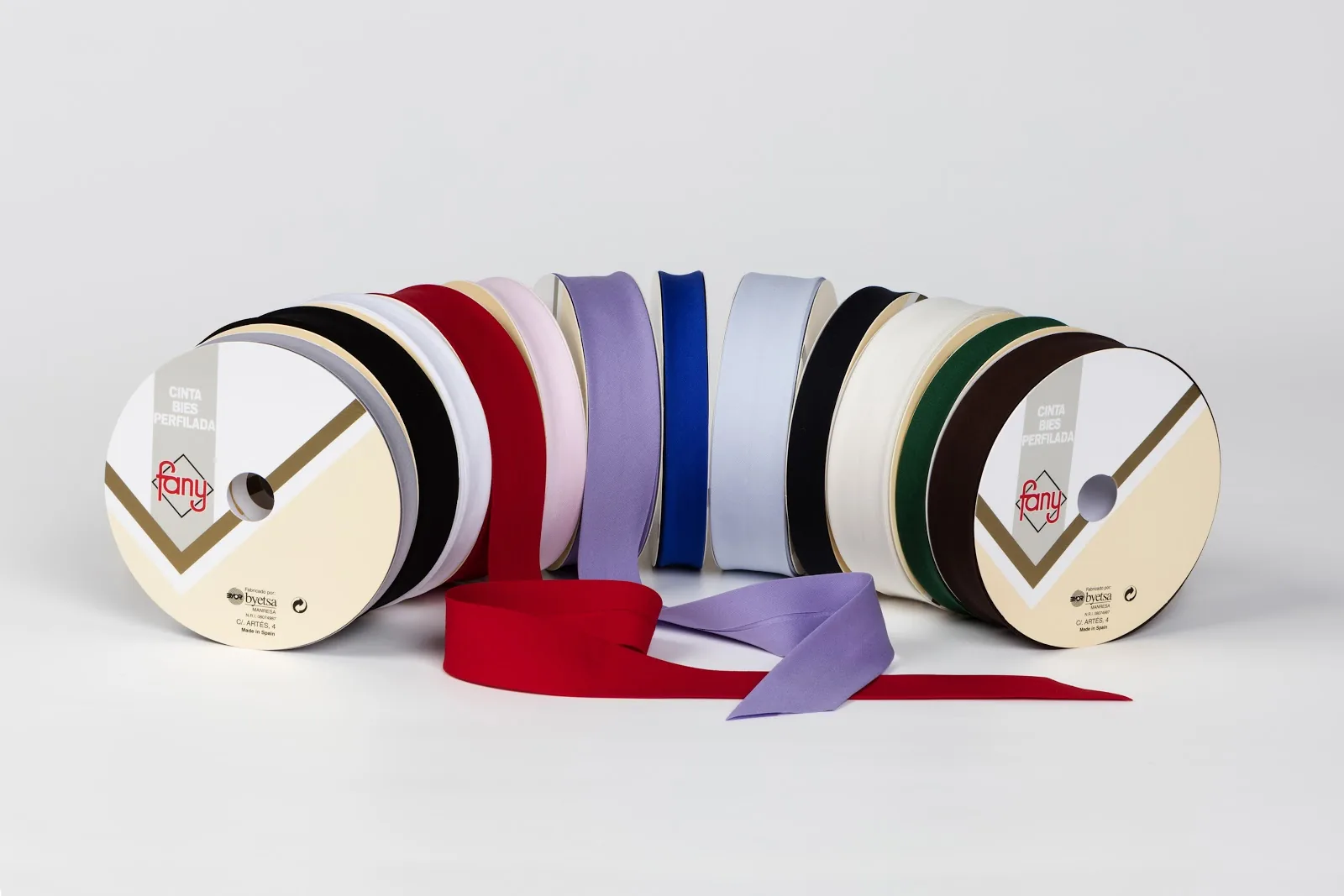
Made from 100% polyester, it features a smooth surface and a silky feel, with a range of over eighty colours.
It is a popular choice for finishing shirt collars and cuffs and for giving a refined internal finish to all types of garments.
Lamé bias tape
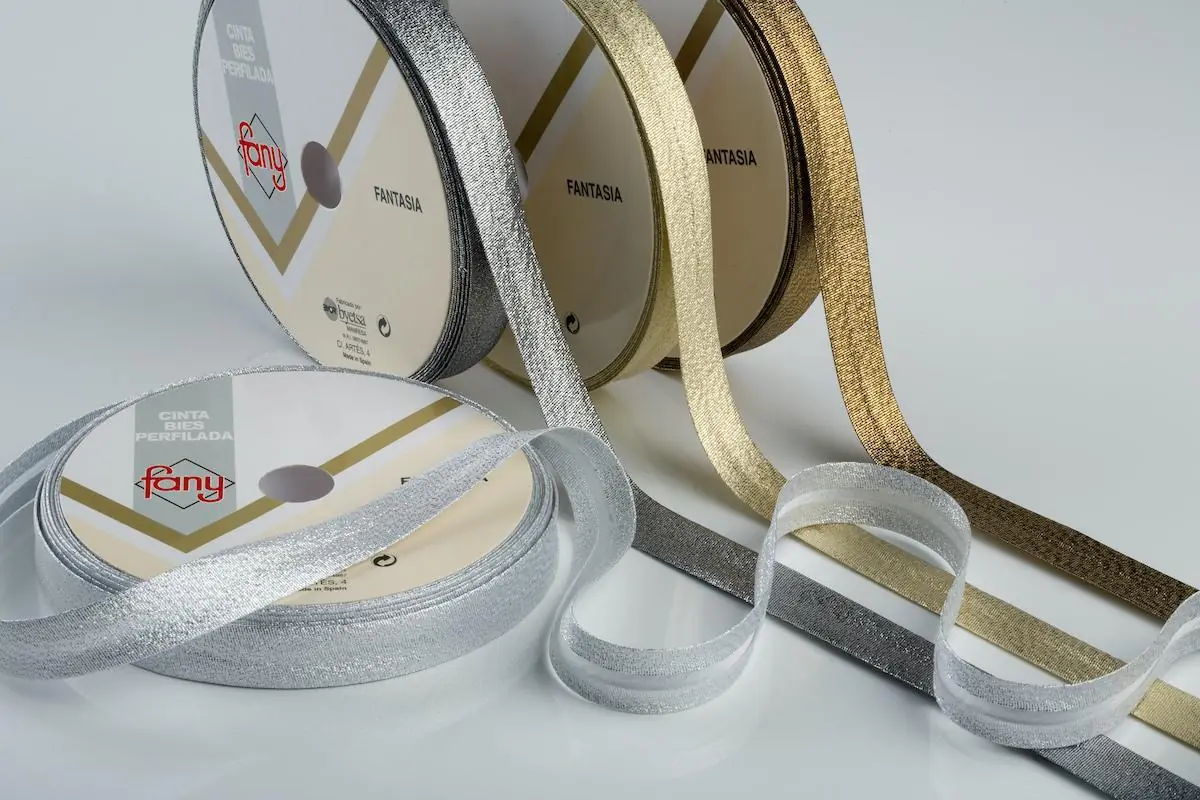
It adds a touch of glamour with its metallic sheen and festive appearance.
Composed of 70% polyester and 30% metallic lamé, it is available in basic colours such as gold, silver, and bronze, and in standard widths of 18 and 30 mm for special projects.
Gingham bias tape
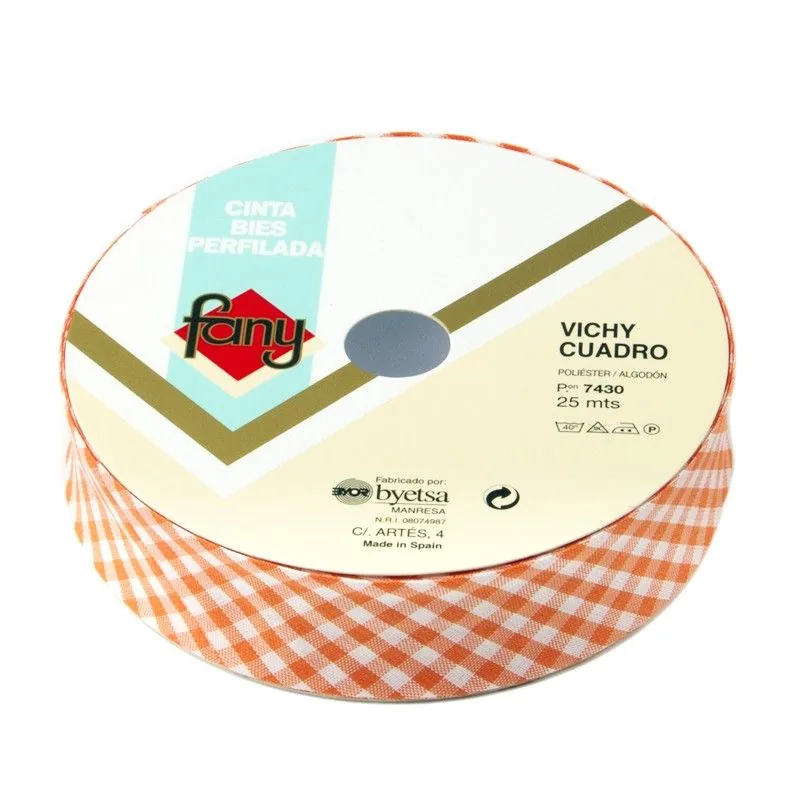
A timeless classic with its distinctive check, mini-check and stripe pattern.
It brings a nostalgic and elegant air to dresses, tablecloths and napkins, and its most popular widths are 18 and 30 mm. It is a must-have in children’s fashion and home.
Stretch bias tape
Composed of 97% cotton and 3% elastane, it offers comfort and flexibility.
Compared to lycras and synthetics on the market, it is more pleasant for garments that need to stretch, which is why it has become a staple in the catalogue.
Printed bias tape
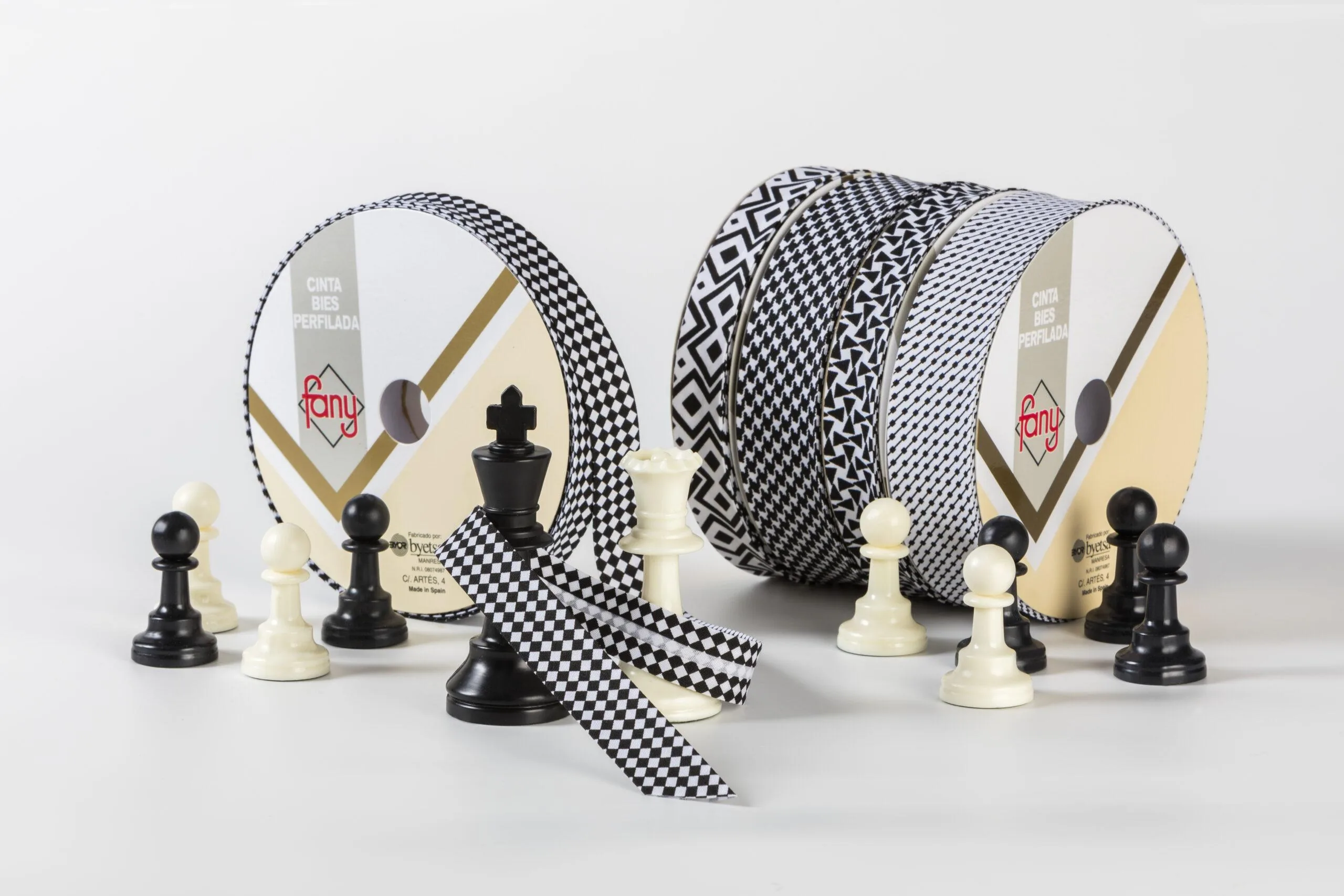
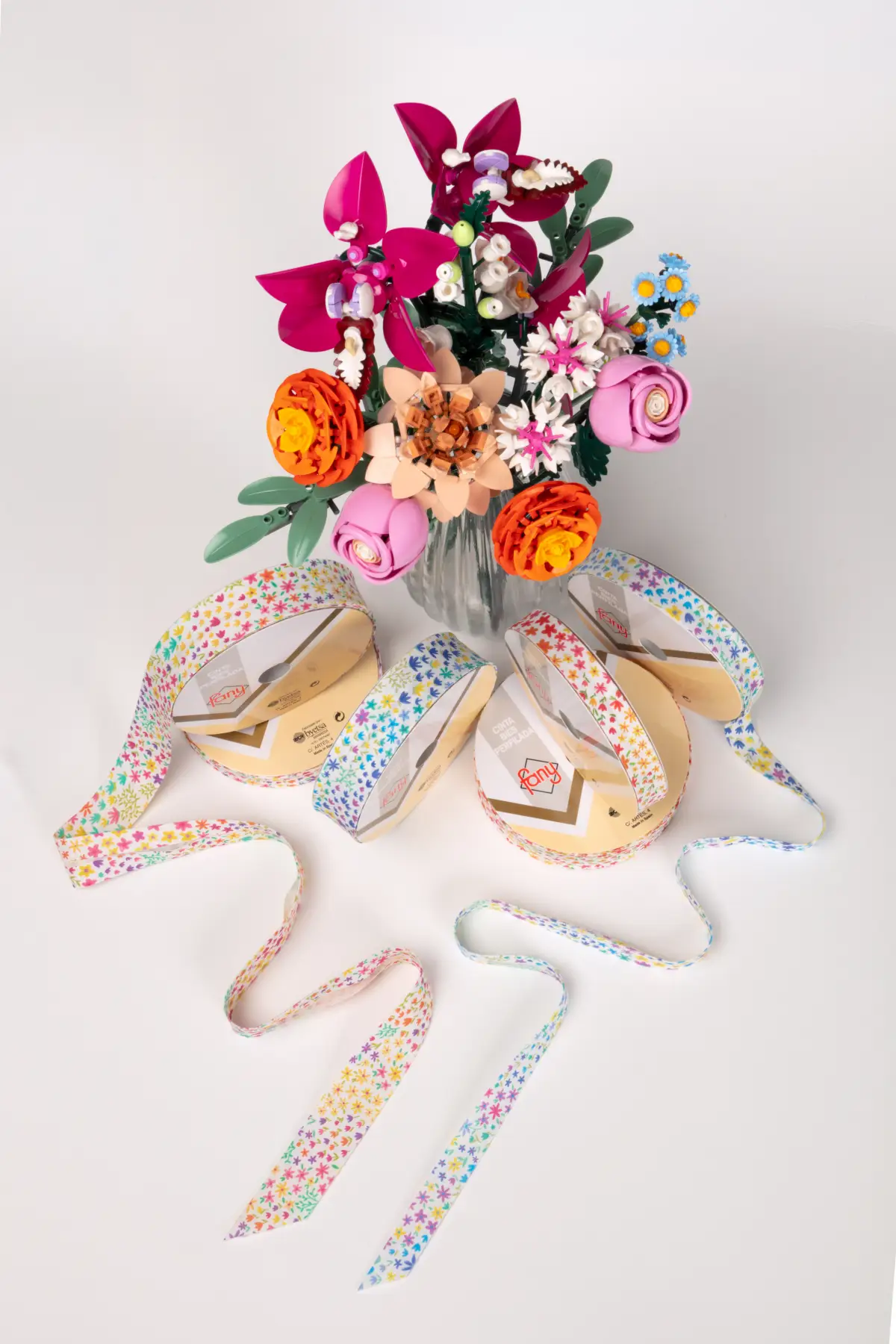
With over 250 different designs and prints, it covers all tastes.
Many are produced in organic cotton, making them ideal for children’s products with vibrant and cheerful colours.
How to choose the type of bias binding
The choice of type depends above all on the use and the desired finish. For garment-making and daily use, cotton and Batiste are the safe bet; for fashion and elegant details, satin; for children’s garments and home textiles, gingham and printed; for garments that give, elastic; and for festive details, lamé. From there, the width (12, 18, 25 or 30 mm) and colour complete the choice for the project.
Types of bias in sewing: most common uses
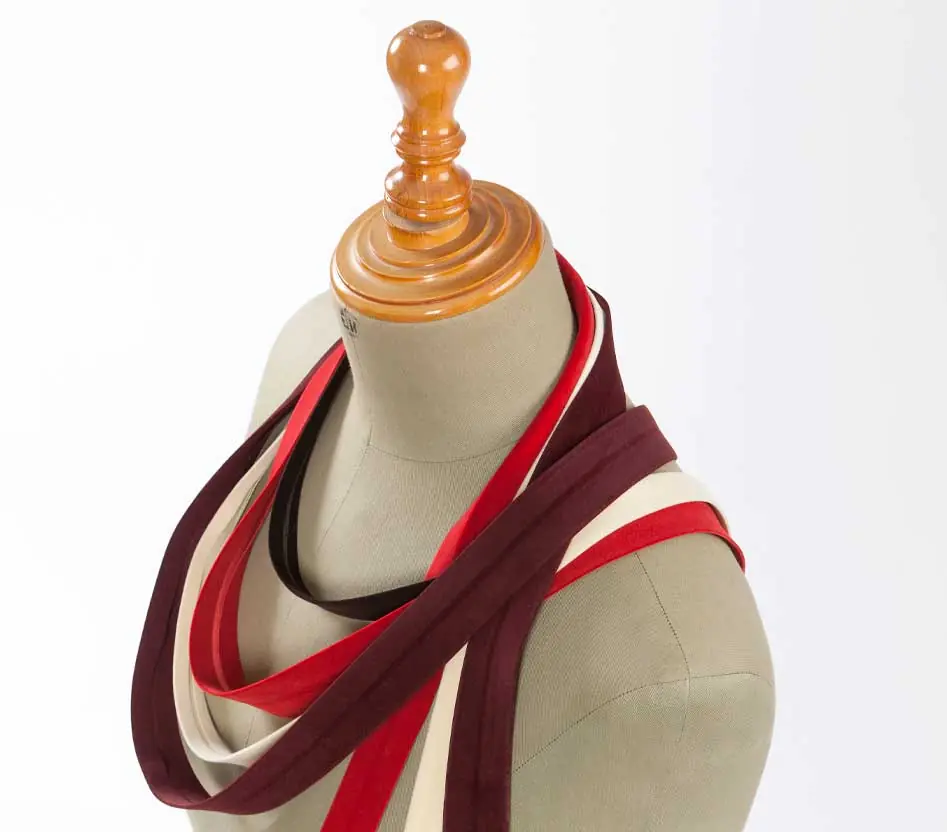
In sewing, each type of bias fulfils a function according to the garment or the work. Cotton and Batiste bias bindings are used to finish and reinforce edges on clothing and accessories for daily use; satin, for visible and elegant finishes; gingham and printed, as a decorative resource in children’s clothing, tablecloths and home projects; and elastic, to finish sportswear or lingerie that needs stretch. Knowing these uses helps to choose the right bias for each sewing project.
Types of bias according to finish: flat, folded and piping
In addition to material, bias binding is classified by its finish. Flat (or cut) bias is the unfolded strip, widely used in the garment-making industry.
Folded (or pleated) bias arrives already folded at its edges and ready to sew, ideal for fashion and home. And piping or passepoil is a variant that incorporates an inner cord that protrudes as a decorative relief profile. Choosing the right finish is as important as choosing the material.
What type of bias to choose according to sector
Each sector tends to prioritise specific types of bias according to their needs:
| Sector | Recommended bias types |
|---|---|
| Fashion and garment-making | Satin, Batiste and cotton for finishes; lamé for party details. |
| Childcare products | 100% cotton, gingham and printed, many in organic cotton. |
| Home textiles | Gingham, printed and cotton for curtains, cushions and table linens. |
| Industry | Cotton-polyester (Batiste) and elastic, and custom technical tapes. |
| Sport and fitted garments | Elastic bias for its ability to give. |
Custom bias: your own type of bias binding
If none of the standard types fits a project, at Byetsa we manufacture custom bias: we adjust the material, width (from a minimum of 6 mm to the entire piece) and finish to each customer’s specifications. It is the option for special garment-making, industrial series or specific needs that require a type of tape not in the general catalogue.
Mistakes when choosing the type of bias binding
- Focusing only on colour: the material determines feel and resistance as much as appearance.
- Using satin where cotton is needed: each type has its use; satin looks good, but cotton is more practical for daily use.
- Ignoring elasticity: for garments that give you need to use elastic bias, not a rigid one.
- Not thinking about width: the same type changes the result a lot depending on the chosen measurement.
Advantages of choosing the right type of bias
Getting the type of bias binding right is not an aesthetic whim: it directly influences the result and durability of the project. A bias of the right material sews better, withstands washing better, maintains colour and offers the feel that the end customer expects.
Choosing wrongly, on the other hand, can result in finishes that fray, pull or clash with the garment. Taking a moment to choose the right type saves rework and improves the perceived quality of the garment-making.
Colours, prints and customisation
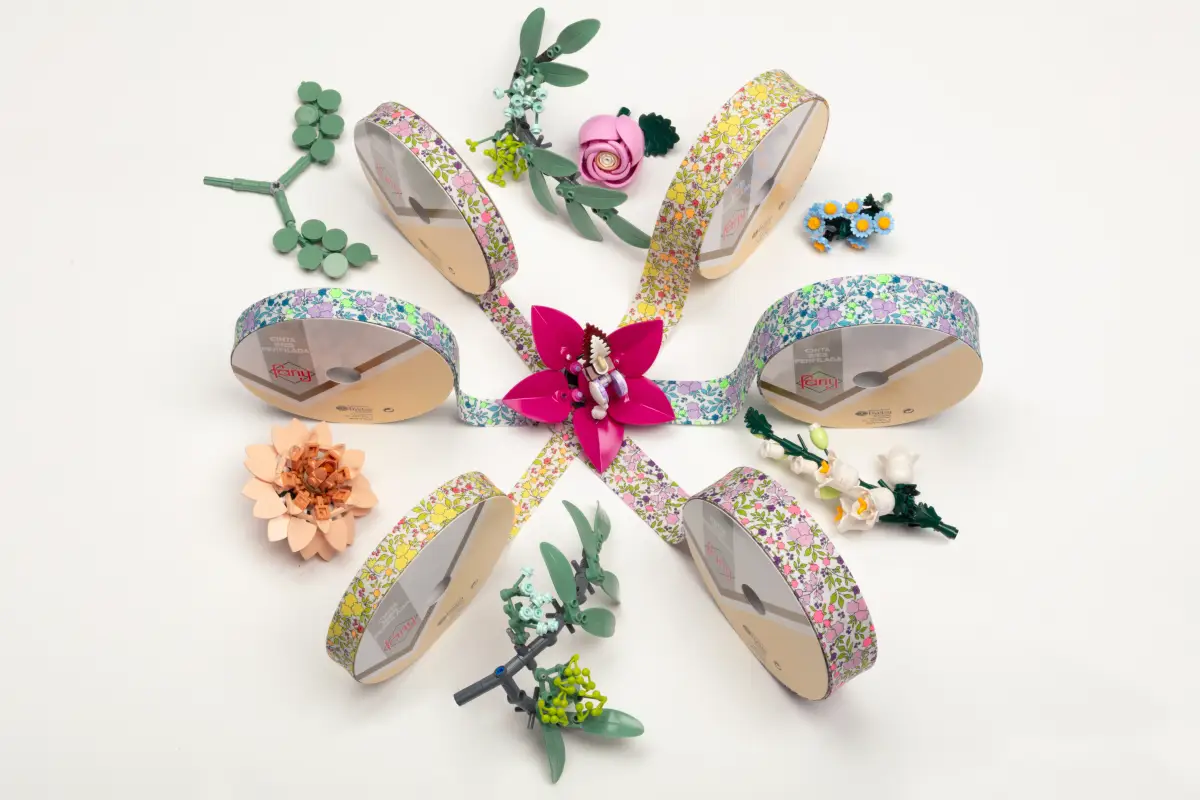
Beyond material, each type of bias offers its own range of colours and finishes. Satin exceeds eighty colours; printed brings together more than 250 designs, many in organic cotton; gingham plays with checks, mini-checks and stripes; and lamé adds metallic shines. Added to this is the possibility of customisation: at Byetsa we can adapt colours and prints to each customer’s needs, something especially useful for brands seeking a differentiated product.
Byetsa, manufacturer of all types of bias binding since 1969
At Byetsa we manufacture the entire range of types of bias binding—cotton, cotton-polyester (Batiste), satin, lamé, gingham, elastic and printed—with over half a century of experience. We control the process from start to finish, which allows us to guarantee the quality of each type and offer advice to choose the most suitable for each project, both in haberdashery and in industry.
How each type of bias binding is manufactured
All types of bias binding start from the same principle: cutting the fabric diagonally, at 45° to the grain, to take advantage of its elasticity.
From there, each type is made with its specific fabric —cotton, polyester, blends, lamé, or elastic fabrics— and cut into very narrow strips, with the fibres always at 45° to the length of the strip.
At Byetsa, this cut is studied to the millimetre, which guarantees uniform width and a homogeneous finish for each type, both in small orders and large series.
The best-selling types of bias
Although the choice depends on the project, some types concentrate most of the demand. Cotton bias and Batiste lead for their versatility and price; satin stands out in fashion for its shine and wide colour range; and gingham and printed are the favourites in childcare products and home for their decorative character. Keeping these types in mind helps to guide both purchasing and a shop’s stock.
Tips for combining types of bias
Combining different types of bias in the same project is a widely used resource in garment-making and decoration. A common trick is to finish with a plain cotton bias and reserve a gingham or printed for the detail you want to highlight, or play with the contrast between a shiny satin and a matte fabric. When mixing types it is advisable to ensure they share a similar washing care, so that the whole ages uniformly, and maintain a colour coherence that gives a sense of considered finish.
Bias, a staple that never goes out of fashion
Whatever the type, bias binding is one of those products that remains current decade after decade. Materials and prints evolve and new colour ranges appear, but the function and essence of bias remain. That stability, combined with the variety of types available, is the reason it continues to be a must-have both in home sewing and in professional garment-making.
Frequently asked questions about types of bias binding
Don’t know what type of bias binding to choose? Write to us at info@byetsa.es or call us on 93 874 40 98 and we will advise you according to your project.
We make what you need
Looking for bias binding for your production or your haberdashery?
Frequently asked questions
01How many types of bias binding are there?
The main types of bias binding are differentiated by material: cotton-polyester (Batiste), 100% cotton, satin, lamé, gingham, elastic and printed. Each has a different composition and ideal use.
02What type of bias is best for children's clothing?
For children’s clothing and accessories, 100% cotton bias, gingham and printed are mainly used, many of them in organic cotton, for their softness, colours and pleasant feel against the skin.
03What is the difference between cotton bias and satin bias?
Cotton bias is natural, versatile and for daily use; satin bias is 100% polyester, with a smooth surface, silky feel and shine, ideal for fashion and elegant finishes such as collars and cuffs.
04What is Batiste bias?
Batiste is Byetsa’s cotton-polyester bias (50% / 50%). It stands out for its silky and soft feel thanks to the use of non-textured polyester threads, and is very versatile for garment-making and decoration.
05What type of bias is used for elastic garments?
Elastic bias, composed of 97% cotton and 3% elastane, is the one indicated for garments that need to give, as it offers more comfort and flexibility than lycras and synthetics.
06What type of bias do I choose according to the project?
For daily use, cotton or Batiste; for fashion and elegant details, satin; for children’s garments and home, gingham and printed; for festive details, lamé; and for elastic garments, elastic bias.
Related articles

What is bias binding tape used for?
Bias binding tape is a strip of fabric cut at 45° that finishes, reinforces and decorates edges. Find out what it is, what it’s used for and its main uses by sector.
Read article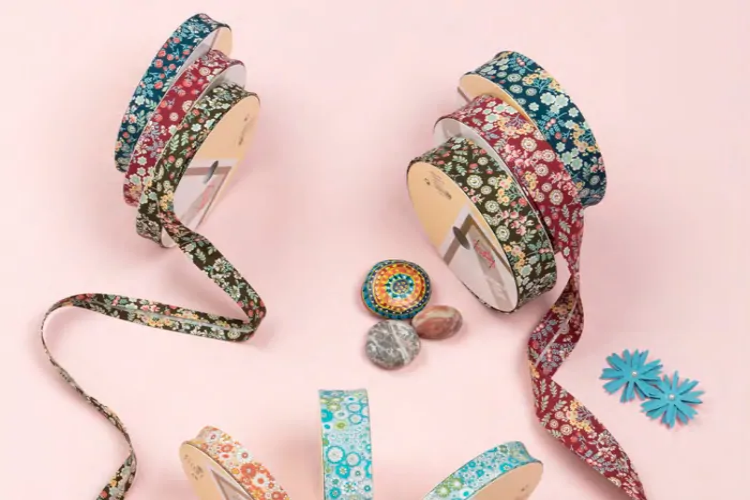
What is bias binding and what decorative uses does it have?
Bias binding is a strip of fabric cut on the diagonal that finishes and decorates edges. Discover what it is, what it means, and its decorative and creative uses.
Read article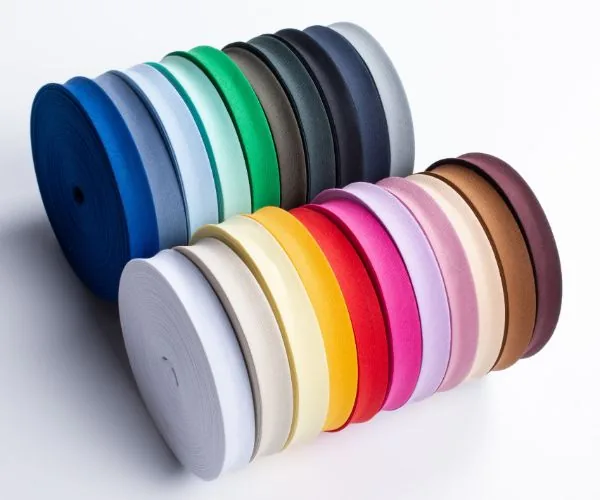
Bias binding widths: what sizes are available and which one to choose
Bias binding is mainly made in widths of 12, 18, 25 and 30 mm. Find out which size to choose depending on your project and when to order a custom width.
Read articleDo you have a question about bias binding?
If you have any questions about our products or need personalised advice, please do not hesitate to contact our team. We are here to help you in any way we can. Write to us!
- Phone93 874 40 98
- Emailinfo@byetsa.es
- AddressC/ Artés, 4 · Pol. Ind. Els Dolors · 08243 Manresa (Barcelona)
Tell us what you need
We will reply with the right reference, format and width for your production.