Elastic Bias Tapes: Applications in Sportswear and Lingerie
Byetsa elastic bias tapes: 97% cotton and 3% elastane. Applications in sportswear, lingerie, knitwear, and activewear. Industrial and haberdashery formats.
 By Francesco ZagnoniPublished on Updated on 13 min read
Quick answer
Elastic bias bindings are used to finish the edges of knitted garments and garments containing elastane, such as leggings, tops, bras or swimsuits. Byetsa’s combine bias cutting with 97% cotton and 3% elastane, and stretch by between 20% and 40% while recovering their shape.
Key points
- Composition of 97% cotton and 3% elastane with a true 45° bias cut: structural and mechanical elasticity at the same time.
- It stretches by between 20% and 40% and recovers its shape, moving with the knitted fabric without breaking.
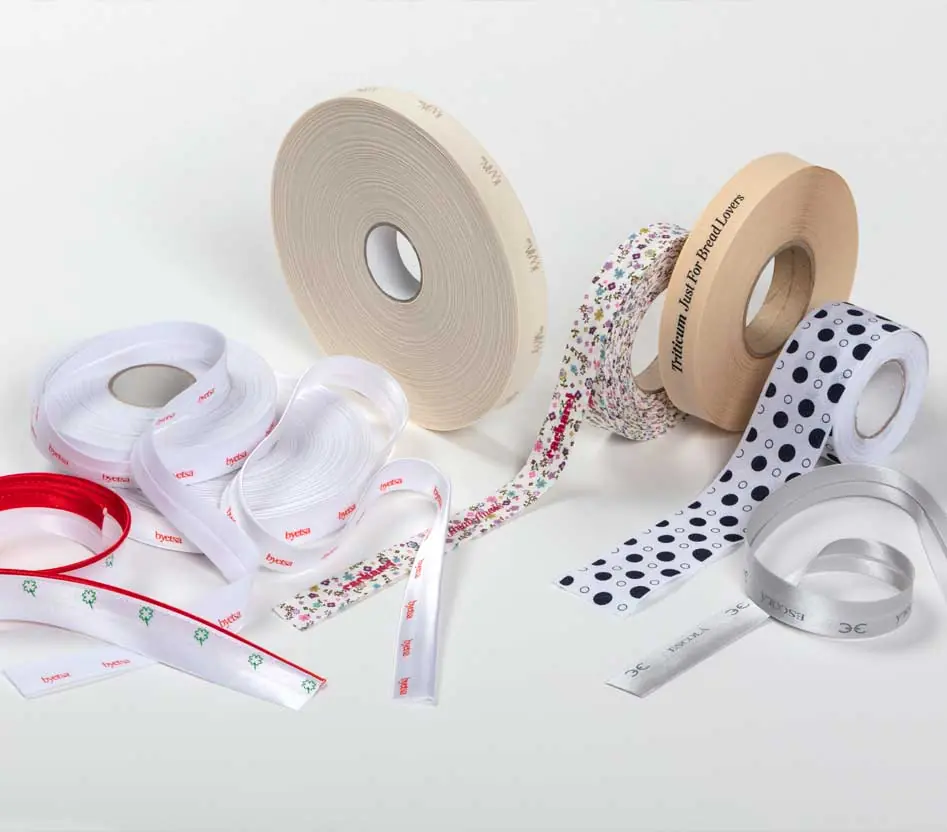
- Formats: 18 and 30 mm single-fold bias binding, 10 mm elastic piping and industrial flat cut bias.
- Key uses: activewear, lingerie, swimwear, children’s knitwear, medical textiles and men’s underwear.
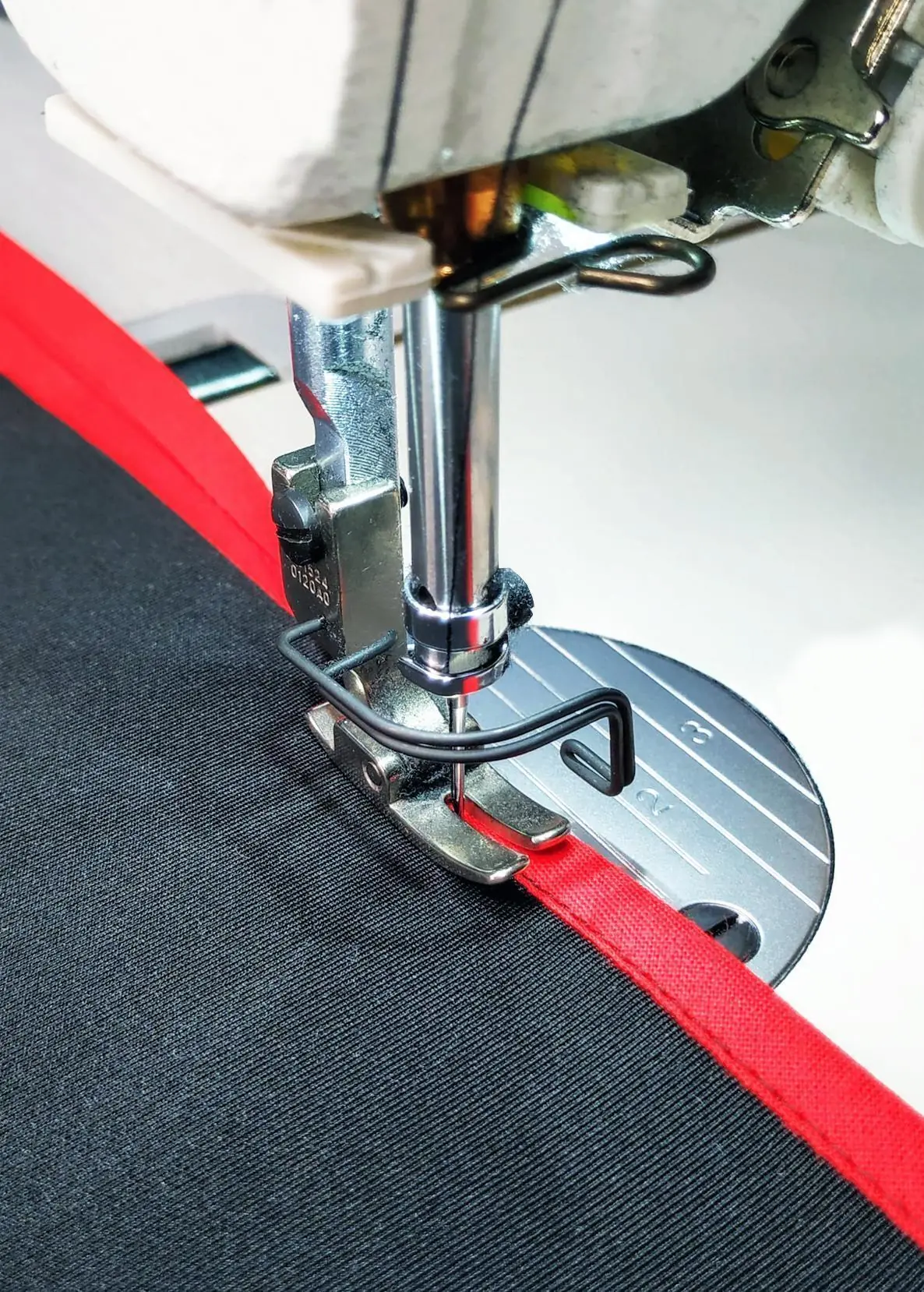
- Sew it with zigzag, stretch stitch or overlock and a ballpoint or stretch 75/11 or 80/12 needle, never with a straight stitch.
The manufacturing of elastic garments poses a technical challenge that many textile professionals know well: edge finishing. When the base fabric is knitted, incorporates elastane, or is designed to stretch with body movement, applying a conventional bias tape creates tension, wrinkles, and premature breakage that compromise both the functionality and aesthetics of the finished product.
Elastic bias tape exists precisely to solve this problem, and its role in sectors such as sportswear, lingerie, underwear, and activewear is as essential as it is discreet.
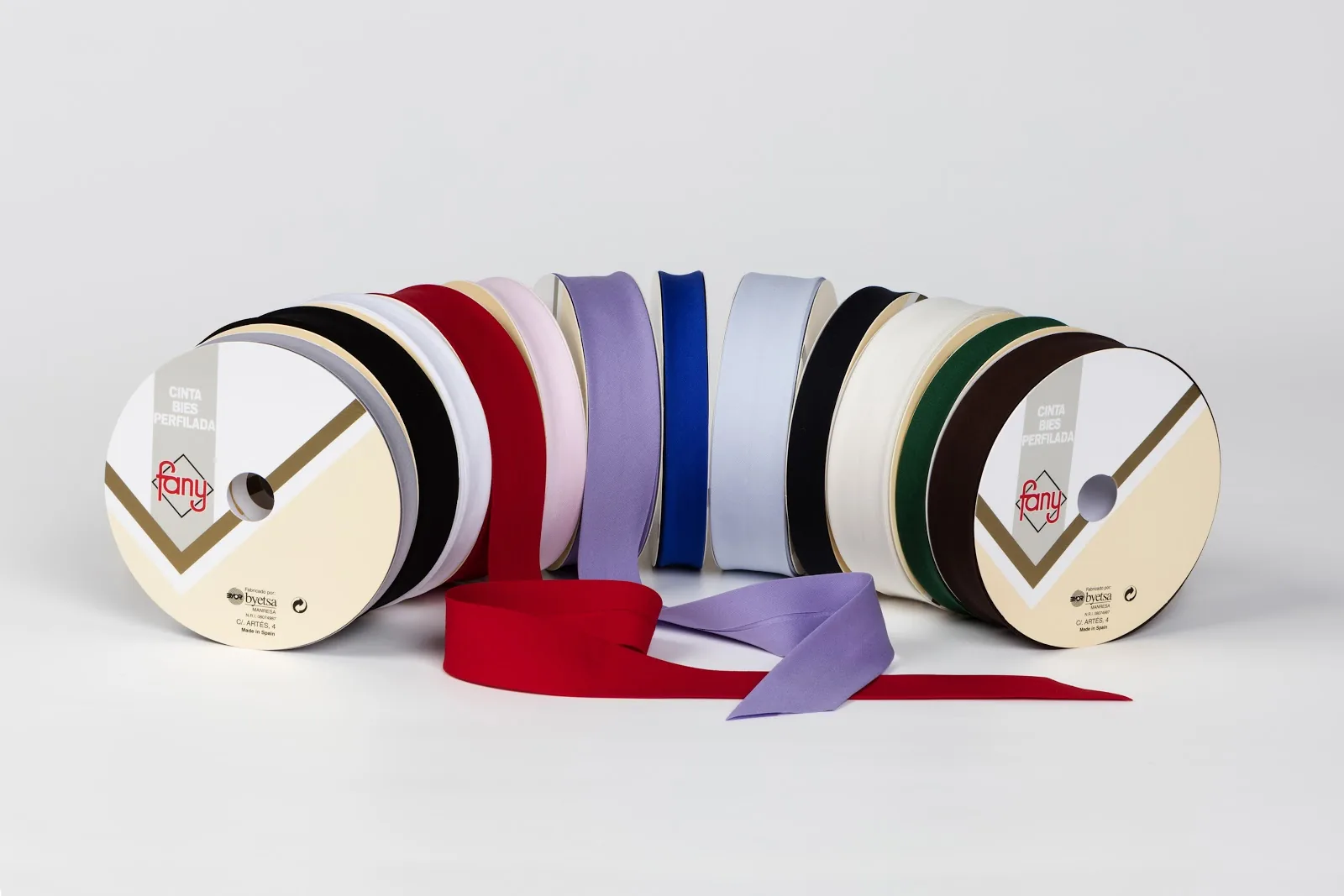
Byetsa, a European manufacturer of bias tapes since 1969, includes in its catalogue a range of elastic bias tapes (Stretch) made of 97% cotton and 3% elastane, available as single-fold bias and elastic piping, with more than twenty colours and both haberdashery and industrial presentations.
Its combination of a true bias cut with elastomeric fibre makes it the essential technical reference for any workshop, manufacturer, or brand working with knitted fabrics and garments that need to move with the body.
Throughout this article, we analyse what makes an elastic bias tape different, what composition and formats Byetsa offers, in which sectors and applications it is irreplaceable, and what technical criteria a professional should consider when working with it and purchasing it wholesale.
What is elastic bias tape and how does it differ from conventional bias?
Any bias tape, by definition, is cut diagonally at 45° to the grain of the fabric. This cut gives it a natural elasticity that allows it to adapt to curves and shapes without wrinkling.
However, that inherent elasticity of the bias cut has a limit: when the base fabric is a knit with elastane (such as jersey, Lycra, or sports interlock), the flexibility of conventional bias is insufficient. The base fabric stretches, but the finish does not follow, causing tightness, seam breakage, and loss of comfort.
Elastic bias tape adds an elastomeric component (elastane) to the true bias cut, allowing the tape to stretch between 20% and 40% relative to its length at rest and recover its original shape without deforming. This double elasticity (structural due to the bias cut plus mechanical due to the elastane) makes elastic bias the only product capable of finishing edges on elastic garments while maintaining the functionality, silhouette, and durability of the finish.
Technical composition of Byetsa elastic bias: 97% cotton, 3% elastane
Byetsa's range of elastic bias tapes is manufactured with a blend of 97% cotton and 3% elastane. This proportion is carefully calculated to offer the best balance between comfort, elasticity, and durability.
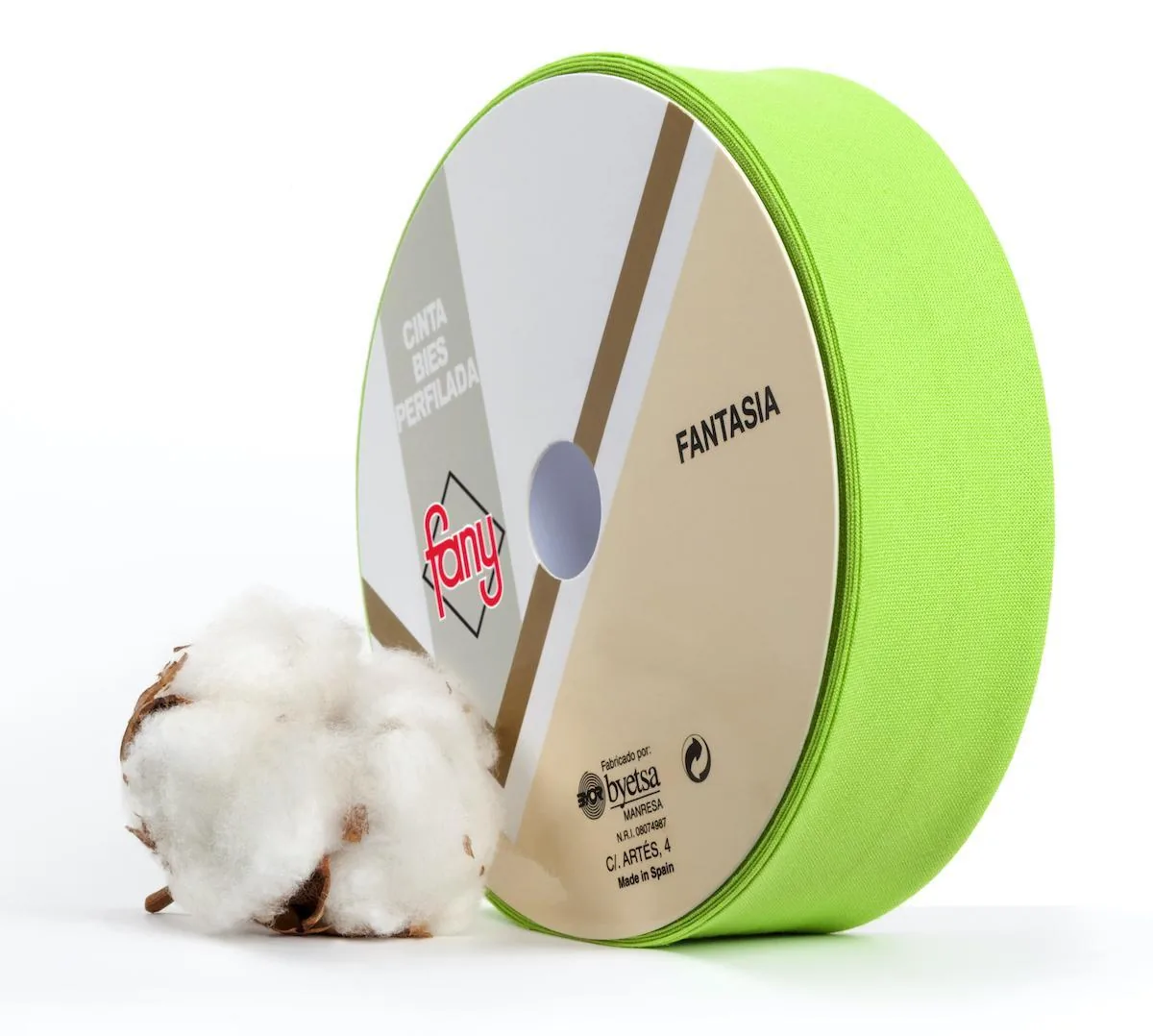
Cotton provides the soft touch, breathability, and compatibility with sensitive skin required by sectors such as lingerie, underwear, and knitted children's fashion. Elastane, for its part, provides the stretching capacity and dimensional recovery that distinguishes this reference from any rigid bias in the catalogue.
The 3% elastane may seem like a small proportion, but it is enough to completely transform the mechanical behaviour of the tape. That small amount of elastomeric fibre, combined with the 45° bias cut, generates a real elasticity that allows the bias to accompany the stretching of the base fabric without breaking, deforming, or losing its recovery capacity even after hundreds of cycles of use and washing.
It is a formulation proven in industrial production and validated by sportswear, lingerie, and knitwear manufacturers throughout Europe.
True bias cut plus elasticity: why this combination is irreplaceable in knitwear
The concept of true bias cut is an important technical differentiator. Some manufacturers offer elastic tapes cut on the grain (straight), which stretch thanks to the elastane but do not possess the structural flexibility of the 45° cut.
The result is a tape that stretches longitudinally but does not adapt well to tight curves such as armholes, necklines, panty contours, or bra support lines. Byetsa elastic bias, by combining a true bias cut with elastane, offers a double dimension of flexibility that makes it irreplaceable in the manufacturing of knitwear and elastic garments.
This combination is especially critical in sportswear and lingerie, where patterns include pronounced curves, deep necklines, wide armholes, and anatomical contours that a rigid bias or a straight elastic simply cannot follow cleanly.
The Byetsa elastic bias adapts to all these shapes without forming folds, waving, or losing the regularity of its profile, offering a professional finish that maintains its integrity throughout the useful life of the garment.
Furthermore, the tensile strength of an elastic bias is much higher than that of a conventional bias subjected to tension. A rigid cotton bias applied to a knitted fabric will break during the first few wears because it cannot accompany the stretching of the base fabric. The elastic bias, on the other hand, yields and recovers without being damaged, which translates into a significantly longer useful life for the finish and, by extension, the entire garment.
Available formats: single-fold bias, elastic piping, and industrial presentations
Byetsa offers its elastic bias range in two main formats, each designed for a different application and customer profile. The following table summarises the references, widths, and presentations available:
| Format | Description | Industrial Ref. | Haberdashery Ref. | Presentation |
|---|---|---|---|---|
| Single-fold bias 18 mm | Tape with side folds, width 18 mm | P.0227100 | 0727100.018mm | 25 m roll |
| Single-fold bias 30 mm | Tape with side folds, width 30 mm | P.0227100 | 0727100.030mm | 25 m roll |
| Elastic piping 10 mm | Elastic covered cord, width 10 mm | P.0627165 | 0727115.010mm | 25 m roll |
| Flat bias | Unfolded flat tape, width as per price list | P.0027110 | — | Industrial |
Single-fold bias is the format most in demand by garment workshops and knitwear manufacturers, as it arrives with pre-made side folds and is ready to be applied to the edge of the fabric.
The 18 mm width is the standard for fine finishes on t-shirt collars, armholes, necklines, and lingerie edges, while the 30 mm width is reserved for more visible finishes or applications where a wider finish with greater presence is sought.
Elastic piping incorporates an inner cord covered with the same elastic tape. It is the ideal solution for raised seams on elastic garments: bra necklines, panty edges, decorative seams on sports tops, and any application where you want to combine the decorative line of the piping with the elasticity of the base fabric.
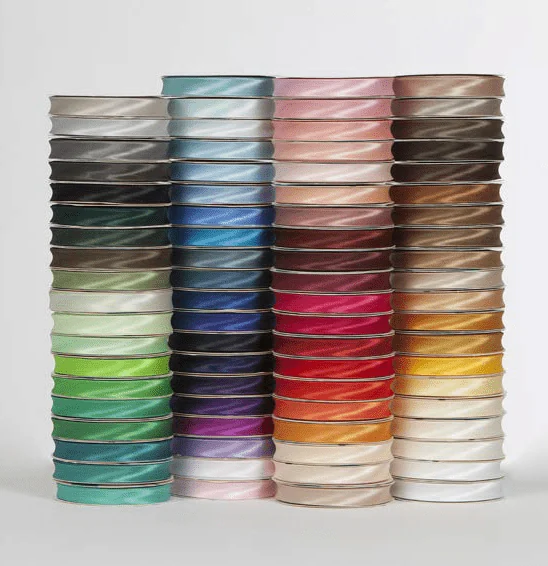
Regarding the colour chart, Byetsa’s elastic range offers more than twenty colours covering the complete palette of basics for underwear and sportswear: white, ecru, black, grey, navy blue, red, pink, fuchsia, green, yellow, brown, beige, orange, lilac, and sky blue, among others. For large manufacturers, Byetsa offers the possibility of special colours upon request.
Applications of elastic bias tape in the main textile sectors
Elastic bias tape is a niche product, but its presence is absolutely structural in certain segments of the textile industry. It is not a decorative accessory: it is a functional component without which the garment cannot be finished correctly.
The sectors that consume it do so in significant volumes and on a regular basis, which makes it a mandatory stock reference for any distributor serving knitwear, lingerie, or activewear manufacturers.
Sportswear and activewear: leggings, tops, kits, and technical clothing
The activewear and sportswear sector is one of the largest consumers of elastic bias tape at an industrial level. Every sports garment made with elastic fabric needs its edges to be finished with a material that accompanies the stretching of the fabric without limiting the athlete’s movement or compromising the durability of the finish after frequent washes.
The specific applications in this sector are very broad. In leggings and sports tights, elastic bias is used to finish the waistband, the leg hem and, in some designs, decorative side seams.
In sports tops and bras, it appears in necklines, armholes, lower support bands, and strap edges. In technical t-shirts and knitted sweatshirts, it finishes collars, cuffs, and hems. In sports shorts and trousers, it outlines elastic waistbands and side slits.
Manufacturers of sports kits (football, basketball, athletics, cycling, swimming) also turn to elastic bias to finish edges on shirts, trousers, jerseys, and competition swimsuits.
In this context, resistance to repeated traction, colour stability after industrial washes, and dimensional recovery capacity are non-negotiable technical requirements.
Lingerie, underwear, and swimwear: finishes that adapt to the body
While sportswear consumes volume, lingerie and underwear demand precision. In this sector, elastic bias tape is a critical component because it comes into direct contact with the skin in sensitive areas of the body and must offer an impeccable touch, without rigid edges, without seams that leave marks, and without elements that cause chafing or irritation.
- In panties and thongs, elastic bias finishes the leg contours, the waistband and, in some models, the edges of the back panel. In bras, it appears in the neckline, cups, side bands, straps, and the lower support band.
- In bodysuits, undershirts, and slips, it outlines necklines, armholes, and hems. In all these cases, the bias must yield when the garment is put on and taken off, adapt to the anatomical curves of the body without deforming, and maintain a clean and uniform profile wash after wash.
- In swimwear (bikinis, one-piece swimsuits, swim shorts), elastic bias fulfils the same function in an even more demanding environment: exposure to chlorine, salt water, solar radiation, and frequent wet-dry cycles. The cotton-elastane composition of Byetsa bias withstands these conditions while maintaining its elasticity and colour, provided that maintenance instructions are followed.
Other sectors: knitted children's fashion, medical textiles, and loungewear
Beyond sports and lingerie, elastic bias tape is an essential technical resource in several additional sectors where the elasticity of the finish determines the functionality of the final product. These are the main areas of application:
- Knitted children's fashion: baby bodysuits, tights, undershirts, children’s tracksuits, knitted pyjamas, and rompers. The elasticity of the bias makes it easier to dress and undress the child, and the soft touch of 97% cotton is compatible with sensitive skin.
- Medical and orthopaedic textiles: knee pads, ankle braces, elbow pads, wristbands, lumbar belts, compression bands, and neoprene bandages. In these applications, the controlled elasticity of the bias is part of the product's functionality and contributes to support and therapeutic compression.
- Loungewear and homewear: knitted pyjamas, elastic nightgowns, light robes, and yoga and Pilates clothing. Garments designed for comfort where the finish must be as comfortable as the base fabric.
- Men's underwear: underpants, boxers, briefs, and undershirts. A segment with large industrial volumes where elastic bias is a structural consumable that is purchased on a recurring basis.
- Elastic textile accessories: scrunchies, headbands, hair bands, sleep masks, fabric watch straps, and various elastic accessories where the bias provides the necessary finish and elasticity.
How to work with elastic bias tape and professional purchasing criteria
Working with elastic bias tape requires knowing some technical particularities that differentiate it from conventional bias. The elasticity of the material requires adaptations in sewing, machinery, and subsequent garment maintenance. Mastering these aspects is what separates a professional finish from a mediocre one.
Sewing techniques, recommended needles, and elastane maintenance
The first rule when sewing elastic bias is never to use a conventional straight stitch. A straight stitch does not yield, so when the garment stretches, the sewing thread will break. Suitable seams for elastic bias are the zigzag stitch, the stretch stitch (available on most domestic and professional machines), and the overlock seam, which is the preferred option in industrial production for its speed and clean finish.
The recommended needle is a ballpoint or stretch type, in gauges 75/11 or 80/12. This type of needle penetrates between the threads of the fabric without cutting them, avoiding damage to the elastane fibres and preventing runs or weakening in the tape. Using a sharp-pointed universal needle can cause micro-perforations in the elastane which, with use and washing, will become premature breakage points.
Regarding maintenance, garments finished with elastic bias should be machine washed at a maximum of 30°C, on a normal or delicate programme. It is advisable to avoid excessive use of fabric softener, as the chemical agents in the softener can degrade the elastane over time, reducing its recovery capacity. Ideal drying is air drying; if a dryer is used, it should be at a low temperature. Ironing should be done at a moderate temperature, avoiding applying direct steam to the elastic areas.
Regarding the durability of elastane, elastomeric fibres have a useful life of several years under normal conditions of use and maintenance. Factors such as excessive washing temperature, concentrated chlorine, prolonged solar exposure, and the use of aggressive softeners accelerate the degradation of elastane. Informing the final customer about the correct care instructions is a recommended practice that protects the perceived quality of the product and reduces returns.
We make what you need
Looking for bias binding for your production or your haberdashery?
Frequently asked questions
01How does elastic bias differ from cotton or batiste bias?
The fundamental difference is the stretching capacity. A 100% cotton or batiste (50% polyester, 50% cotton) bias is a rigid product that only possesses the slight flexibility inherent to the 45° bias cut. It is perfect for woven fabrics (fabrics that do not stretch), but it is not suitable for finishing knitted fabrics or garments with elastane. Elastic bias, with its composition of 97% cotton and 3% elastane, stretches between 20% and 40% and recovers its shape, making it essential for sportswear, lingerie, knitwear, and any elastic manufacturing.
02In what widths is the single-fold elastic bias available?
Byetsa’s single-fold elastic bias is offered in two standard widths: 18 mm and 30 mm. The 18 mm width is the most used in lingerie, underwear, sportswear, and fine finishes for collars and armholes in knitted garments. The 30 mm width is used in more visible finishes, waistbands, and applications where a wider finish is sought. Both are sold in 25-metre rolls in haberdashery presentation. In industrial format, the width is adapted according to the price list and customer needs.
03Can elastic bias be used in swimwear?
Yes. Byetsa elastic bias is suitable for swimwear: bikinis, swimsuits, swim shorts, and aquatic accessories. Its composition with elastane withstands exposure to water, chlorine, and salt water, maintaining its elasticity and colour. To maximise durability in this type of application, it is recommended to rinse the garment with fresh water after each use in the pool or sea, and avoid direct drying in the sun for prolonged periods.
04What type of seam does elastic bias need?
Elastic bias requires seams that accompany its elasticity. The recommended options are: zigzag stitch, stretch stitch, or overlock seam. A conventional straight stitch should never be used, as it does not yield and breaks when the garment is stretched. The recommended needle is a ballpoint or stretch type, gauge 75/11 or 80/12, which penetrates between the threads without cutting the elastane fibres.
05Can elastic bias be ordered in industrial format for large series?
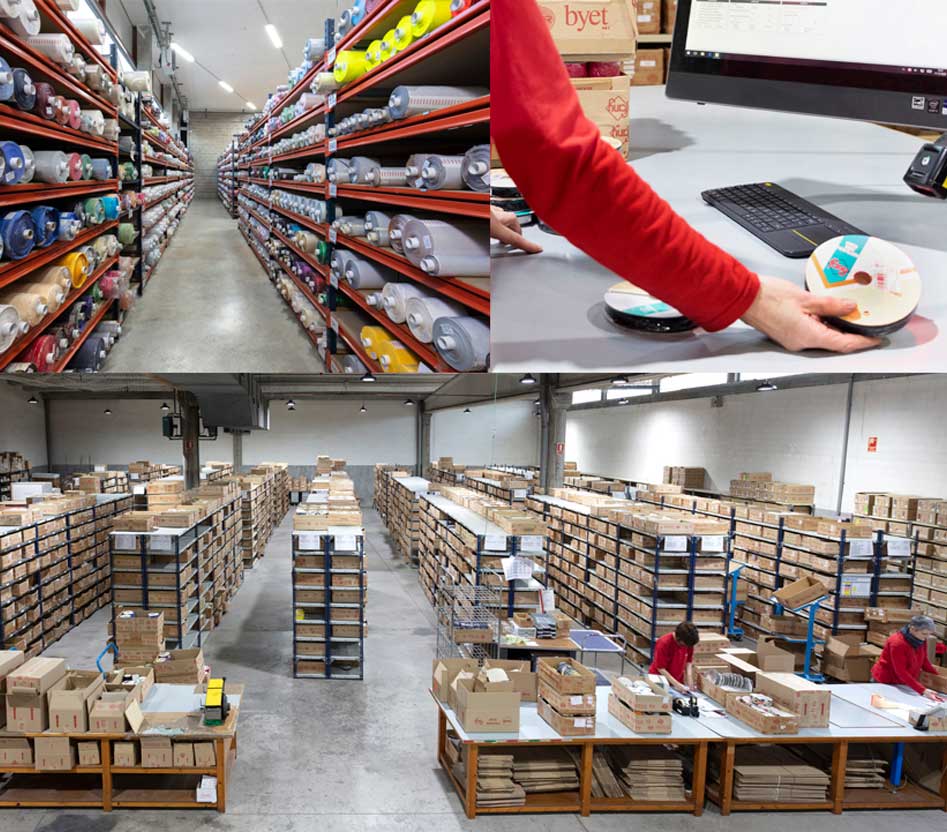
Yes. Byetsa offers its entire range of elastic bias in industrial presentation with flat cut bias (ref. P.0027110), single-fold bias (ref. P.0227100), and elastic piping (ref. P.0627165). Industrial formats are designed for garment manufacturers, activewear brands, lingerie companies, and any customer who needs constant volume with permanent stock in Europe. For large orders, Byetsa also offers the possibility of special colours upon request.
06
Related articles
Vichy Bias Tape Catalogue: the timeless classic for children’s fashion and home décor
Discover the Byetsa Vichy bias tape catalogue: three patterns, 15+ colours, industrial and haberdashery formats. Ideal for children’s fashion, home décor and childcare products.
Read article
Faux leather bias tape: applications in leather goods and accessories
Discover Byetsa faux leather bias tape: technical composition, industrial and haberdashery formats, and applications in leather goods, footwear, and accessories.
Read article
Cotton vs. Polyester Bias Tape: Technical Guide for Industrial Garment Manufacturing
Cotton or polyester bias tape? We analyse technical differences, properties and industrial performance. Choose the best tape for your garments with Byetsa.
Read articleDo you have a question about bias binding?
If you have any questions about our products or need personalised advice, please do not hesitate to contact our team. We are here to help you in any way we can. Write to us!
- Phone93 874 40 98
- Emailinfo@byetsa.es
- AddressC/ Artés, 4 · Pol. Ind. Els Dolors · 08243 Manresa (Barcelona)
Tell us what you need
We will reply with the right reference, format and width for your production.