What is bias binding tape used for?
Bias binding tape is a strip of fabric cut at 45° that finishes, reinforces and decorates edges. Find out what it is, what it’s used for and its main uses by sector.
 By Francesco ZagnoniPublished on Updated on 8 min read
Quick answer
Bias binding tape is a strip of fabric cut at 45° that’s used to finish, reinforce and decorate the edges of a sewn item. In this guide you’ll see what it is, what it’s used for and its uses by sector—fashion, home, baby products, industry and packaging—as well as what bias in sewing is.
Key points
- Three functions: finishing edges so they do not fray, reinforcing areas under strain and decorating with colour or contrast.
- Sectors: fashion, home textiles, babywear, industry (upholstery, footwear, automotive, protective equipment) and packaging.
- “Sesgo” is another Spanish term for bias: the diagonal of the fabric, where the cloth has the most stretch.
- Quality depends on composition, uniformity of the cut, colour fastness, the folding finish and behaviour in the wash.
- Byetsa manufactures made-to-measure bias binding from 6 mm up to the full piece, with its Fany and Byor lines.
What bias binding tape is and why it’s so common
Bias binding tape is a strip of fabric cut at a 45° angle to the grain and folded along its edges, used to finish, reinforce and decorate the edges of a sewn item.
Thanks to that diagonal cut—the bias—it adapts easily to both straight lines and curves, something a strip cut on the grain can’t do. That’s why it’s used in fashion, home textiles, baby products, industry and packaging, both for its technical function and its decorative finish.
The perfection of a fabric lies in its geometry: the warp and weft form a right angle, and the edges usually run parallel to the grain.
Garments are commonly cut along the grain. However, bias breaks this convention. It sits on the diagonal of this rectangle, cut “on the fold” of the fabric, which gives it a series of unique advantages.
What bias binding tape is used for: functions and uses
Bias binding tape serves three main functions in any sewn item: finishing, reinforcing and decorating. When finishing, it covers and protects raw fabric edges—necklines, armholes, hems or the edges of blankets and curtains—prevents fraying and leaves a clean finish on both sides.
When reinforcing, it adds strength to areas with more tension or wear, such as seams, straps and hems. And when decorating, it lets you add colour, contrast or a visible finish that enhances the garment or item. Thanks to the diagonal cut, the tape adapts just as easily to straight lines as to tight curves—something no strip cut on the grain can achieve.
These are the most common uses of bias binding tape by sector:
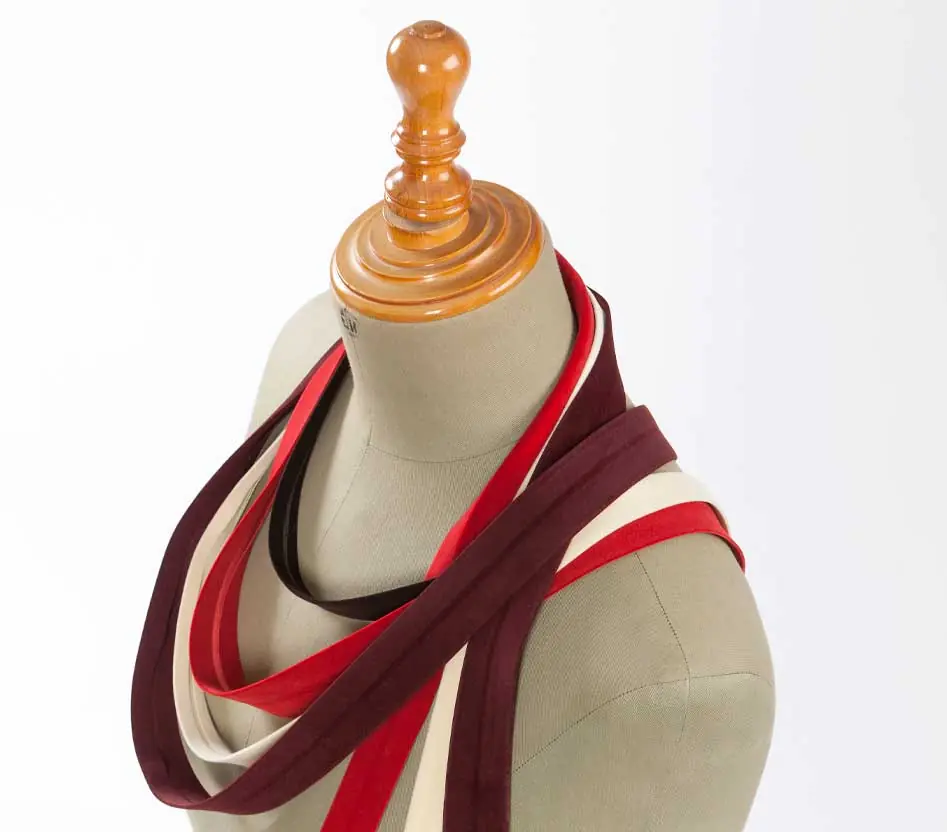
- Fashion and garment making. It finishes necklines, armholes, waistlines and hems, and is used as piping or a decorative trim on all kinds of garments. In haute couture, satin bias offers a drape and sheen that are especially valued.
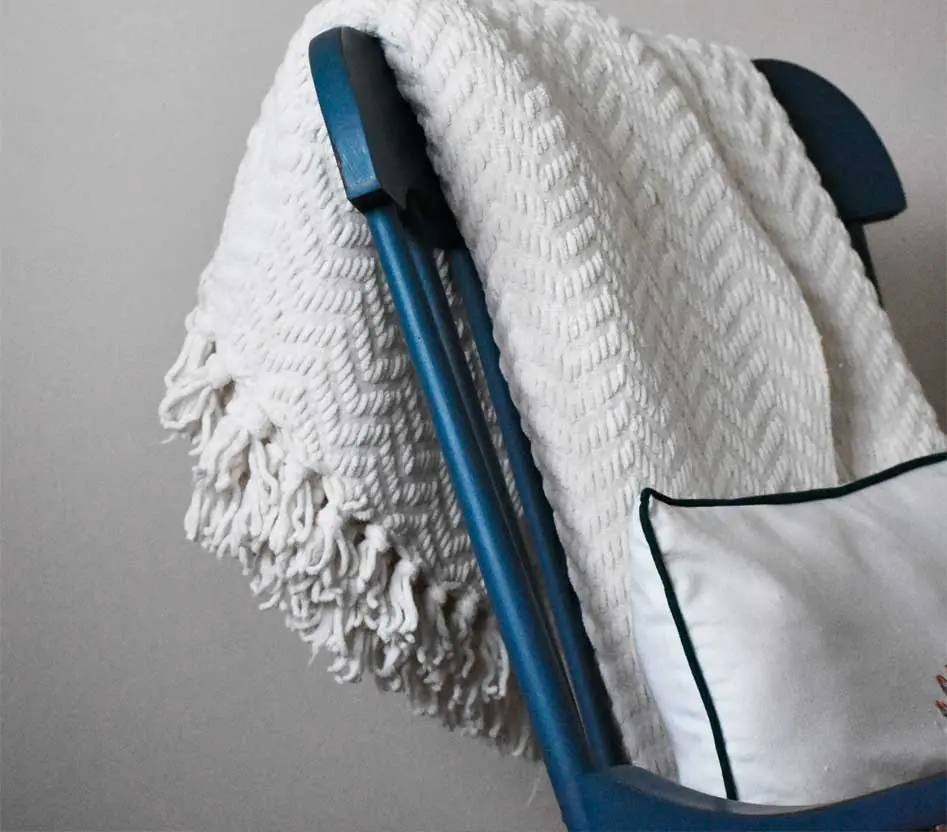
- Home textiles. It reinforces and decorates the edges of curtains, table linens, cushions, bedspreads and bedding, combining durability with a quality finish.
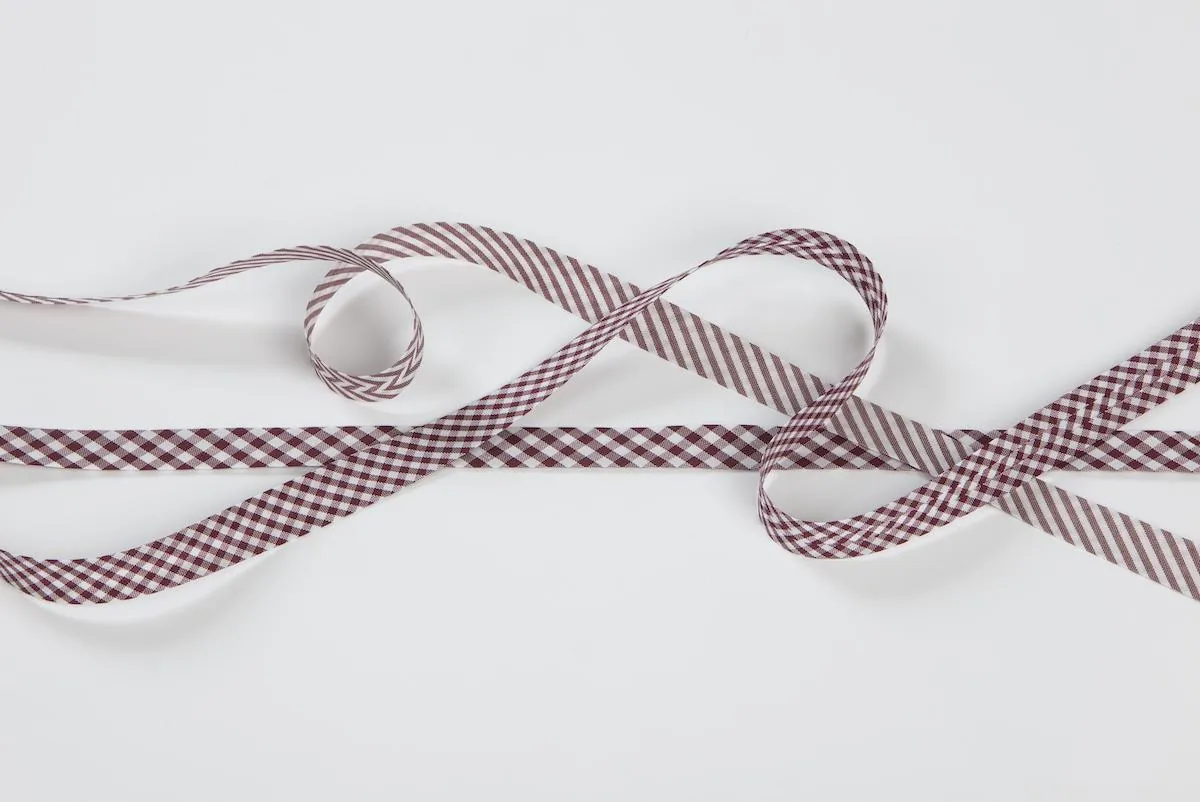
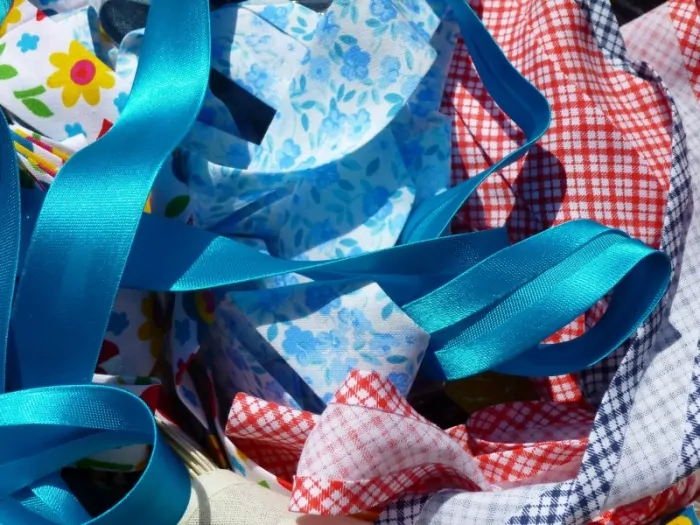
- Baby products. It’s a staple for bibs, sleeping bags, Moses baskets, children’s clothing and accessories, where a soft, safe finish is key; prints and gingham are among the most in-demand here.
- Industry. It’s used to reinforce and protect edges in upholstery, footwear, leather goods, protective equipment, automotive or sports items, where durability is crucial.
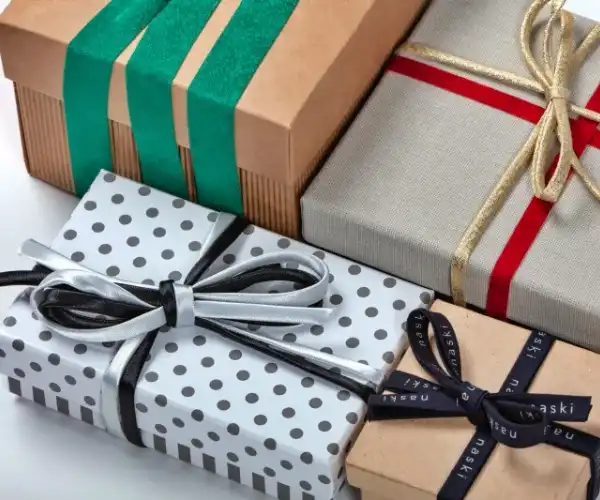
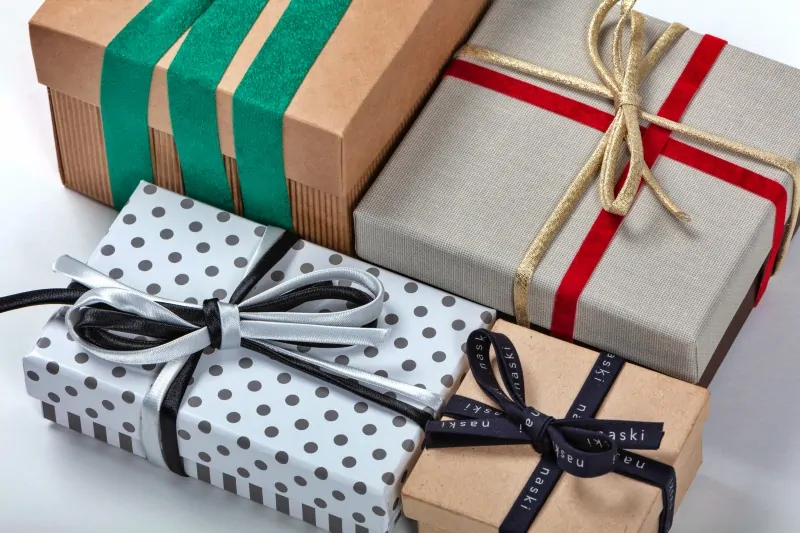
- Packaging. It adds a refined, distinctive finish to boxes, cases and presentations—an increasingly valued detail in premium products.
In all cases, choosing the right width and material—cotton, cotton-polyester, satin or elastic—determines the final result, both in strength and appearance.
What is bias in sewing?
Bias in sewing is another way of referring to the bias: it’s the diagonal direction of the fabric, at 45° to the warp and weft grain.
Sewing or cutting “on the bias” means working along that diagonal, and it’s precisely what gives bias binding tape its stretch and its ability to follow curves without puckering.
In a woven fabric, the warp and weft cross at a right angle and have very little give; that’s why a strip cut on the grain is stiff and tends to crease at corners.
By turning the cut to 45°, however, you use the fabric’s point of maximum stretch: the bias stretches slightly and moulds to both straight lines and tight curves—essential for finishing necklines, armholes, waistlines or rounded edges with a flawless result.
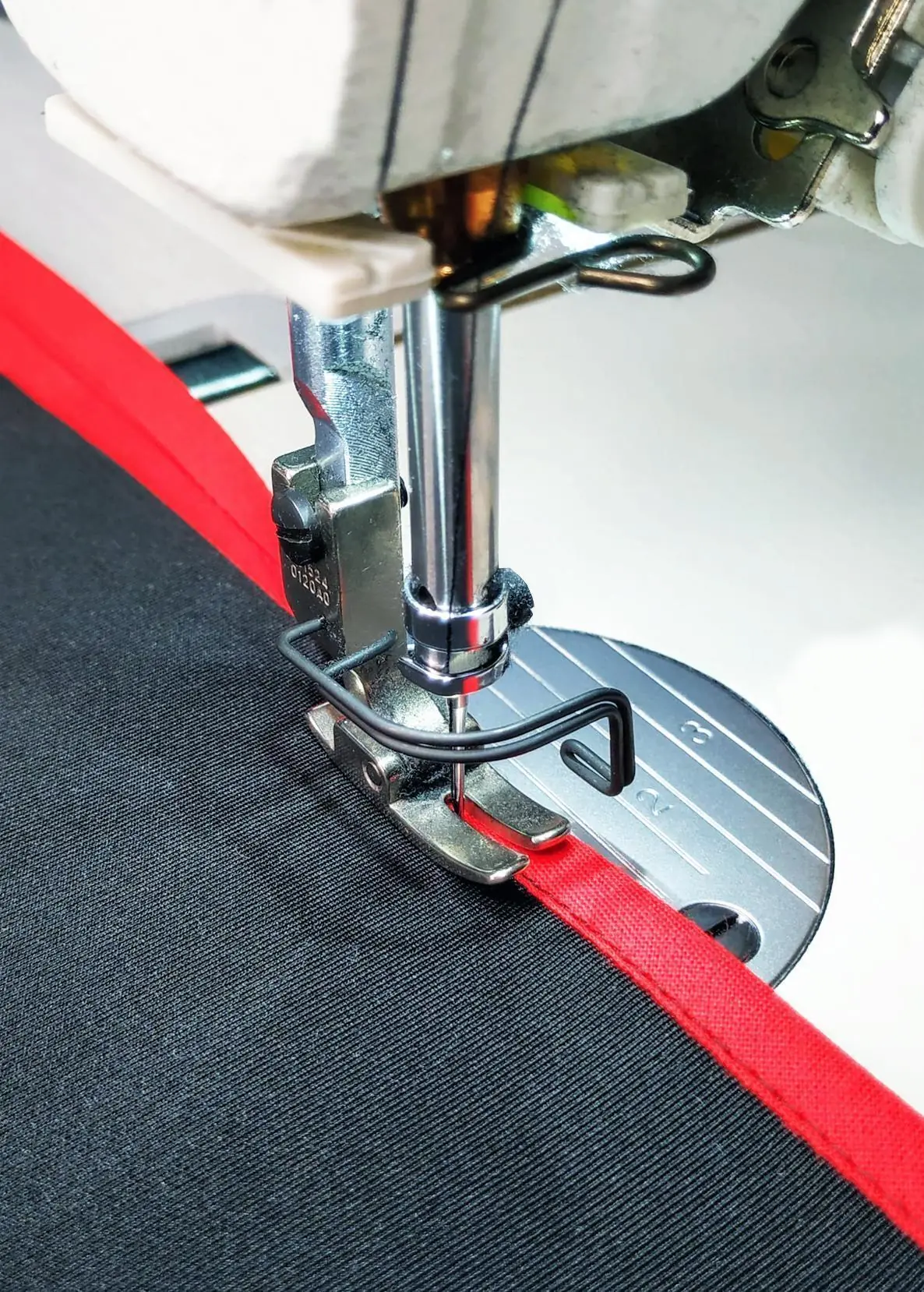
To work bias on a garment, the strip is first secured with pins or basting and then machine topstitched; once sewn, it’s opened out and pressed to achieve a clean, precise finish. The more uniform the angle and width of the strip, the better the final result, especially when binding curves.
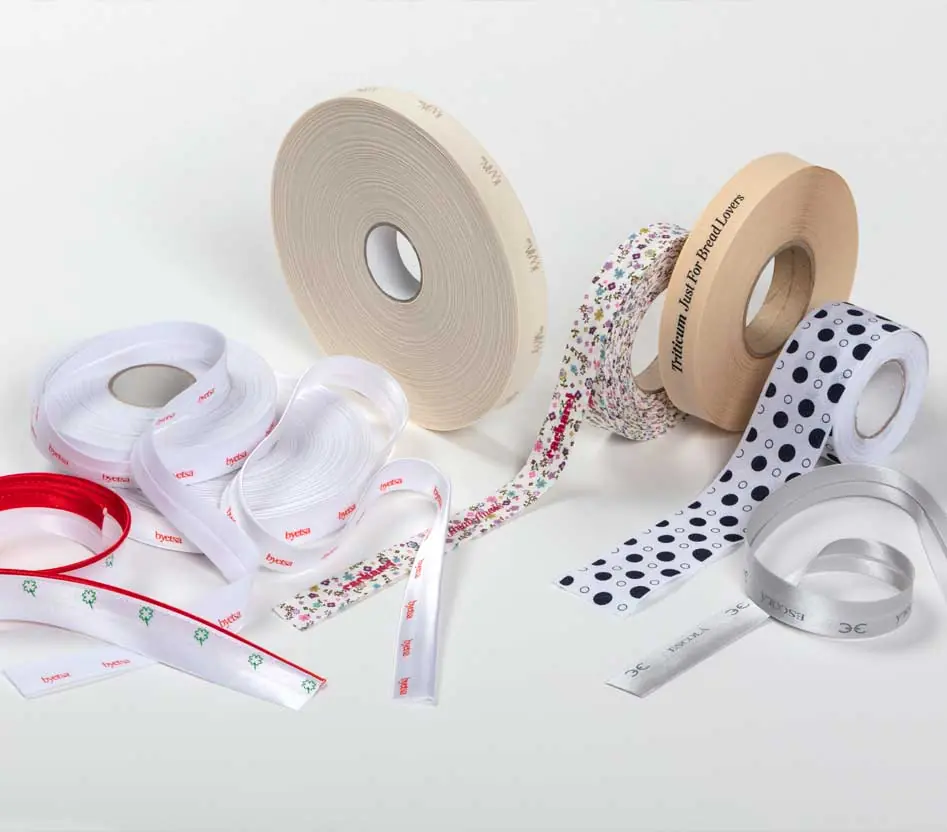
At Byetsa we make our bias binding tapes in very narrow strips, with the fabric fibres always at 45° to the length of the strip. That millimetre-precise cut—from a minimum of 6 mm up to the full piece—is what guarantees the stretch, drape and uniformity needed to apply bias with a professional finish in any sewn item.
What does the quality of bias binding tape depend on?
The quality of bias binding tape doesn’t depend on a single factor, but on several details that make the difference between a finish that lasts and one that’s ruined after the first wash. These are the most important:
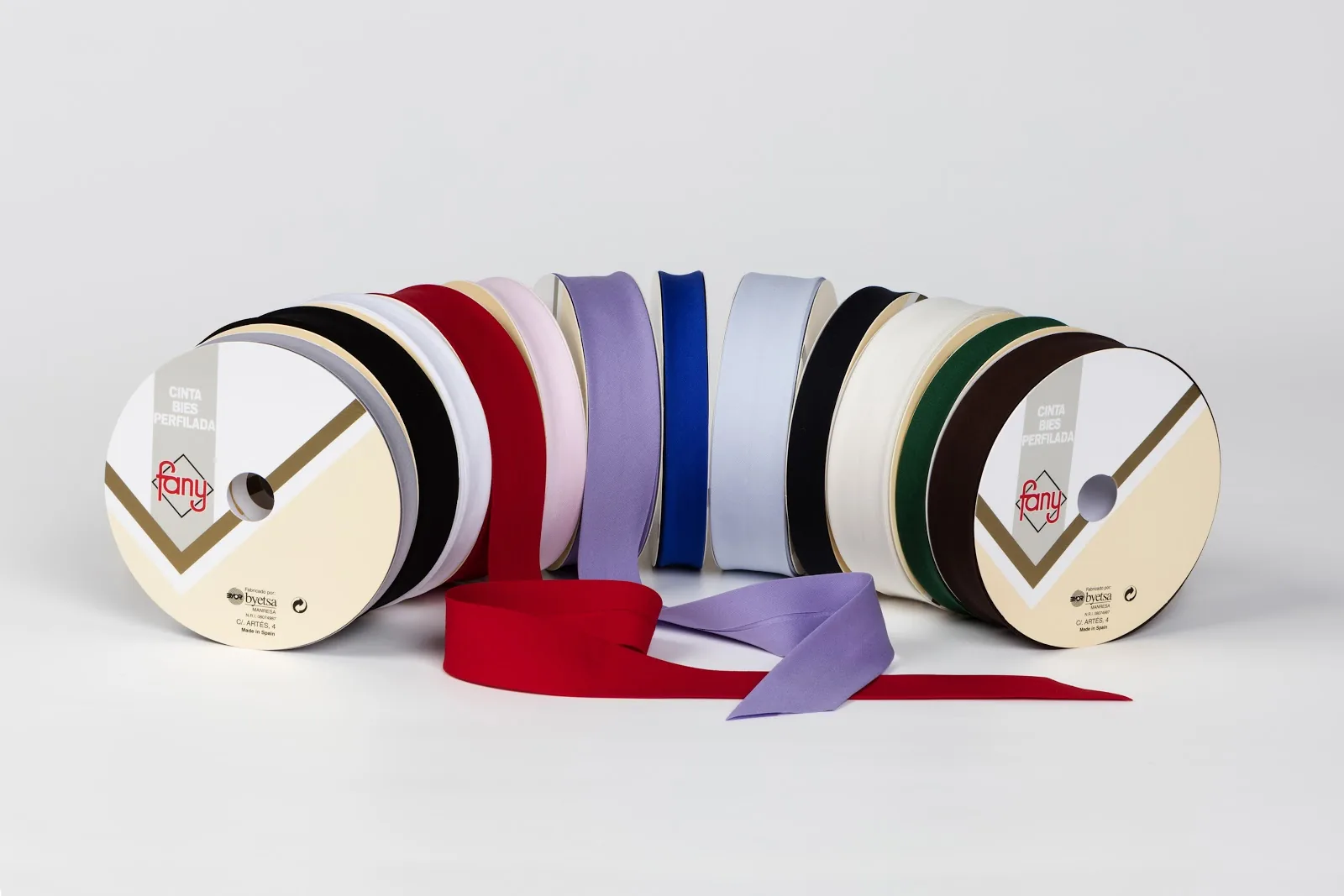
- Fabric composition. The material—cotton, cotton-polyester, satin or elastic—determines the feel, strength and performance of the tape. Each performs best for a specific use: cotton for everyday sewing, satin for fashion finishes, and elastic when extra stretch is needed.
- Cut uniformity. Quality bias maintains a constant 45° angle and a calibrated width along the entire strip. That consistency is what allows a clean fold and application without puckering, especially when binding curves.
- Colour fastness. The fabric must retain its colour and intensity after exposure to light and repeated washing, without fading or transferring dye to the garment.
- Strength and fold finish. Well-folded edges and firm stitching prevent the tape from fraying or losing shape with use.
- Wash performance. Good bias binding tape shrinks as little as possible and keeps its shape—essential for garments and items that are washed frequently.
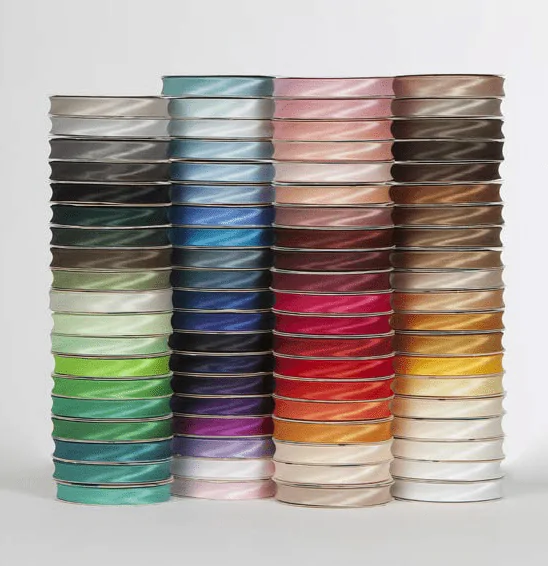
At Byetsa we select quality fabrics designed for each application—including those intended for baby products and direct skin contact—and we control the cut to the millimetre to guarantee a uniform product in every order.
Whatever bias binding tape you’re looking for, you’ll find it at Byetsa
At Byetsa we’ve been manufacturing bias binding tape in all its variants since 1969. Whatever type you need, you’re very likely to find it in our catalogue: we work with two product lines, Fany and Byor, covering the needs of fashion, home, baby products, consumer goods, packaging and industry.
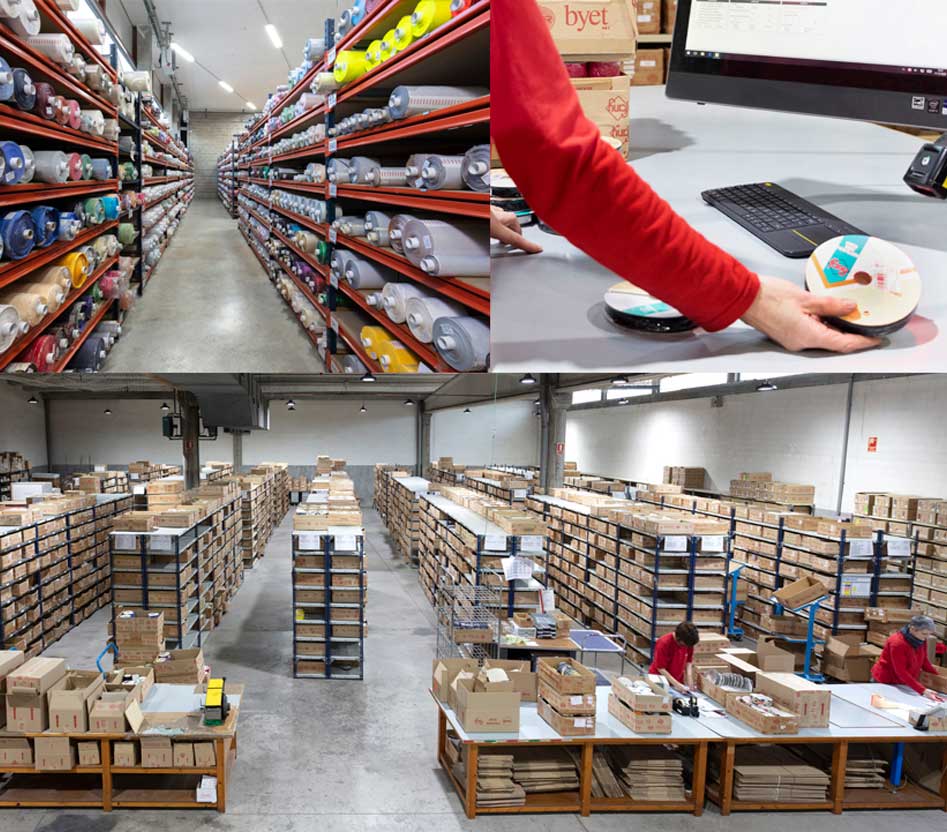
We manufacture to measure, in the material, width and format each application requires, and we control the entire process with our own technology to guarantee a uniform product in every order, both for short runs and large volumes.
If you’re looking for a specific type of bias binding tape or need advice, we’ll be happy to help. Email us at info@byetsa.es or call us on 93 874 40 98.
We make what you need
Looking for bias binding for your production or your haberdashery?
Frequently asked questions
01Is bias the same as bias binding tape?
Yes. “Bias” and “bias binding tape” are two names for the same thing: a strip of fabric cut diagonally, at 45° to the grain. The term “bias” refers to that diagonal direction of the fabric, while “bias binding tape” refers to the product already cut and folded, ready to sew. In some regions and sewing patterns you’ll find one term or the other, but in practice they refer to the same diagonal strip that provides stretch and a good fit around curves.
02What is bias used for in sewing?
In sewing, bias is used to finish, reinforce and decorate the edges of a garment or project. It’s used to bind necklines, armholes, waistlines and hems, but also to reinforce straps, hems and seams under tension, or simply as a decorative colour accent. Because it stretches on the diagonal, it covers both straight and curved edges with a clean finish on both sides—something a strip cut on the grain can’t do without puckering.
03What types of bias binding tape are there?
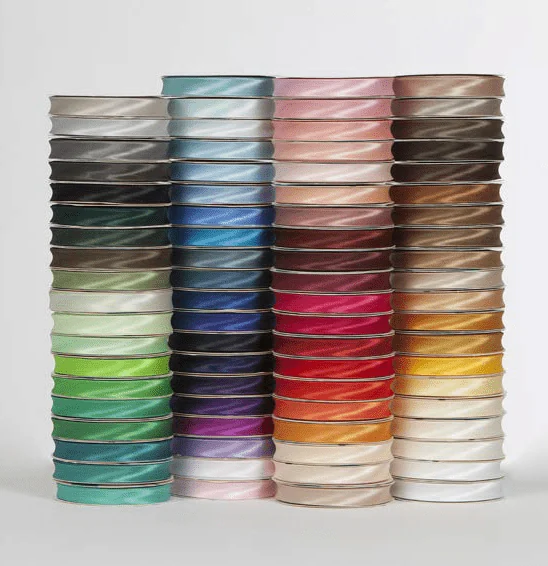
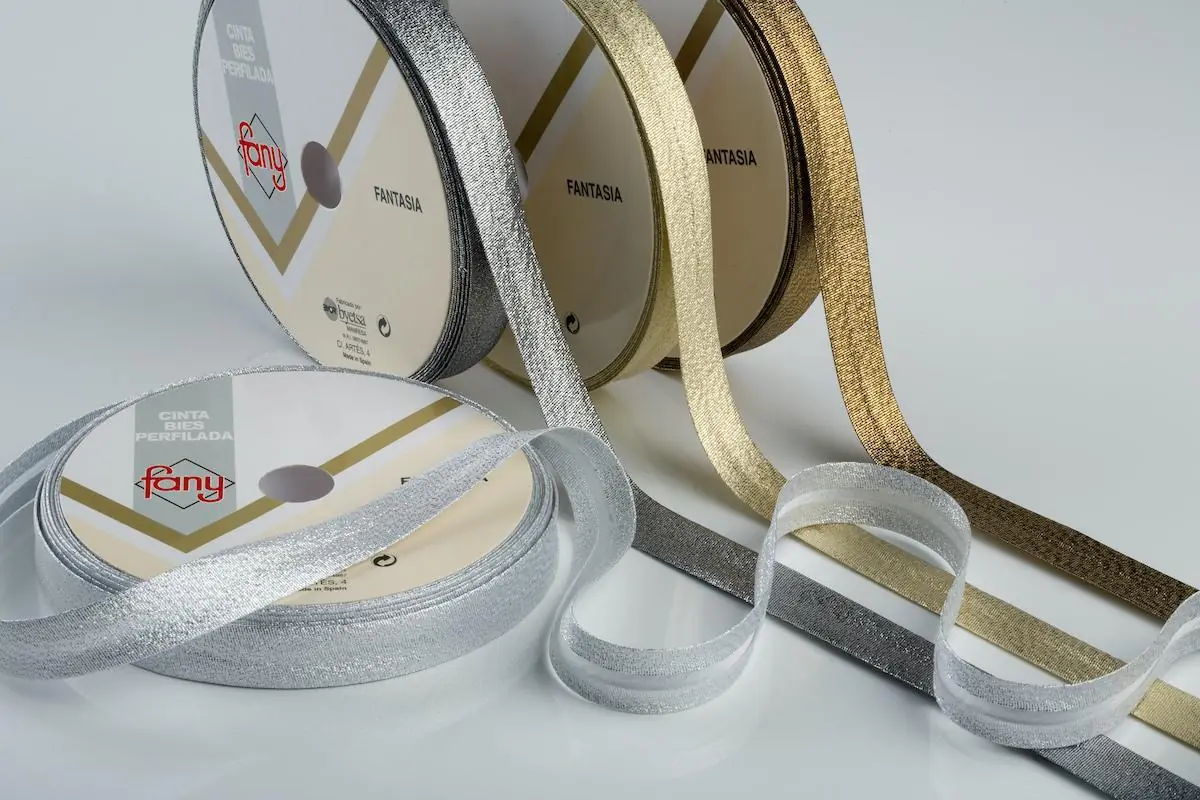
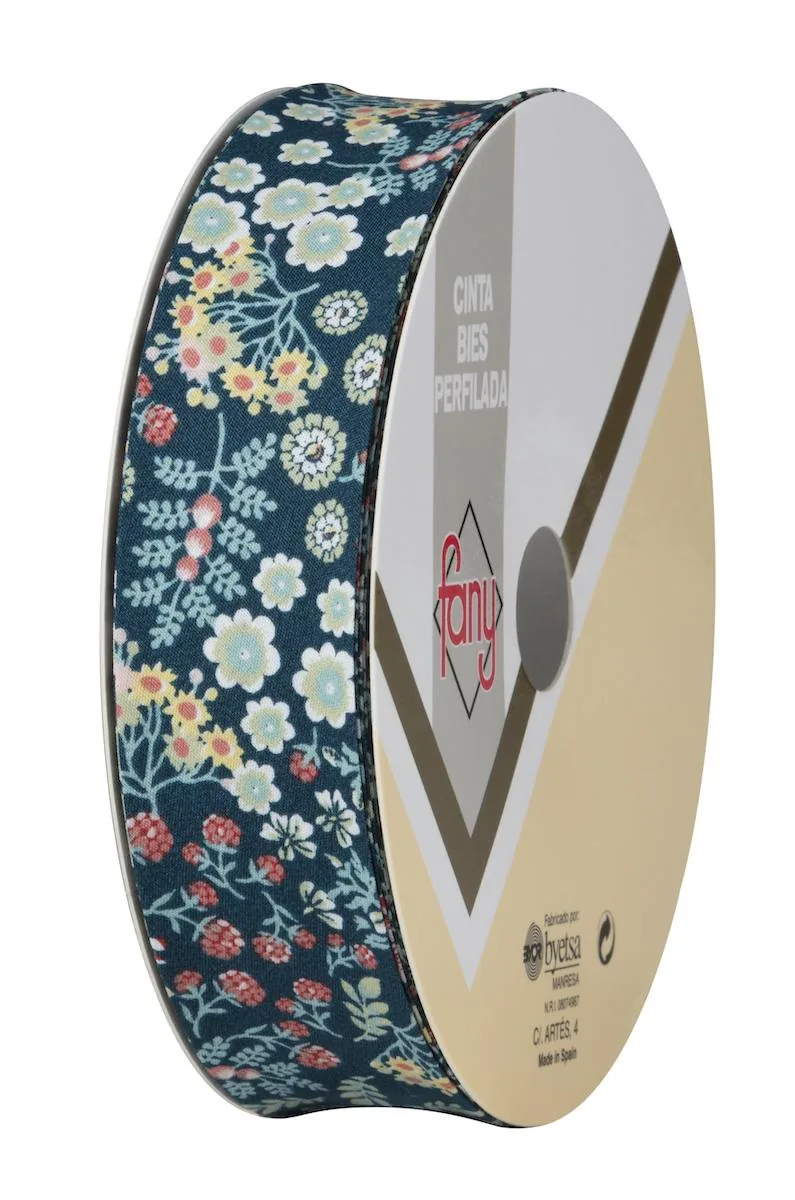
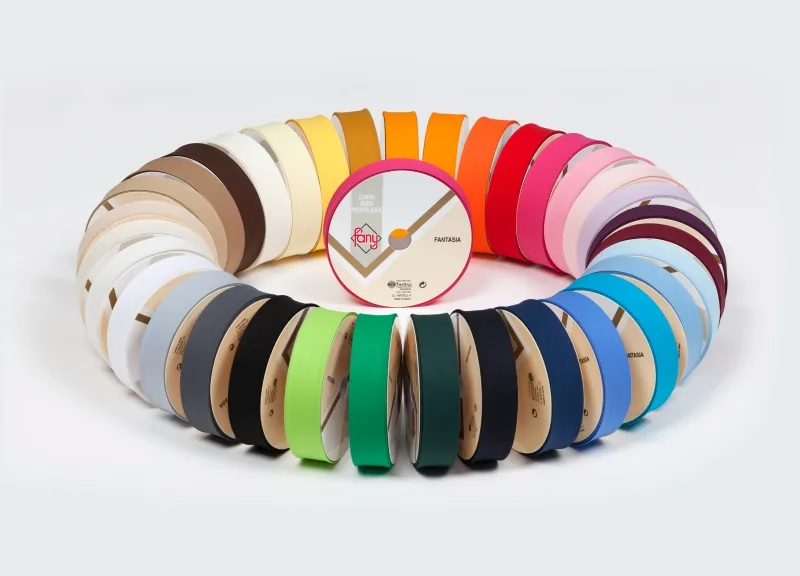
The main types differ by material: cotton, cotton-polyester, satin, gingham, printed and elastic. Cotton is the most versatile for everyday sewing; satin adds sheen and drape for fashion; gingham and prints add decorative value widely used in baby products; and elastic is reserved for garments that need more stretch. They also vary in width and finish. You can see all available types in our catalogue.
04What width of bias binding tape should I choose?
It depends on the use and the thickness of the edge you need to finish. Narrow widths, from 6 mm, are ideal for fine finishes and details, while wider ones offer more coverage on thick edges, upholstery or home textiles. As a general rule, the more visible or exposed the finish is, the more allowance you should leave. At Byetsa we manufacture to measure from 6 mm up to the full piece, adapting to each application.
05What’s the difference between bias and piping or passepoil?
Bias is a flat strip that finishes an edge; piping (or passepoil) has a cord inside that stands out as a decorative ridge along the seam line. Both are cut on the bias and share that diagonal stretch, but they serve different purposes: bias gives a flat, clean finish, while piping adds a raised finish that defines and decorates the join between two pieces. The choice depends on the effect you’re looking for.
06Why is it called bias binding tape?
It’s called that because of how it’s cut: “on the bias” means diagonally, at 45° to the fabric grain. That bias cut is what sets it apart from a conventional strip cut on the grain and what gives it its characteristic stretch. Thanks to it, the tape moulds to curves and corners without gathers or pulling, which is why it’s essential for finishing rounded edges with a professional result.
Related articles
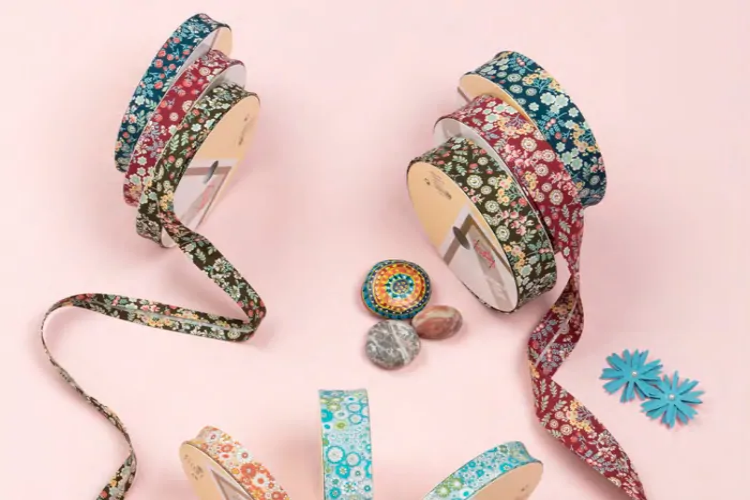
What is bias binding and what decorative uses does it have?
Bias binding is a strip of fabric cut on the diagonal that finishes and decorates edges. Discover what it is, what it means, and its decorative and creative uses.
Read article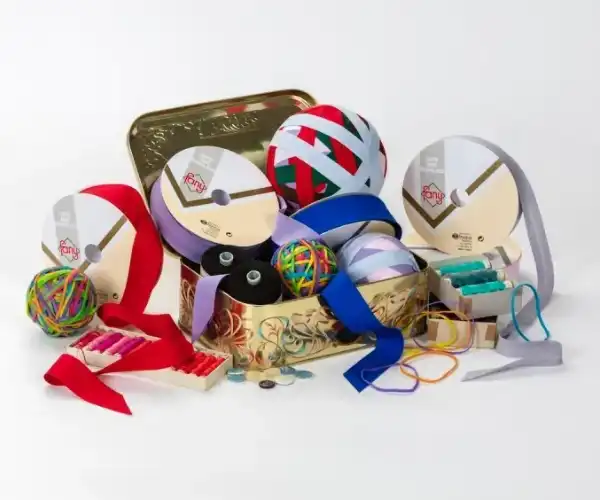
What is bias cutting, and how do we do it at Byetsa?
Bias cutting involves cutting fabric at a 45° angle to the grain to give it elasticity and drape. Discover what it is, what it's for, and how to cut it step by step.
Read article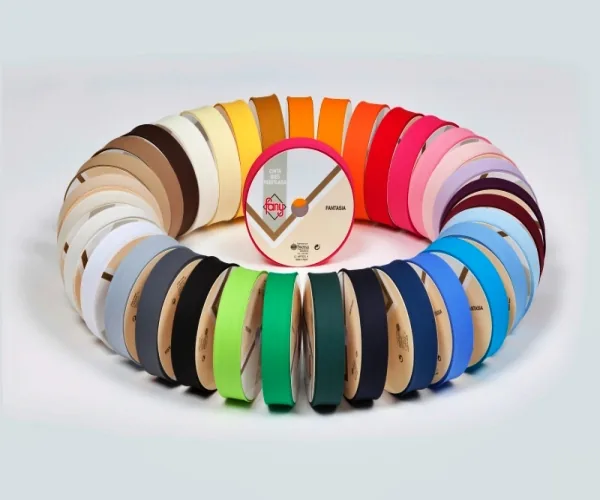
Types of bias tape available on today’s market
Types of bias binding by material: cotton, Batiste, satin, lamé, gingham, elastic and printed. Discover the characteristics of each and which to choose.
Read articleDo you have a question about bias binding?
If you have any questions about our products or need personalised advice, please do not hesitate to contact our team. We are here to help you in any way we can. Write to us!
- Phone93 874 40 98
- Emailinfo@byetsa.es
- AddressC/ Artés, 4 · Pol. Ind. Els Dolors · 08243 Manresa (Barcelona)
Tell us what you need
We will reply with the right reference, format and width for your production.