How to make bias binding from your own fabric or have it cut: when each option pays off
How to make bias binding from your own fabric: cutting at 45°, joining strips and folding. And when it pays to have a manufacturer cut your fabric on the bias.
 By Francesco ZagnoniPublished on 9 min read
Quick answer
To make bias binding, you cut strips at 45° to the grain, join them with diagonal seams and fold them with a bias tape maker and an iron. The strip measures twice the finished width. Making it in the workshop pays off for prototypes and short runs; for production with your own fabric, it is better to have the cut done by a manufacturer.
Key points
- Making bias binding takes three operations: cutting strips at 45°, joining them diagonally and folding them.
- For a simple single-fold bias binding, the strip measures twice the finished width.
- The real cost lies in labour and waste, not in the fabric.
- A binder attachment needs a constant width, which is hard to achieve by hand.
- Byetsa cuts the customer’s fabric on the bias, millimetre by millimetre, in whatever format is needed.
How to make bias binding from your own fabric: cutting at 45°, joining strips and folding. And when it pays to have a manufacturer cut your fabric on the bias.
How to make bias binding from your own fabric: from the cut to the folded tape
Some finishes cannot be done with a catalogue bias binding. An exclusive print, a collection fabric or a colour that must match the garment exactly means the tape has to be made from the same fabric. At that point, every workshop asks the same question: how to make bias binding from your own fabric and whether it pays to do it in-house. More articles on the subject in the Blog.
The answer has two parts. The first is technical: making bias binding involves three operations, cutting strips on the diagonal, joining them and folding them, and anyone with a cutting table can do them. The second is economic: what works for a sample collection stops making sense when you need hundreds of metres. This guide covers both.
Cutting the strips at 45°: width, grain direction and fabric yield
Bias binding is cut on the diagonal, at 45° to the warp and the weft, because that is the direction in which a woven fabric has the most stretch. The article on what bias cutting is explains the principle. In practice, you fold one corner of the fabric until the selvedge lines up with the weft and mark the fold: that is the true bias line.
From that line, you draw parallel lines at the strip width you want. As a guide, for a simple single-fold bias binding, with both edges folded towards the centre, the strip should be twice the finished width.
| Finished width of single-fold bias binding | Approximate strip width |
|---|---|
| 12 mm | 24 mm |
| 18 mm | 36 mm |
| 25 mm | 50 mm |
| 30 mm | 60 mm |
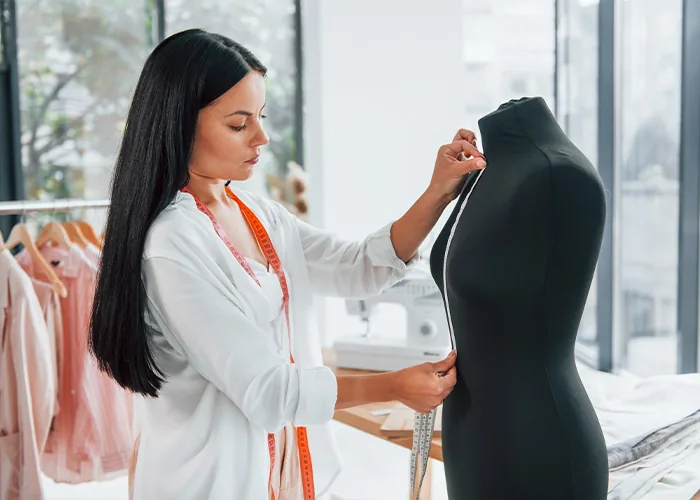
Cutting should be done with a rotary cutter and ruler, or with a straight knife if several layers are cut at once. A deviation of a few degrees reduces the stretch of the tape and makes it twist when sewn. The triangles left at the ends of the fabric do not yield usable strips: they are the unavoidable waste of this cut.
Joining the strips: the diagonal seam and continuous bias
A strip cut at 45° from a 150 cm wide fabric is just over two metres long. To get a long tape, many strips have to be joined. The join is also sewn on the diagonal, placing the strips at right angles, right sides together, and stitching from corner to corner. This spreads the bulk of the seam so it does not form a lump when folded.
The seams are then pressed open and the protruding points are trimmed. On an 18 mm bias binding, a badly opened join can be felt to the touch and jams in any binder foot.
To avoid sewing strip by strip, there is the continuous bias method: you start from a square or rectangle of fabric, sew it into a tube with the cutting line offset and cut a single, already joined strip in a spiral. It saves sewing time, but requires precise marking and still leaves a join every few metres.
Folding and pressing: the bias tape maker
The joined strip is flat bias. To turn it into folded bias, both edges have to be folded towards the centre and set with heat. By hand this is slow and uneven, which is why a bias tape maker is used: a flat, funnel-shaped metal piece that the strip is pulled through.
The strip goes in flat at the wide end and comes out with its edges folded at the narrow end. You pull the tape maker with one hand while the other presses the tape as it comes out. Each tape maker gives a single finished width; the usual ones match the commercial bias binding widths. The fabric determines the ironing temperature: cotton can take steam, polyester satin cannot.
The result depends on how regular the strip is. If the width varies by a couple of millimetres, one of the folds ends up short. After pressing, the tape is rolled up without tension so that it keeps its fold until it is sewn.
Making bias binding in the workshop or having it cut: what changes
The procedure above is the same one a manufacturer follows, with a difference in scale. In a factory, the fabric is cut on the bias in full pieces, with calibrated blades and controlled joins, and the tape comes out on rolls ready for the machine. The choice between making it and ordering it is not about craft versus industrial quality, but about time, waste and consistency.
It is worth looking at the three factors separately, because they do not weigh the same in a haute couture workshop as in a children’s clothing or home textiles factory.
Time and waste: the real cost of handmade bias binding
The fabric is the visible part of the cost. The less visible part is labour: marking, cutting, joining, pressing seams open, folding and pressing. For a few metres, the time is acceptable; for a production run, it competes with sewing hours that the workshop could spend on the garment.
Waste has two sources. One is geometric: the triangles at the ends, which weigh more the shorter the piece of fabric. The other is defects, that is, strips of uneven width or joins that will not go through the machine. In theory, one metre of 150 cm fabric yields around 40 metres of 36 mm strip; in practice, the usable figure is lower.
There is a third cost that is often forgotten: storage. Bias binding made in the workshop is kept in improvised hanks or rolls, which lose their shape easily. Tape that has lost its fold has to be pressed again before use.
Consistency: constant width, joins and behaviour on the machine
On a garment sewn freehand, a one-millimetre variation in the width of the bias binding goes unnoticed. On a machine with a binder attachment, it does not: the attachment is calibrated for a specific width and an uneven strip wrinkles or slips out of the fold. The same happens with joins that are too thick.
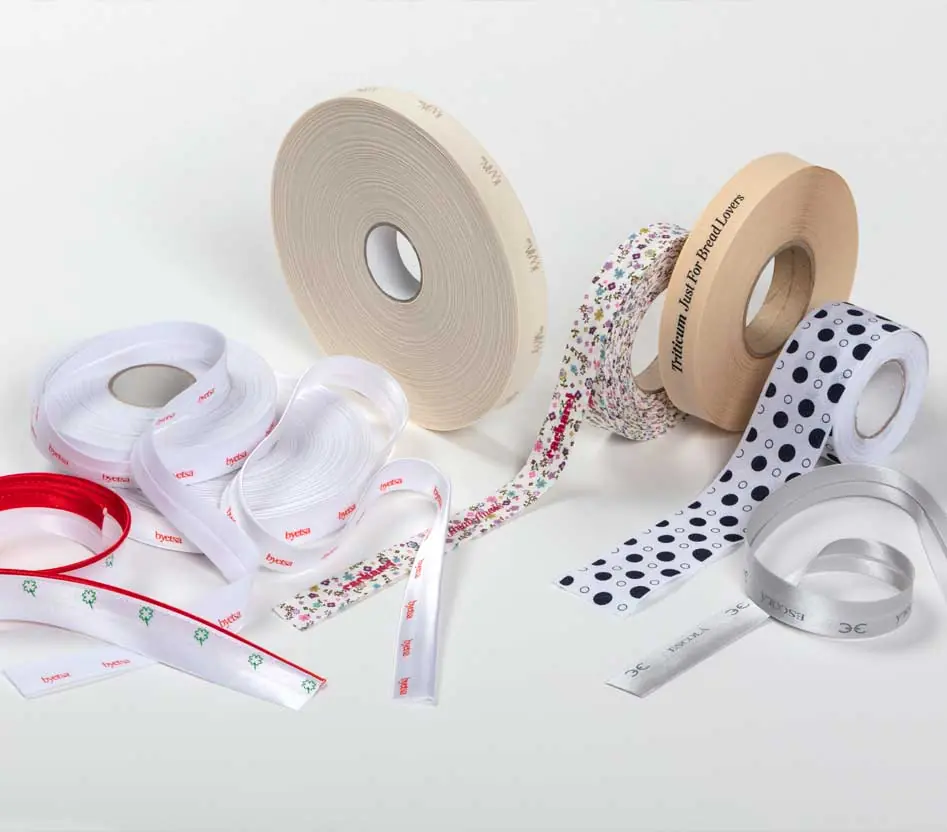
Industrial cutting solves both issues. The width stays constant along the whole roll and the joins are made uniformly. In addition, the manufacturer can supply the tape in any of the bias binding formats: cut for a binder, single-fold, double-fold, or even as corded piping.
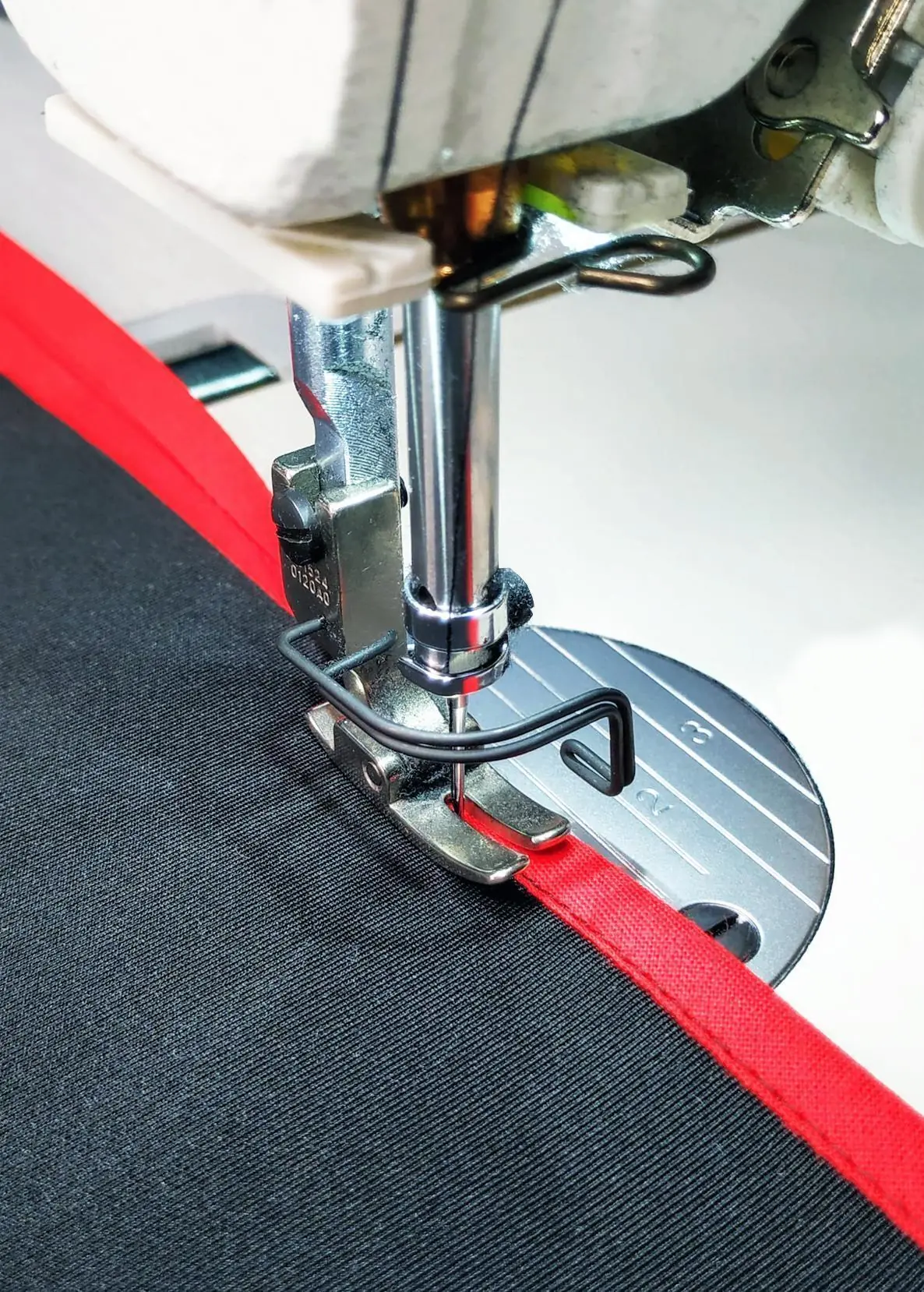
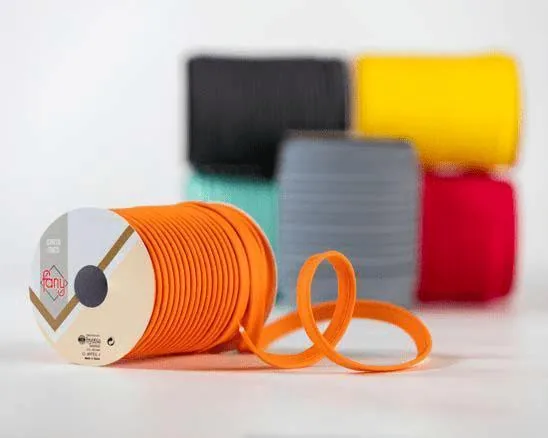
That last option matters. With workshop equipment you can make flat bias and simple single-fold bias. Corded piping, triple-fold binding or spaghetti tubing require specific machinery, so ordering it widens the range of possible finishes from the same fabric.
When each option pays off
There is no exact threshold in metres, because it depends on each workshop’s hourly cost and the type of fabric. There are, however, typical situations in which the decision is clear. The variable that weighs most is whether the bias binding will be applied by hand or with a machine attachment.
| Situation | Most reasonable option | Reason |
|---|---|---|
| Prototype or sample collection | Make it in the workshop | Few metres and frequent fabric changes |
| One-off piece or very short run | Make it in the workshop | The preparation time is acceptable |
| Run with your own fabric applied with a binder | Have it cut | Constant width and tape on a roll are needed |
| Collection with an exclusive print | Have it cut | Consistency and choice of formats |
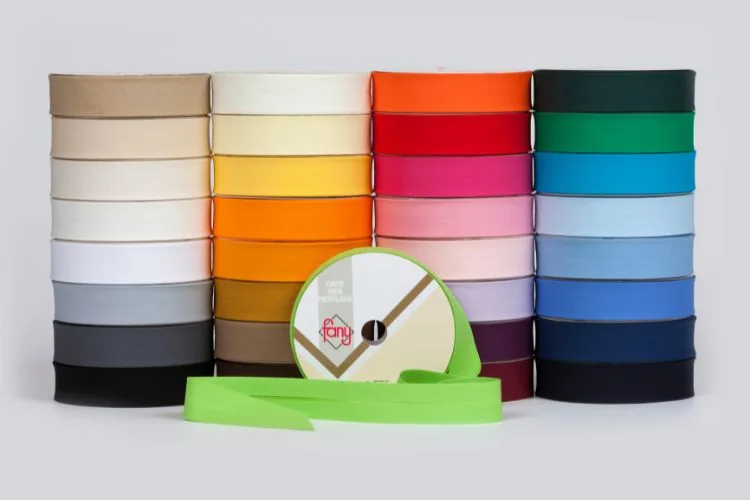
| Standard plain colour | Catalogue bias binding | Available from stock, no handling |
The last row deserves attention. Before making bias binding from your own fabric, it is worth checking whether an equivalent colour exists in the catalogue. The bias binding width guide and the types of industrial bias binding help narrow down the search.
How to have your own fabric cut on the bias
Ordering is simple: the customer sends their fabric and receives the tape made in the format and width they need. Byetsa handles the fabrics its customers send and makes custom bias bindings, so a brand can have its own collection of tapes coordinated with its garments.
It is a common service in fashion, where the binding must be in the same fabric as the garment, and in home textiles, to coordinate table linen or bedding. When a printed design is wanted, there is also the option of custom printed bias tapes, by screen printing or sublimation.
For the result to be as expected, the order must be well defined from the start. Most delays are due to missing information, not to manufacturing.
What to specify when ordering the cut: fabric, format, width and presentation
Four pieces of information are enough to set up the order. The most important is how the tape will be applied, because the format and width depend on it.
| Information | What to specify |
|---|---|
| Fabric | Composition, width of the piece and metres available |
| Format | Flat bias, single-fold, double-fold, piping or other |
| Width | Cutting width or finished width, depending on the application attachment |
| Presentation | Metres per roll and total quantity needed |
Not all fabrics behave the same when cut on the diagonal. Cotton, cotton-polyester blends, satin and gingham are the most common; very stiff or heavy-bodied fabrics give poorer results. If in doubt, the sensible thing is to send a sample before committing the whole piece.
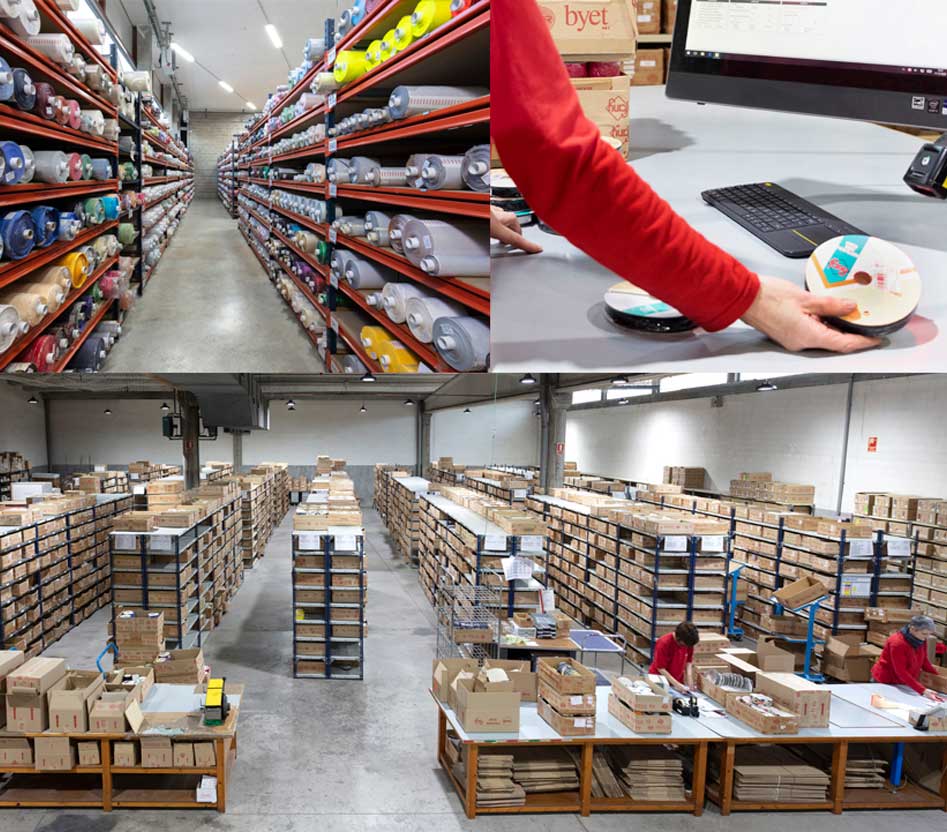
Byetsa has been making bias binding in Manresa since 1969 and cuts at 45° to the grain, millimetre by millimetre, from 6 mm up to the full piece. Alongside the service of cutting the customer’s fabric, it keeps permanent stock of more than 7,000 references, guarantees exact colour replenishment in its catalogue families and works with reasonable minimum order quantities (MOQ) and deliveries matched to the production schedule.
We make what you need
Looking for bias binding for your production or your haberdashery?
Frequently asked questions about how to make bias binding
01How do you make bias tape?
Bias tape is made in three steps: strips of fabric are cut at 45° to the grain, joined together with diagonal seams and the edges are folded towards the centre with the help of an iron. The diagonal cut is what gives the tape its stretch and lets it follow curves without wrinkling.
02What strip width do you need to cut to make bias binding?
For a simple single-fold bias binding, the strip should be roughly twice the finished width. For an 18 mm bias binding, strips of about 36 mm are cut, and for a 25 mm one, about 50 mm. If the bias binding will be applied with a binder attachment, the attachment itself determines the cutting width, so it is worth checking before cutting.
03How much bias binding do you get from a metre of fabric?
It depends on the width of the fabric and the width of the strip. The theoretical length is obtained by dividing the area of the fabric by the strip width: one metre of 150 cm fabric gives about 40 metres of 36 mm strip. The real figure is lower, because the triangles at the ends are not used and each join uses up a few centimetres.
04What is a bias tape maker?
A bias tape maker is a flat, funnel-shaped metal piece that folds both edges of a fabric strip while it is pressed. It turns flat bias into folded bias and each tape maker gives a single finished width. It is useful for short runs; in production, folding is done with industrial machinery.
05Can bias binding be made from any fabric?
From almost any woven fabric, although the result varies. Cotton, cotton-polyester blends, satin and gingham are the most suitable thanks to their balance between stretch and stability. Very stiff or heavy-bodied fabrics fold poorly, and very slippery ones require more care when cutting and pressing.
06Can Byetsa make bias binding from my brand’s fabric?
Yes. In addition to its catalogue families, Byetsa handles the fabrics its customers send and makes custom bias bindings. The fabric is cut at 45°, millimetre by millimetre, in the width and format each application requires, and delivered on a roll. To set up the order, simply specify the fabric, format, width and quantity.
Related articles
Cost Optimisation in Garment Manufacturing: Advantages of Buying Bias Tape Wholesale in Europe
Cut costs in your workshop by buying bias tape wholesale. OEKO-TEX quality, European manufacturing and fast delivery. Improve your profitability with Byetsa.
Read article
We are a benchmark bias tape manufacturer in a long list of countries and sectors
Bias tape manufacturers. Exports, history and the sectors we regularly work with at Byetsa. Ask for information with no obligation.
Read article
Technical differences between bias tape, corded piping and flat piping
We analyse the technical differences between bias tape, corded piping and flat piping. Choose the right finish for your industrial garment production with Byetsa.
Read articleDo you have a question about bias binding?
If you have any questions about our products or need personalised advice, please do not hesitate to contact our team. We are here to help you in any way we can. Write to us!
- Phone93 874 40 98
- Emailinfo@byetsa.es
- AddressC/ Artés, 4 · Pol. Ind. Els Dolors · 08243 Manresa (Barcelona)
Tell us what you need
We will reply with the right reference, format and width for your production.