
Narrow and wide bias binding: widths, folds and formats for garment making
Bias binding widths from 6 mm to the full piece: size chart, cutting and finished width, folds and haberdashery (Fany) or industrial (Byor) formats.
 By Francesco ZagnoniPublished on 10 min read
Quick answer
The most common bias binding widths are 12, 18, 25 and 30 mm, although bias cutting can be done from 6 mm up to the full piece; the right size depends on the use, the fold (flat, single-fold, double-fold, triple or quadruple) and whether you work with haberdashery or industrial presentation.
Key points
- Most common widths: 12, 18, 25 and 30 mm; the best sellers in plain colours, 18 and 30 mm.
- Cutting width versus finished width: an 18 mm single-fold comes from a 30 to 35 mm cut.
- Folds: flat, single-fold open or closed, double-fold, triple and quadruple.
- Presentations: Fany for haberdashery (5 to 25 m) and Byor for industry (50 to 200 m).
Choosing the right bias binding width, narrow or wide, is one of the decisions that most affects a garment’s finish and the pace of a production line. Knowing the millimetres is not enough: you need to know which width we are talking about, which fold the tape comes in and in which presentation it is supplied.
In this guide we bring together in one place the width chart, the folds we make and the criteria for choosing between the haberdashery and the industrial format, so that you can specify your order with no room for error.
Bias binding width chart: from 6 mm to the full piece
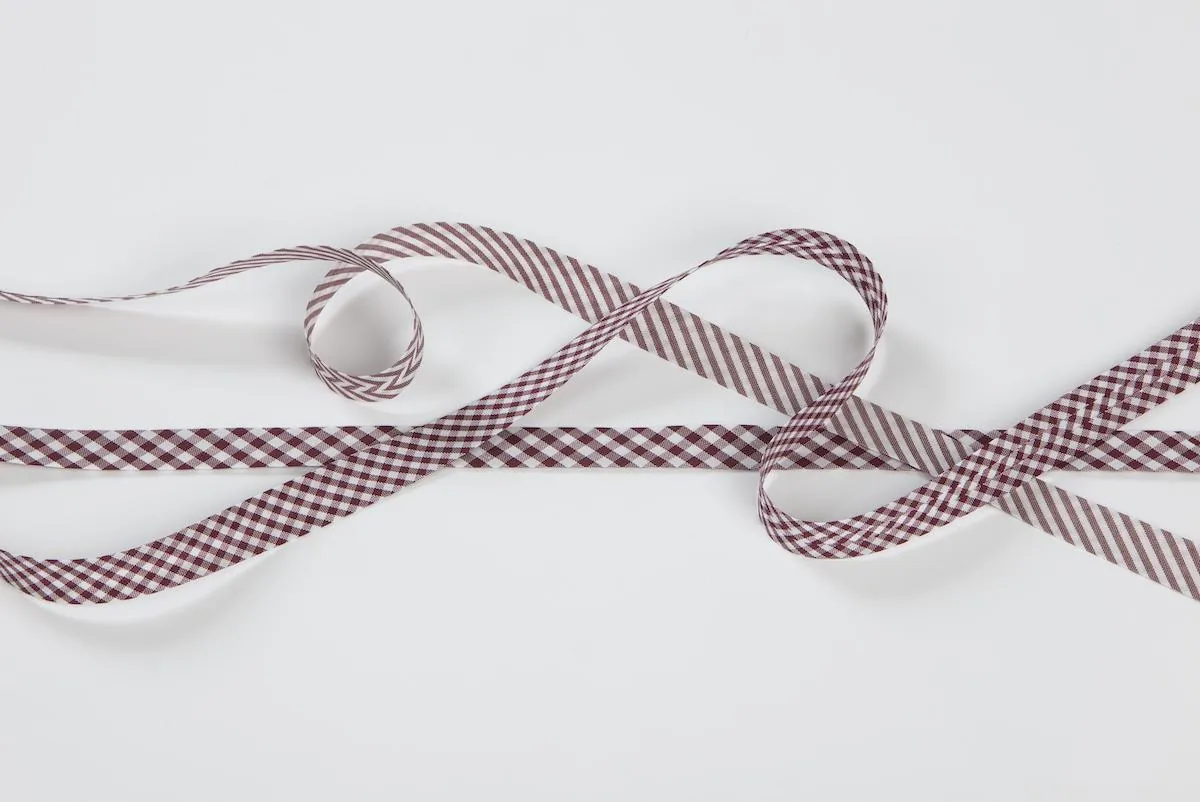
Bias binding is obtained by cutting the fabric into strips at 45° to the grain. That angle gives it stretch and drape, and lets it follow both straight lines and curves. The cut is made millimetre by millimetre, from 6 mm up to the full piece, so in practice any width is possible. What changes from one width to another is the use it suits best. More articles on the subject in the Blog.
| Finished width | Visible finish | Most common uses |
|---|---|---|
| From 6 mm | Very fine | Special applications made to order |
| 12 mm | About 5 to 6 mm per side | Childrenswear, lingerie and lightweight fashion |
| 18 mm | About 8 to 9 mm per side | Necklines, armholes, bibs, napkins and general use |
| 25 mm | More visible finish | Home textiles, table linen and leather goods |
| 30 mm | Wide, decorative finish | Hems, cushions, bedding and home textiles |
| 40 to 50 mm | Very wide | Decoration and creative sewing projects |
Cutting width and finished width: two different measurements
Many order mix-ups come from confusing two measurements. The cutting width is the unfolded strip, before folding; the usable or finished width is what the tape measures once folded, and what will be seen on the garment. An 18 mm single-fold, for example, comes from a 30 to 35 mm cut depending on the thickness of the fabric and the type of fold.
When you specify an order, always state whether the size is the cutting or the finished width. We explain this in more detail in the guide to the most popular widths, and you will find more content of this kind in the technical guides section.
The best-selling widths: 18 and 30 mm
The most common widths in our bias binding families are 12, 18, 25 and 30 mm, and among plain bias bindings, the best sellers are 18 and 30 mm. The 18 mm is the all-rounder: it is easy to handle, follows tight curves on collars and armholes and works for a bib as well as for the hem of a skirt.
The 30 mm gives a more prominent finish and dominates in home textiles. The 12 and 15 mm widths are ordered less often, but they are irreplaceable when a discreet binding is wanted on fine or children’s garments.
Bias binding folds: flat, single-fold, double-fold, triple and quadruple
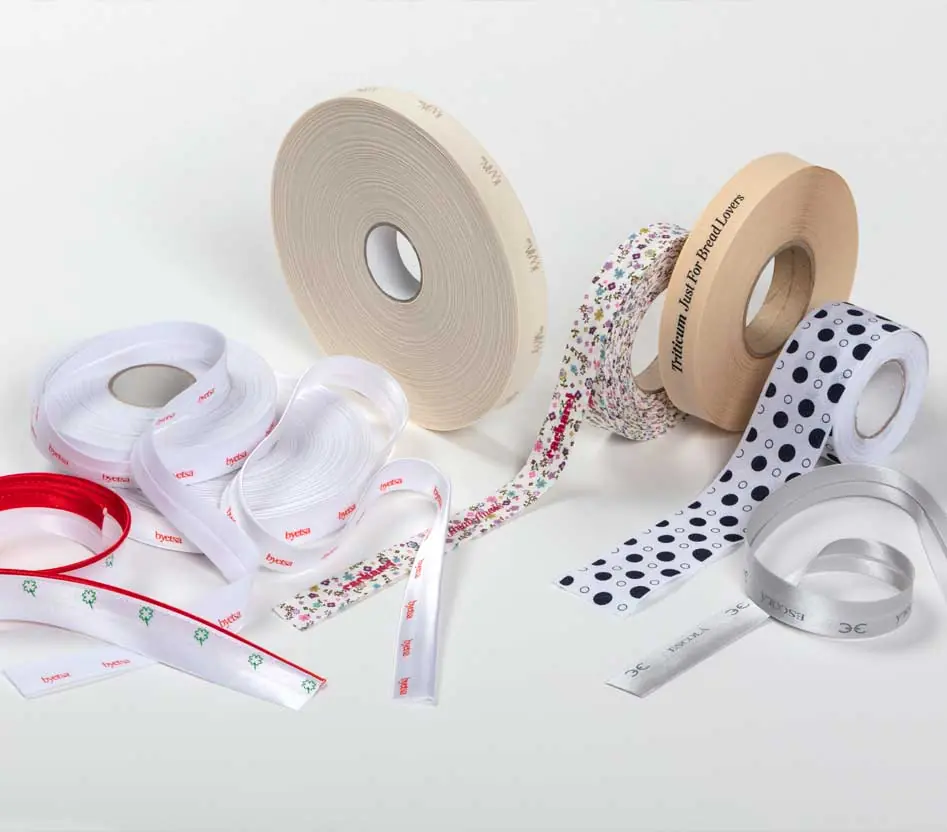
The same width can arrive folded in very different ways, and the fold determines both the final size and the speed of application. We make 31 bias binding formats grouped into four families: flat, folded, piping and special.
Flat bias binding: the flat strip
Flat bias binding is the flat strip, without folds, cut to the exact size the production requires. It is used to finish or join seams on a wide range of products, from the corners of duvets to napkins or bibs, and it is applied with a binder, which folds the tape during sewing.
Single-fold and double-fold bias binding
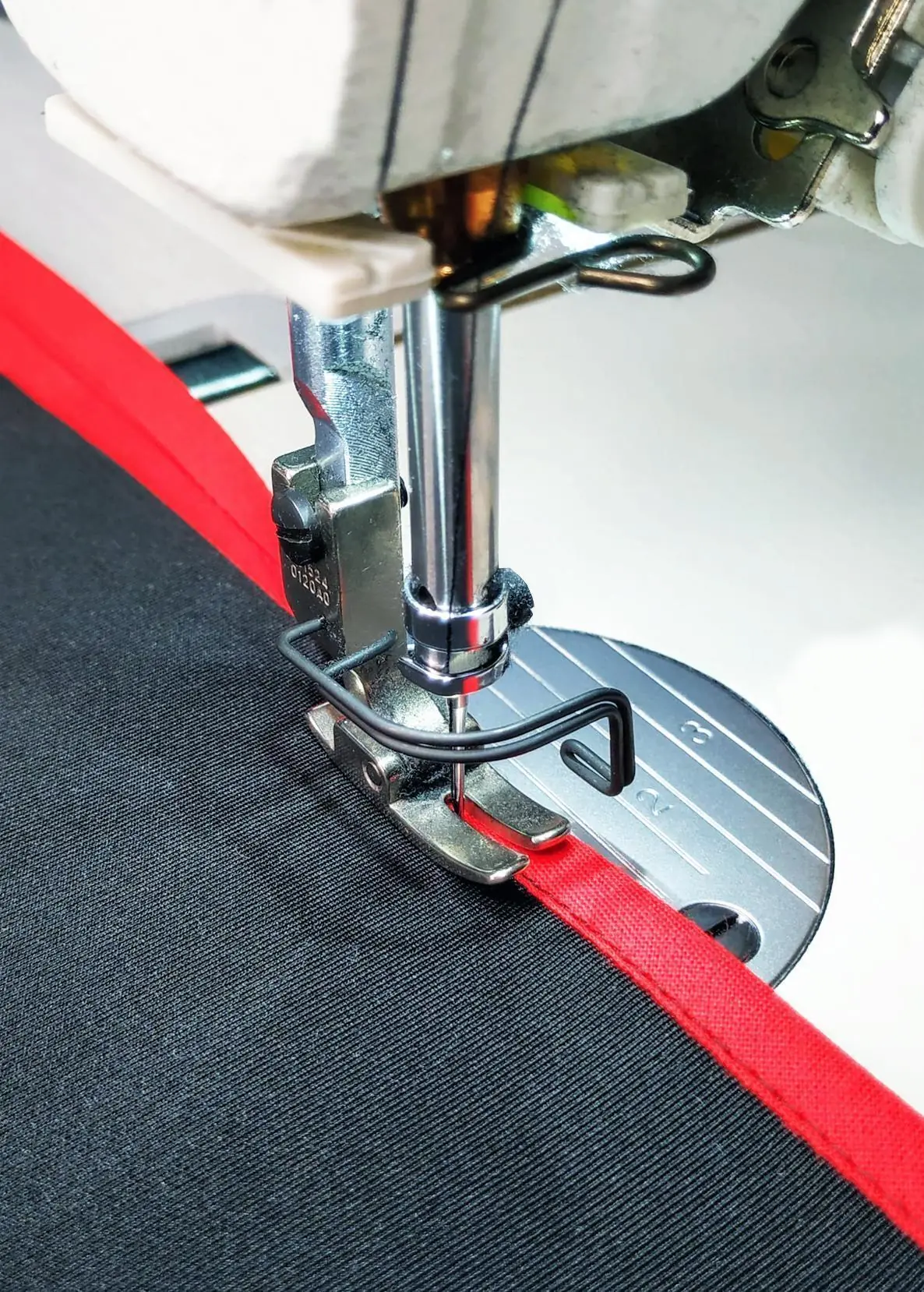
Single-fold bias binding arrives with its edges folded at the factory, ready to apply with a presser foot or topstitching, and it is the format most requested by our customers. It is made open or closed depending on how the edges sit relative to the centre of the tape.
Double-fold bias binding adds a central fold to the single-fold, so that the tape closes over the edge of the fabric like the covers of a book. It is also made open or closed, and is a convenient way to bind without needing a binder.
Triple and quadruple fold
Triple and quadruple folds add more folds to give a thicker, more stable finish. The triple is made open or closed; the quadruple, open, closed or stitched, when the customer needs the tape to arrive already fixed.
Alongside the folded bindings there are piping with and without cord, double and triple, which are inserted between two fabrics to outline the seam. We explain their differences in the article on bias binding, corded piping and flat piping.
Haberdashery or industrial format: how to choose
The same bias binding families, in the same widths and folds, are supplied in two presentations. Choosing the presentation is as important as choosing the width, because it determines how much material is tied up and how you work on the machine.
Fany for haberdashery and Byor for industry
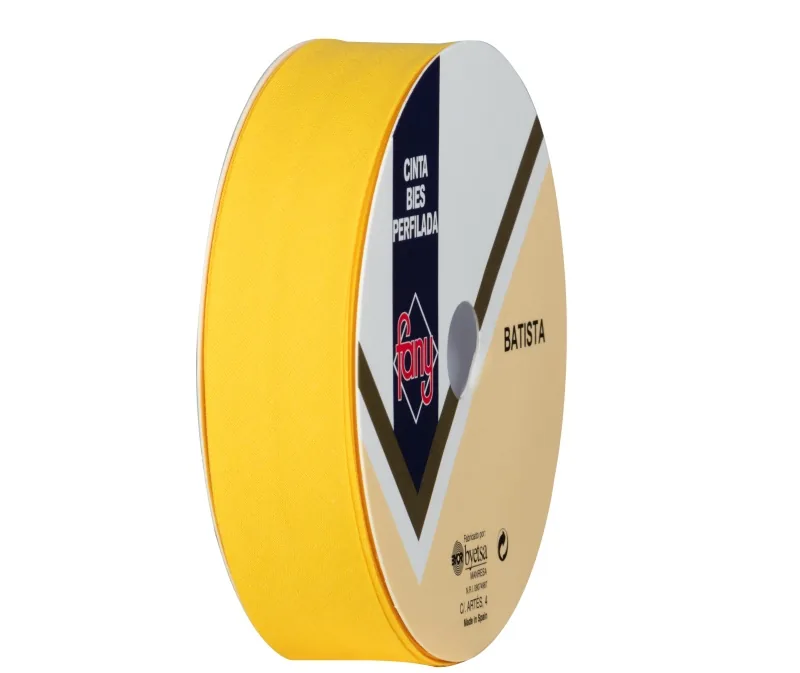
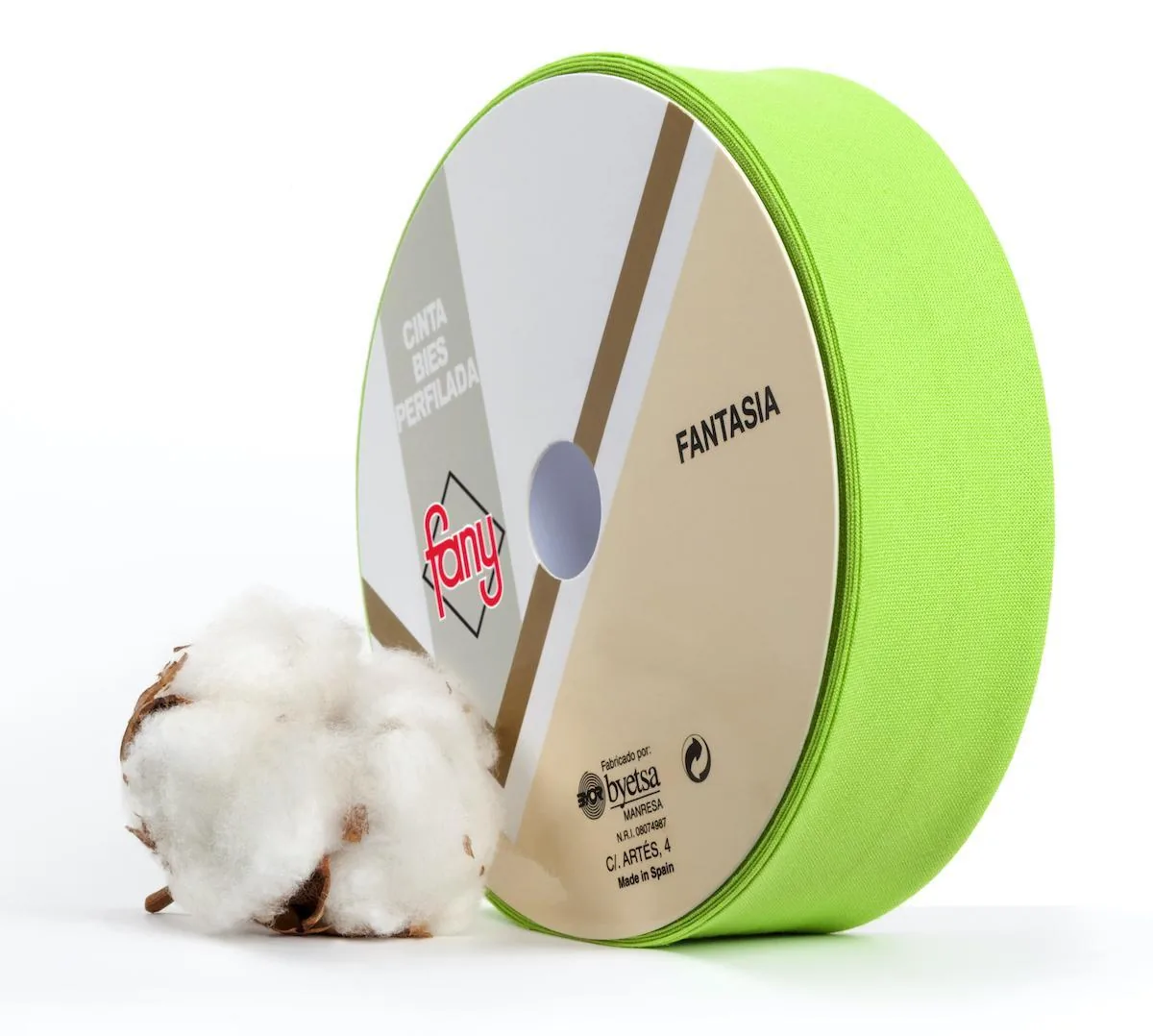
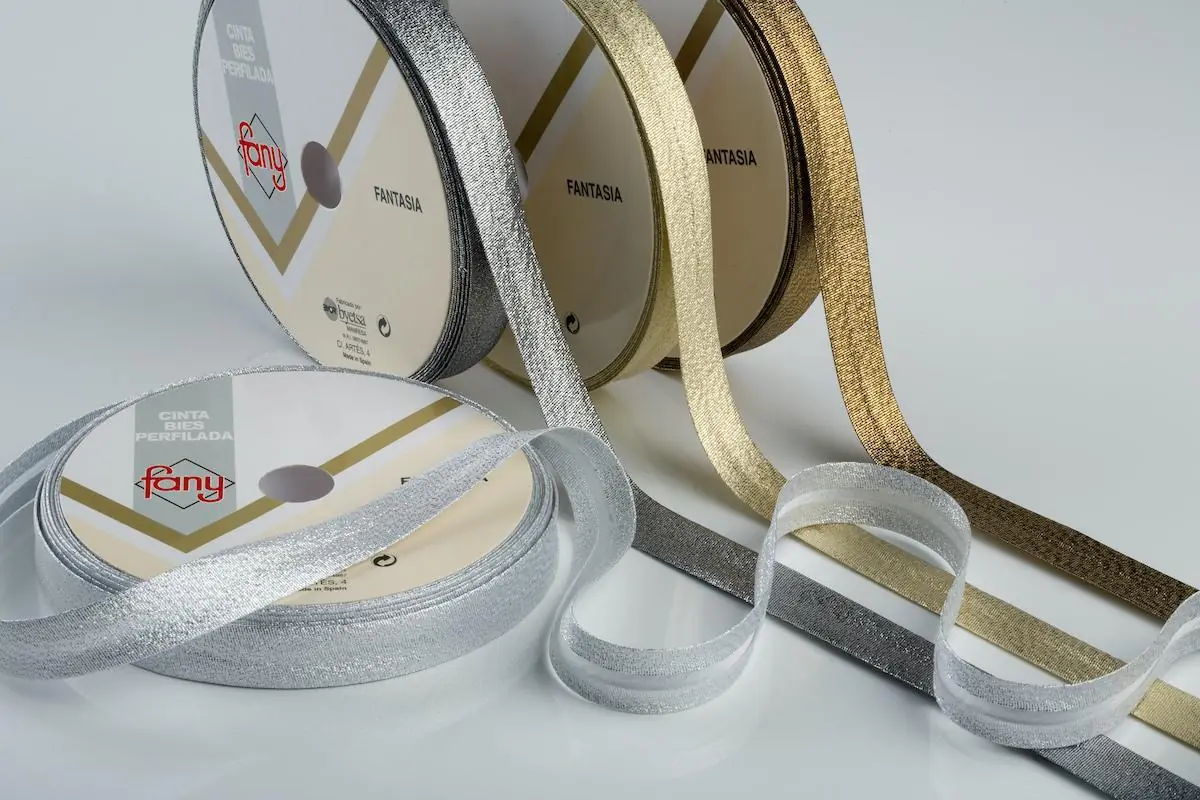
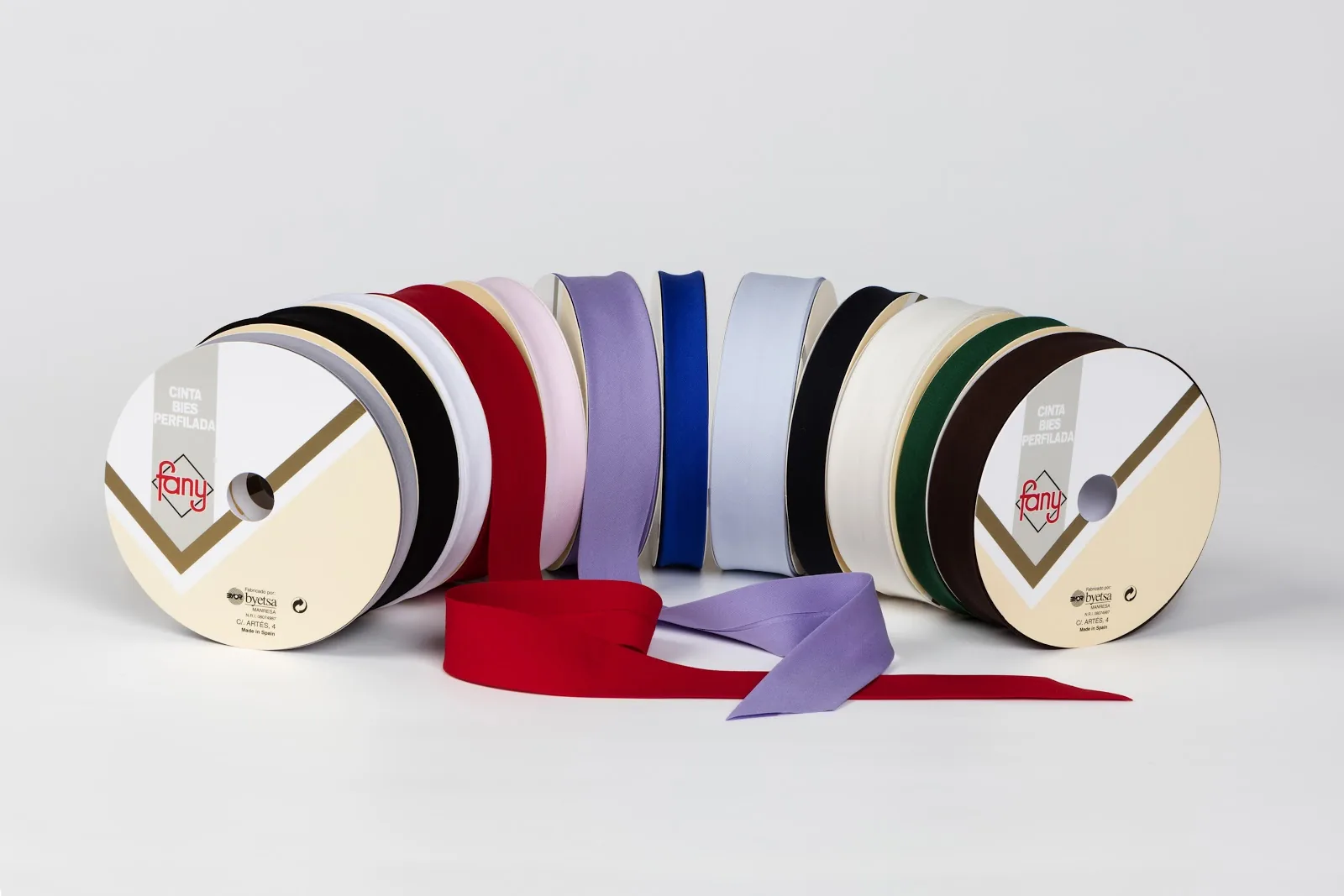
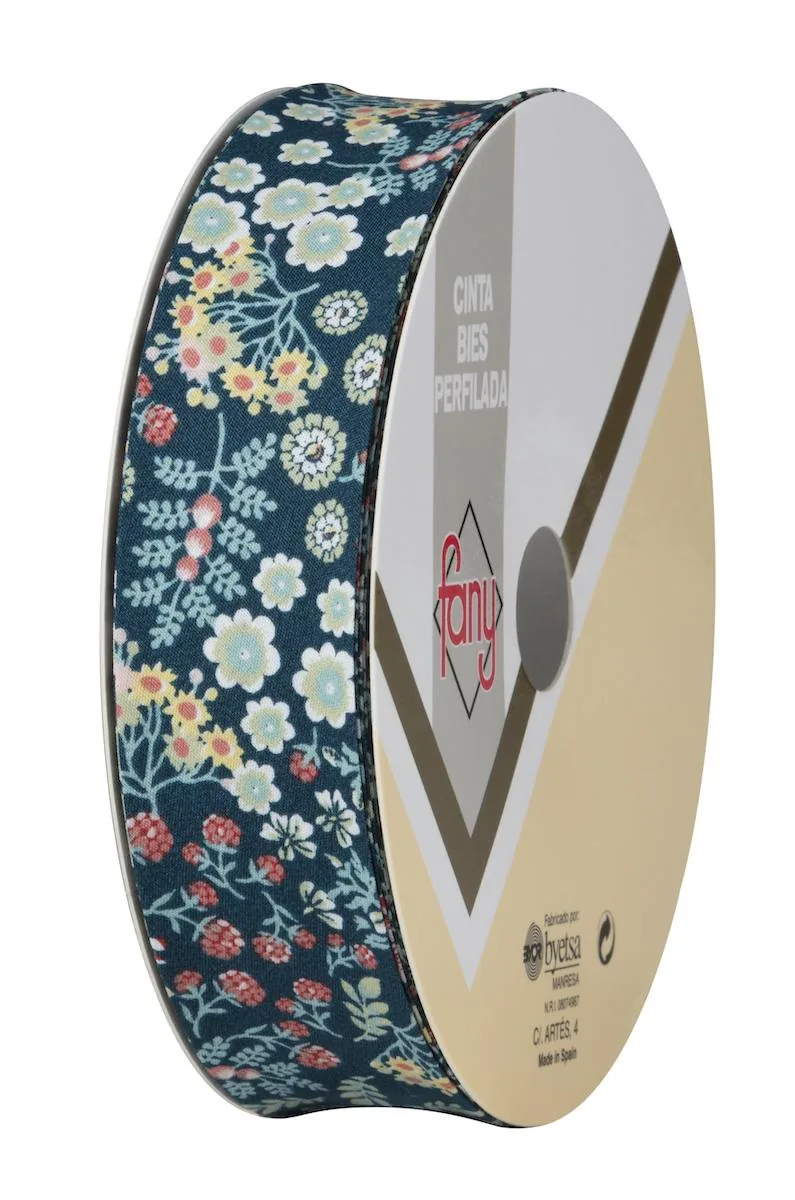
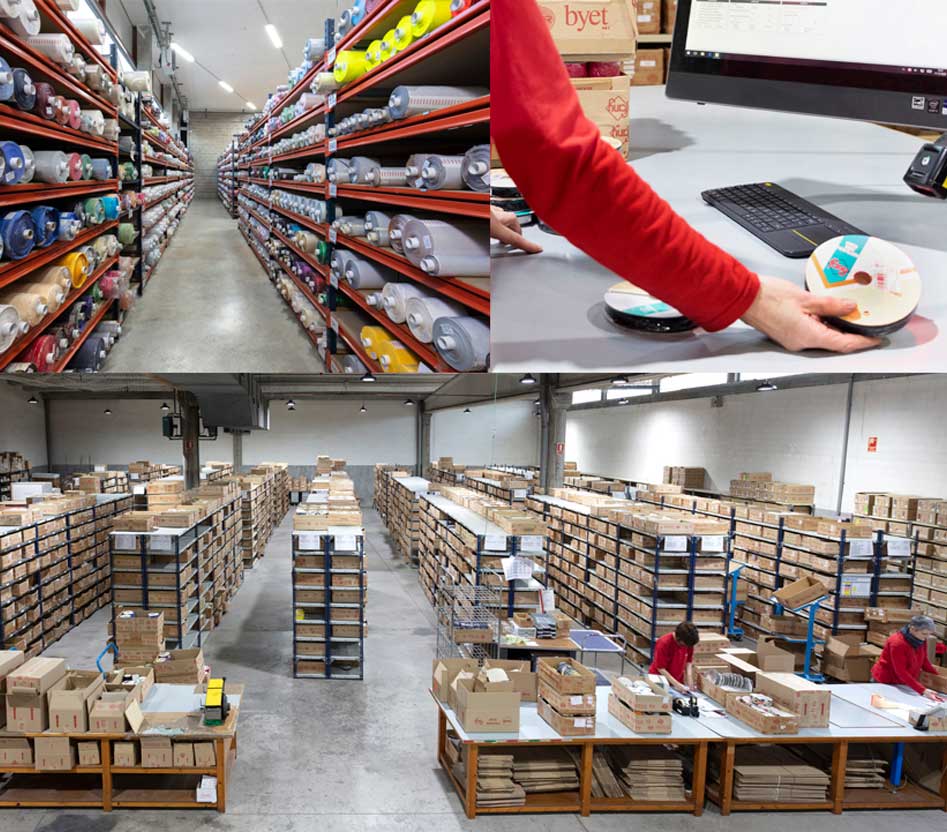
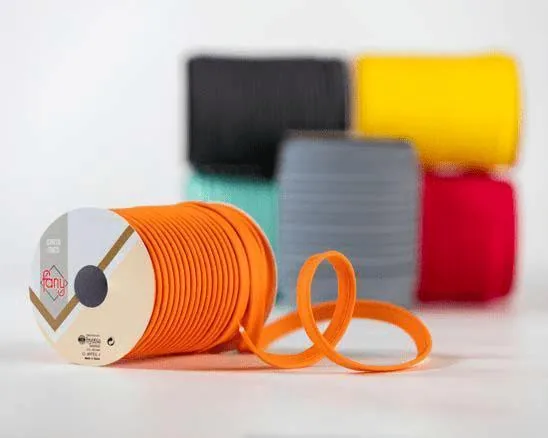
The Fany line brings together the haberdashery presentations, from 5 to 25 metres, for haberdasheries, wholesalers, distributors and workshops that need a variety of colours and widths in manageable quantities. The Byor line is the industrial presentation, in rolls from 50 to 200 metres, for garment makers and brands producing in series.
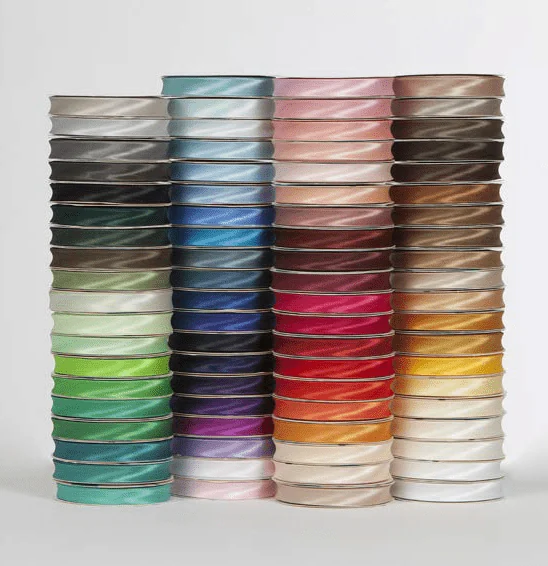
In Batiste cotton and polyester, for example, the usual widths are 12, 18, 25 and 30 mm in more than 120 colours, in either presentation. The references for each line are listed in the haberdashery catalogue and the industrial catalogue.
Width on the production line: binders and machines
In industrial garment making, the width of the tape has to match the machine’s binder. A tape a few millimetres wider or narrower than the binder causes jams, stoppages and sewing defects, and over a long run that mistake multiplies.
That is why, before closing an industrial order, it is worth confirming the cutting width the binder accepts, the fold the line works with and the length per roll. If your production needs a non-standard size, the cut is made to order: you can ask us for advice from the bias binding for industry page or the contact form.
We make what you need
Looking for bias binding for your production or your haberdashery?
Frequently asked questions
01What is the most common bias binding width?
The most common widths are 12, 18, 25 and 30 mm. Among plain bias bindings, the best sellers are 18 and 30 mm, and 18 mm is the most general-purpose size.
02What is the minimum width of bias binding?
Bias cutting is done millimetre by millimetre from 6 mm up to the full piece, so very fine widths can be made for specific applications.
03What is the difference between cutting width and finished width?
The cutting width is the unfolded strip before folding; the finished width is what the tape measures once folded. An 18 mm single-fold comes from a 30 to 35 mm cut.
04What is double-fold bias binding?
It is a single-fold bias binding with an additional central fold, so that the tape closes over the edge of the fabric. It is made in open and closed versions.
05Which bias binding width is best for home textiles?
For table linen, cushions and bedding, the 25 and 30 mm widths are usually used, as they give a more visible finish. For decoration and creative sewing, wide bias binding of 40 to 50 mm is also used.
06In what lengths is bias binding supplied?
In the Fany haberdashery presentation, in formats from 5 to 25 metres, and in the Byor industrial presentation, in rolls from 50 to 200 metres.
Related articles

Width Guide: Which Bias Tape Sizes Are Most in Demand by Consumers?
The bias binding sizes most in demand in haberdashery and garment making.
Read article
Technical differences between bias tape, corded piping and flat piping
When to use each finish in industrial garment making.
Read articleDo you have a question about bias binding?
If you have any questions about our products or need personalised advice, please do not hesitate to contact our team. We are here to help you in any way we can. Write to us!
- Phone93 874 40 98
- Emailinfo@byetsa.es
- AddressC/ Artés, 4 · Pol. Ind. Els Dolors · 08243 Manresa (Barcelona)
Tell us what you need
We will reply with the right reference, format and width for your production.