

How to choose and sew satin bias binding: widths, formats and workshop application
How to choose and sew satin bias binding: which width and format to order for each application, sewing settings and differences from batiste, cotton and lamé.
 By Francesco ZagnoniPublished on 9 min read
Quick answer
To choose satin bias binding, start from the application: 12 mm for necklines and armholes, 18 mm as the all-purpose width and 25 or 30 mm for visible bindings and home textiles. It is 100% polyester with trilobal yarn, sewn with a fine needle and a stitch length of 2.5 to 3 mm, and ironed at two dots, on the reverse.
Key points
- The width depends on the curve and the thickness of the fabric: 12 mm on tight curves, 30 mm for home textiles.
- The format depends on the machine: folded for lockstitch machines, flat for binder attachments.
- Satin bias binding is 100% polyester with trilobal yarn: even sheen and stability in the wash.
- It is sewn with a fine needle, polyester thread and a stitch length of 2.5 to 3 mm.
- It is washed at 40 °C and ironed at two dots, on the reverse or with a pressing cloth.
How to choose and sew satin bias binding: which width and format to order for each application, sewing settings and differences from batiste, cotton and lamé.
What satin bias binding is and how it differs from other bias bindings
In a garment workshop, the finish accounts for much of a garment’s perceived quality. When the design calls for sheen, as on a formalwear neckline, the piping on a pair of pyjamas or the binding on a cushion, satin bias binding is the usual choice. It is also the one that raises the most questions: which width to order, in which format and how to sew it so that it does not slip or get marked by the iron. More articles on the subject in the Blog.
This guide answers those questions from a production point of view. It does not replace the catalogue: the colour chart and references are on Byetsa’s satin bias binding page. Here we explain how to choose between widths and formats and how to apply it by machine, with criteria that are useful both for a workshop manager and for a haberdashery advising its customers.
Satin weave and trilobal yarn: where the sheen comes from
The sheen of satin does not come from a chemical finish, but from the construction of the fabric. In a satin weave, the yarns float over several crossing yarns before interlacing, so the surface is made up of long, smooth floats with very few visible interlacing points. The fewer the crossings, the more even the reflection of light.
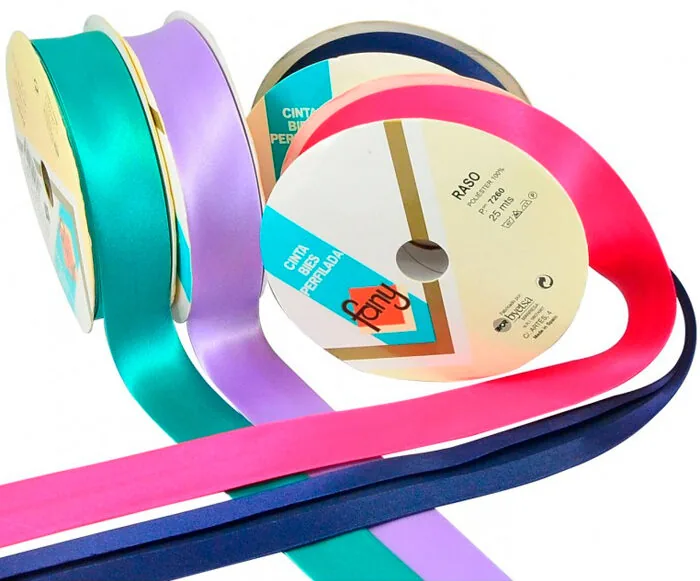
The type of yarn adds to that structure. Satin bias binding is woven with trilobal filament, whose cross-section has three lobes instead of being round. Each lobe acts as a small reflective face, giving an even sheen along the whole tape, without the dull areas that appear in lower-quality satins.
The same construction has a practical consequence: long floats snag more easily than a plain weave and the surface is slippery. That is why satin needs needles in good condition and controlled feeding. The true bias cut, at 45° to the warp, provides the stretch needed to follow necklines, armholes and rounded edges without forming pleats.
What being 100% polyester means for washing and ironing
Satin bias binding is 100% polyester. For production, this translates into dimensional stability: the tape does not shrink noticeably in the wash, so the binding does not pucker the garment after the first few wears, a common defect when a natural-fibre bias binding is combined with a synthetic fabric.
The care conditions are washing at 40 °C and ironing at two dots. The second point causes the most mistakes in the workshop: an iron that is too hot flattens the floats and leaves uneven shine or seam allowance marks that cannot be recovered. If the main garment can take a higher temperature than the bias binding, the bias binding always takes priority.
Polyester also helps colour fastness. At Byetsa, dyeing control means the same colour can be replenished in successive orders without visible differences in shade, which is decisive for collections produced in several batches or for uniforms, where a binding from another dye lot is plain to see on the sheen of satin.
Satin bias binding versus batiste, cotton and lamé: when to choose each one
Satin does not compete with the other families: it meets a specific need. It is chosen when the finish must be seen and add sheen, and ruled out when a matt finish, a natural feel or a metallic effect is wanted. The table summarises how to choose between the four families most often compared.
| Family | Composition | Finish | When to choose it |
|---|---|---|---|
| Satin | 100% polyester | Shiny and silky | Visible bindings on formalwear, lingerie, pyjamas and cushions |
| Batiste | 50% polyester + 50% cotton | Matt and smooth | All-purpose finishes for everyday garments and crafts |
| Cotton | 100% cotton | Matt and natural | Natural-fibre garments, childrenswear and patchwork |
| Lamé | 70% polyester + 30% metallic lamé | Metallic | Party wear, costumes and Christmas decorations |
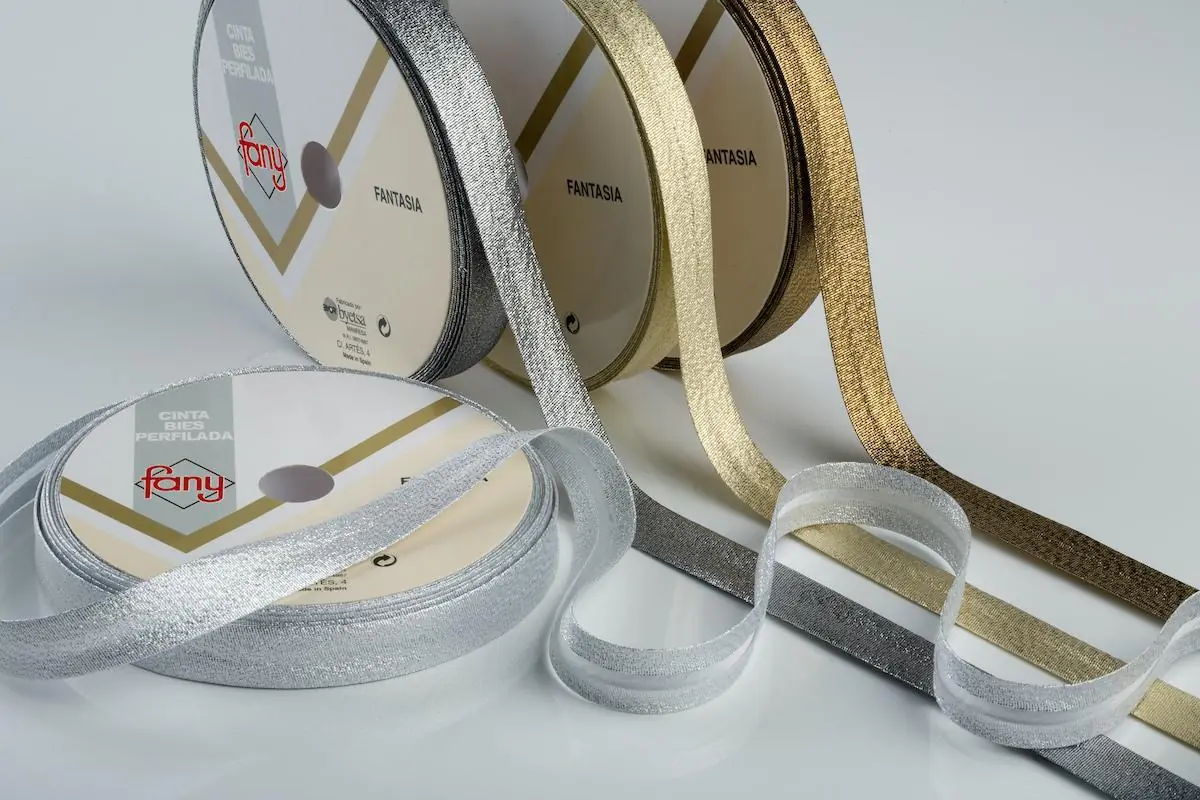
Two rules prevent most returns. The first is to match the behaviour of the bias binding to that of the base fabric: satin on synthetic fabrics or blends, cotton on cotton. The second is to keep lamé bias binding for when a metallic reflection is wanted; satin gives light, but does not imitate metal.
Which satin bias binding width and format to choose for each application
Once the fabric is chosen, two decisions remain that are usually made together but are best kept separate: width and format. The width depends on the garment and how much binding you want to show; the format depends on the machine and the type of seam. A mistake in either one costs workshop time.
With satin, the margin for correction is also small. A bias binding that is too wide on a tight curve forms wrinkles that the sheen makes obvious, and one that is too narrow does not cover the edge on thick fabrics. The criteria below are based on the standard formats; details of each presentation can be found on the formats page.
Folded satin bias binding: how to choose between 12, 18, 25 and 30 mm
Folded bias binding arrives with both edges folded at the factory, ready to sew. It is the most popular format in satin and is made in four standard widths. The choice is not aesthetic but geometric: the tighter the curve and the finer the fabric, the narrower the bias binding should be.
| Width | Typical application | Notes |
|---|---|---|
| 12 mm | Necklines, armholes, lingerie and inside seams | The best choice for tight curves and fine fabrics |
| 18 mm | Collars, cuffs, hems and general-purpose bindings | All-purpose width; the most common in haberdashery |
| 25 mm | Visible bindings on dressing gowns, pyjamas and accessories | Covers the edges of medium-weight fabrics |
| 30 mm | Blankets, cushions and other home textile items | For thick edges and wide decorative bindings |
The bias binding width guide develops this criterion for the other families; for satin, the practical rule is to test the tightest curve in the pattern before launching production.
Corded satin piping, flat bias binding and spaghetti
Not every finish can be done with folded bias binding. Corded satin piping does not cover the edge: it is inserted between two pieces and leaves a covered cord visible that outlines the seam. It is the classic choice for pyjamas, dressing gown collars and cushions, and requires a piping or zip foot to sew close to the cord.
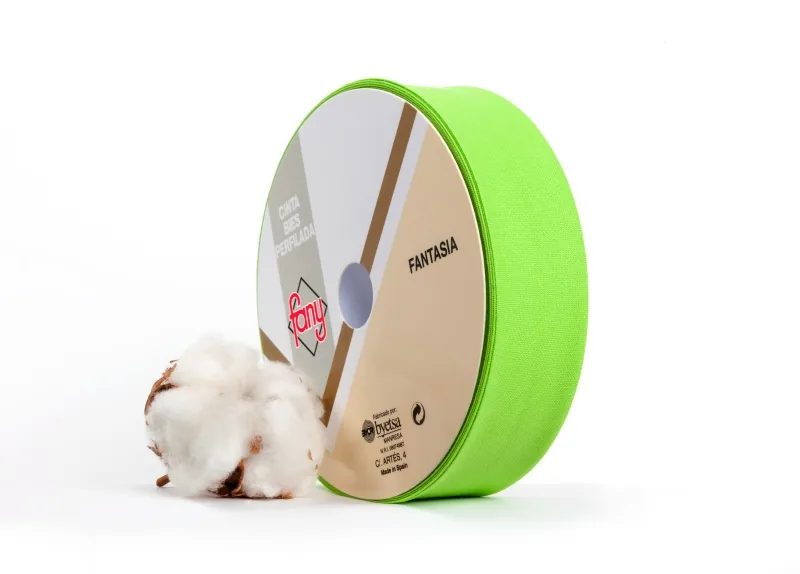
Flat bias binding is supplied flat, unfolded, cut millimetre by millimetre to the width the production requires. It is the format designed for workshops that work with a binder attachment, where the machine itself folds the tape as it sews. The cutting width must match the binder installed; a difference of a couple of millimetres is enough for the satin to slip out of the fold.
Spaghetti is a narrow tubular item used for straps, loops, ties and for covering headbands. The differences between bias binding, corded piping and flat piping explain the anatomy of each tape. In satin, the choice between them depends on whether the finish must cover, outline or tie.
Satin decor bias binding and presentations for industry and haberdashery
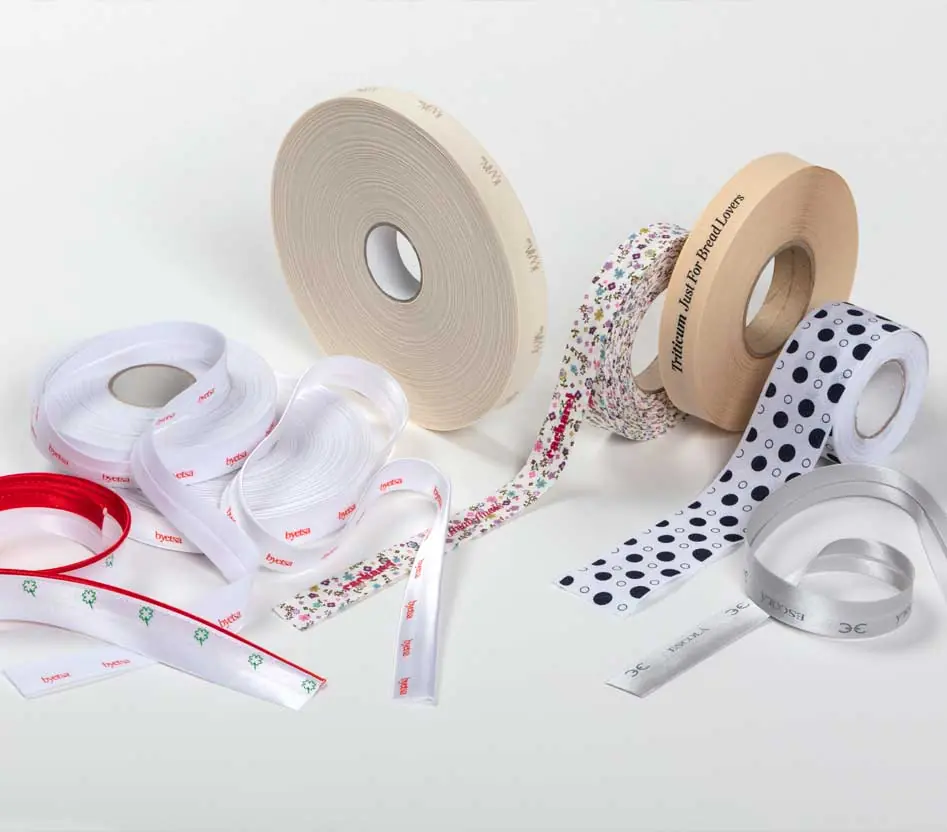
When the binding is also the trim, there is satin decor bias binding, with a scalloped edge in one or two waves, in single-fold or double-fold versions. It replaces lace edging on childrenswear, lingerie and home textiles, with the advantage that it finishes and decorates in a single seam. The range is completed by triple satin piping.
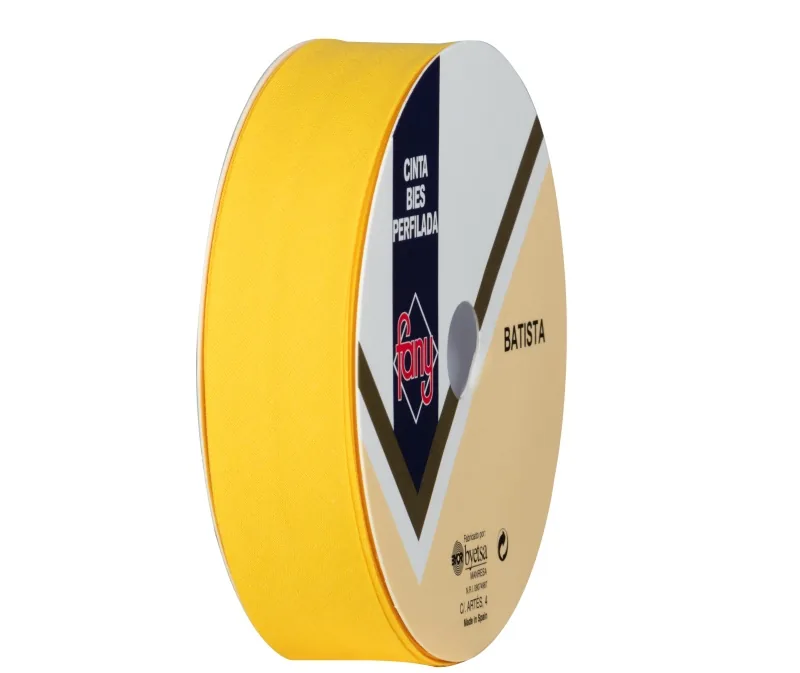
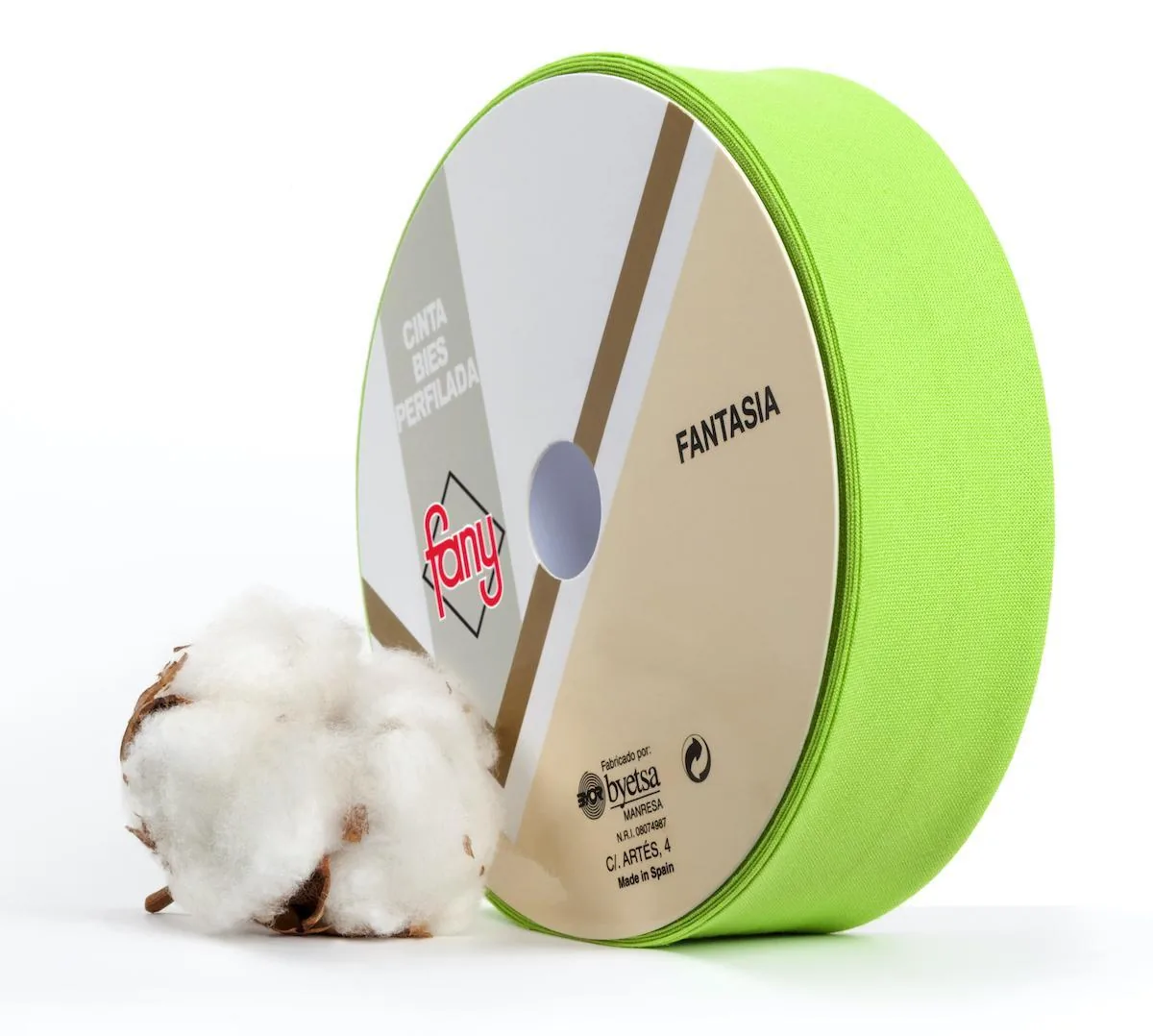
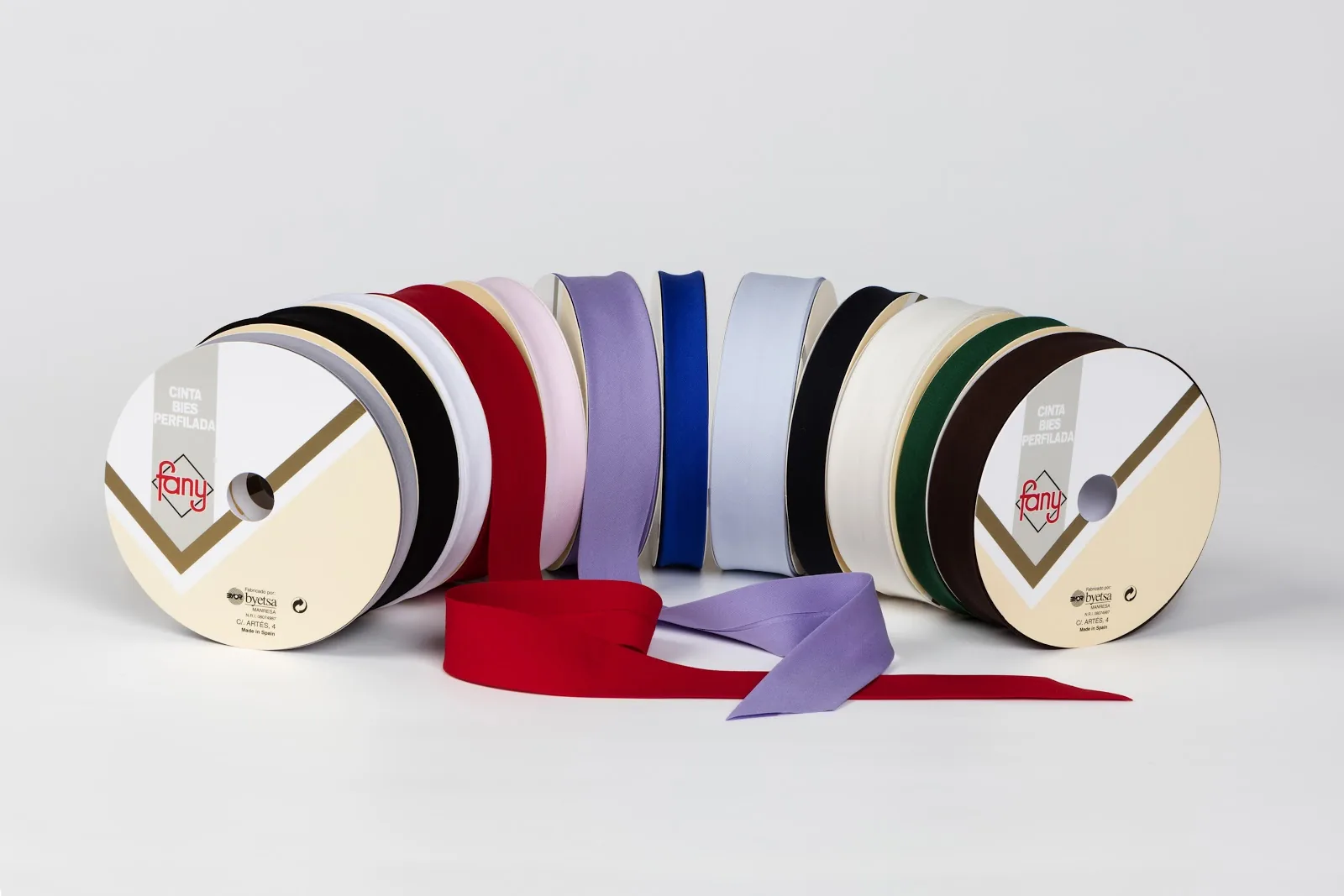
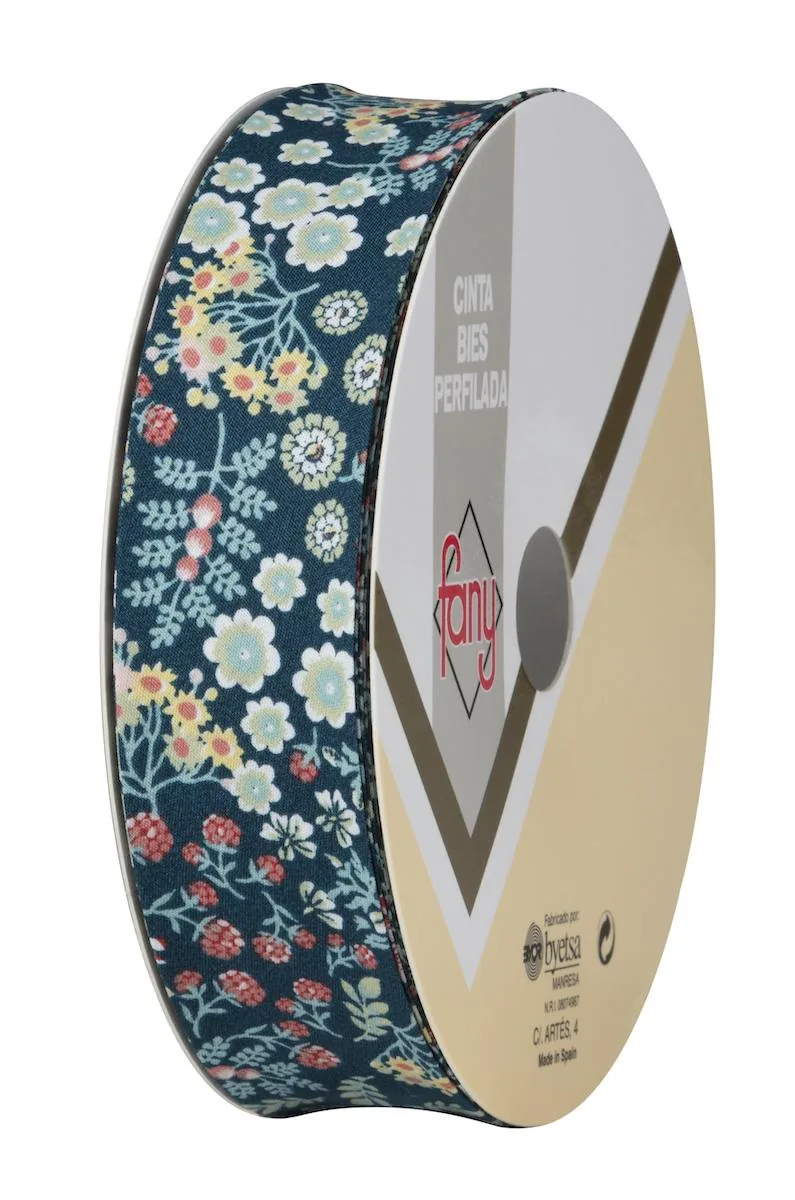
The same product comes in two presentations depending on the channel. The Byor brand brings together the industrial formats, designed to feed machines for hours; the Fany brand groups the haberdashery presentations, with lengths suited to retail sale.
| Presentation | Brand | Usual length | For |
|---|---|---|---|
| Industrial roll | Byor | 100 m or as per price list | Garment makers and manufacturers |
| Haberdashery roll | Fany | 25 m | Haberdasheries and distributors |
| Blister pack | Fany | 5 m (30 mm) | Retail sale |
| Satin decor bias binding | Fany | 10 m | Haberdasheries and craft workshops |
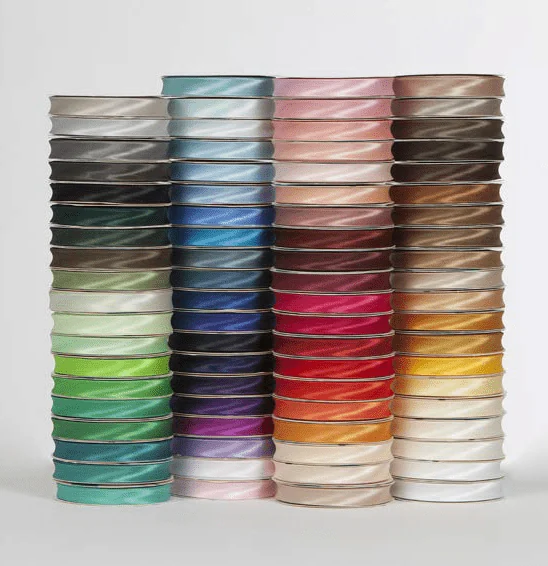
For a haberdashery, 18 and 30 mm rolls in the basic colours cover most of the demand. For a workshop, the decision is between folded and flat, depending on whether or not it has a binder. In both cases, Byetsa supplies the colours on its chart from stock.
How to apply satin bias binding in garment making
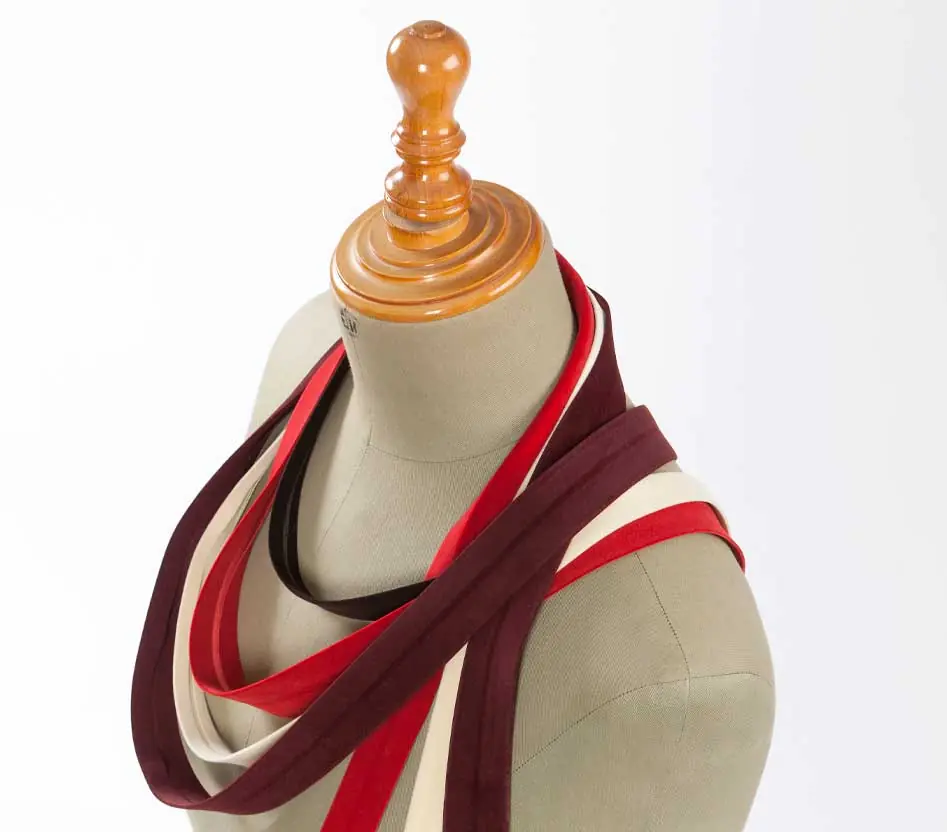
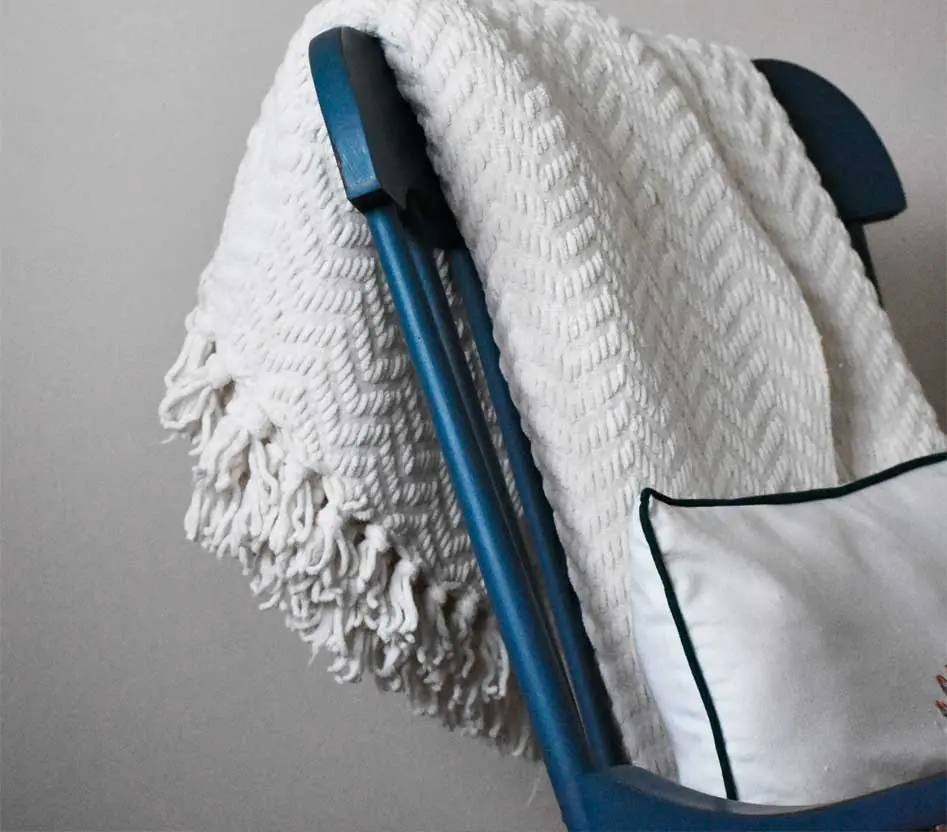
Satin bias binding is used mainly in three areas. In fashion, it finishes necklines, armholes, collars and cuffs on formalwear, pyjamas and lingerie, and neatens inside seams on unlined jackets. In home textiles, it binds blankets and outlines cushions with piping. In accessories, it covers headbands and forms ties and straps.
Use on evening dresses and gala wear has its own requirements, covered in the article on satin and lamé bias binding in haute couture. What follows focuses on series production, where the aim is a consistent result garment after garment with as few touch-ups as possible.
Sewing satin bias binding without slipping or iron shine
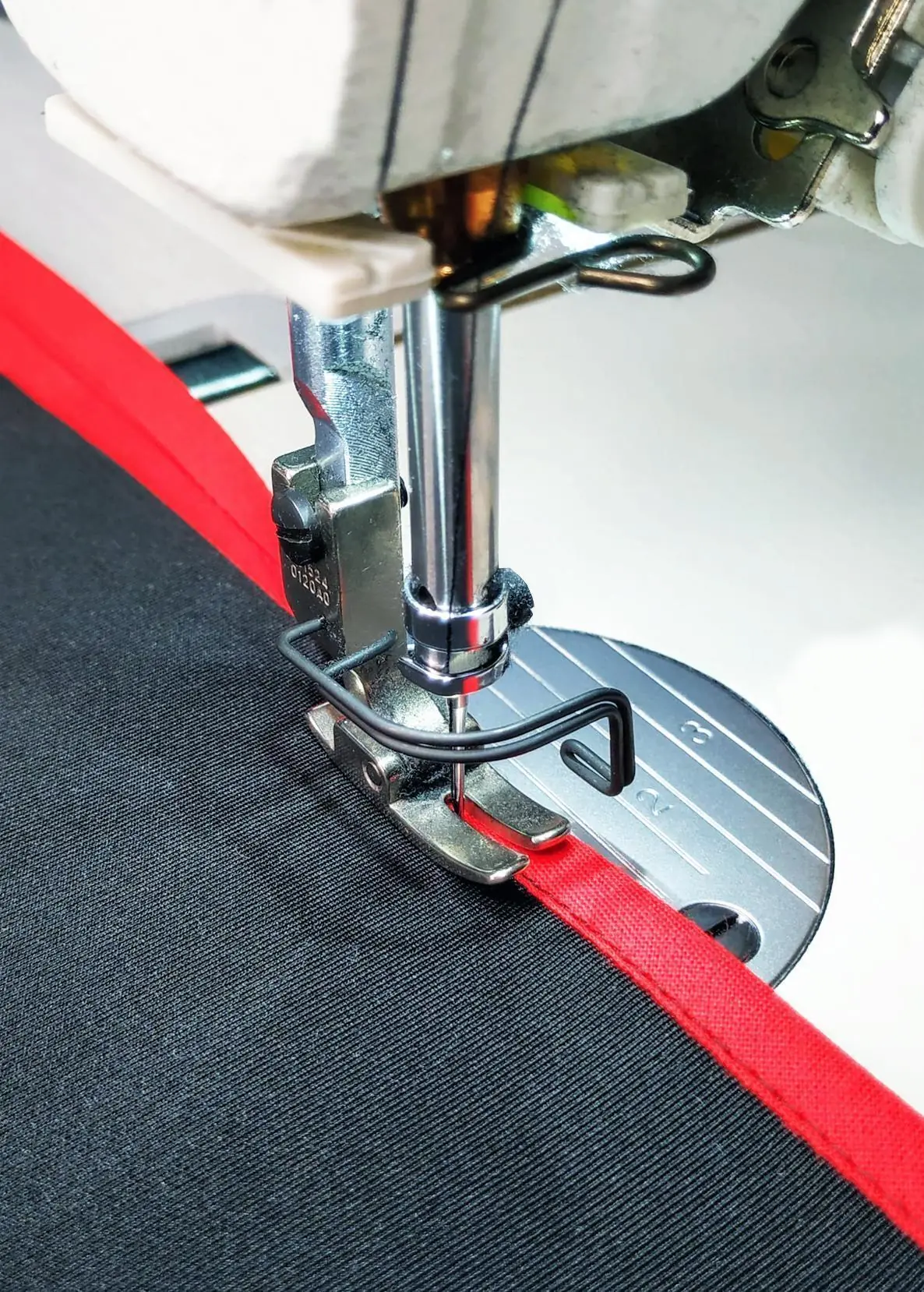
The first adjustment is the needle. A fine needle, size 60 to 70 with a sharp microtex point, passes through satin without dragging the floats. A worn needle is the most common cause of snags and puckering; with satin, it is worth changing it sooner than usual. Use polyester thread so that it behaves in the wash the same way as the bias binding.
The recommended stitch length is between 2.5 and 3 mm. A shorter stitch builds up perforations and makes the edge ripple. On a lockstitch machine, folded bias binding is sewn in two steps, first opened along the fold and then closed over the edge, or in one step with a binder foot. On curves, the bias binding is eased without stretching on concave curves and eased in slightly on convex ones.
To hold the bias binding before sewing, clips are better than pins, which can leave marks. The final pressing is done at two dots, on the reverse or with a pressing cloth, without resting the weight of the iron on the edge. These settings are a guide and should be adjusted to the base fabric of each garment.
A correct application starts with a reliable supply. Byetsa has been making bias binding in Manresa since 1969 and keeps permanent stock of more than 7,000 references. In addition to the standard widths, it offers custom widths from 12 to 50 mm and bias cutting of fabric supplied by the customer, with exact colour replenishment, reasonable minimum order quantities (MOQ) and deliveries matched to the production schedule.
We make what you need
Looking for bias binding for your production or your haberdashery?
Frequently asked questions about satin bias binding
01What is satin bias binding made of?
Satin bias binding is made of 100% polyester satin fabric, cut on the bias. The sheen comes from the satin weave and the trilobal yarn, not from a surface finish, so it lasts through washing. Being polyester, the tape has good dimensional stability and does not shrink noticeably, which stops the binding from puckering the garment with use.
02What widths does satin bias binding come in?
The most common widths of folded satin bias binding are 12, 18, 25 and 30 mm. 18 mm is the most versatile and 12 mm the right choice for tight curves. In flat format, the width is cut millimetre by millimetre to each production’s needs, and custom widths from 12 to 50 mm can be made to order.
03What is the difference between satin bias binding and lamé bias binding?
The main difference is the composition and the type of sheen. Satin bias binding is 100% polyester and has a silky, even sheen; lamé bias binding combines 70% polyester with 30% metallic yarn and produces a metallic reflection.
04Can satin bias binding be washed and ironed?
Yes. Satin bias binding can be washed at 40 °C and ironed at two dots. It is best to iron on the reverse or with a pressing cloth, because too high a temperature flattens the satin surface and leaves uneven shine. If the garment can take a higher temperature than the bias binding, follow the bias binding’s care conditions to preserve the finish.
05Which satin bias binding width is best for finishing a neckline or armhole?
For necklines and armholes, the most suitable width is 12 mm. The tighter the curve, the narrower the bias binding should be, because a wider width forms wrinkles on the inner edge that the sheen of satin makes very visible. On medium-weight fabrics or gentle curves, 18 mm can be used.
06Can satin bias binding be ordered in a custom width?
Yes. In addition to the standard widths, Byetsa makes bias binding in custom widths from 12 to 50 mm and supplies flat bias binding cut to the exact width required by the workshop’s binder attachment. It is also possible to cut fabric supplied by the customer on the bias, when the finish must match the garment fabric exactly.
Related articles
Cotton vs. Polyester Bias Tape: Technical Guide for Industrial Garment Manufacturing
Technical differences, properties and industrial performance of cotton and polyester.
Read article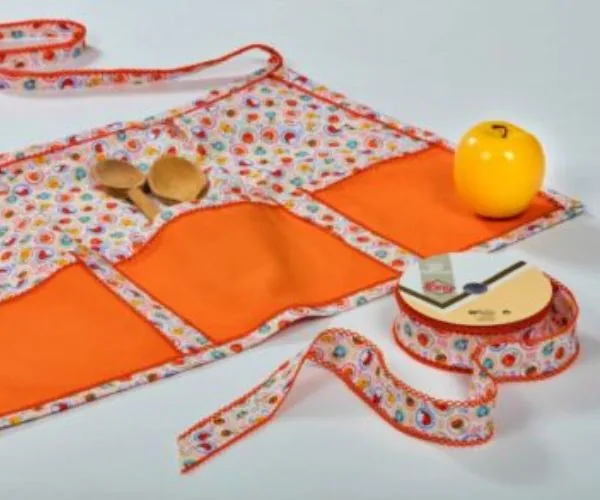
Types of stitching for Byetsa bias tape
Features and uses of each seam for applying bias binding.
Read article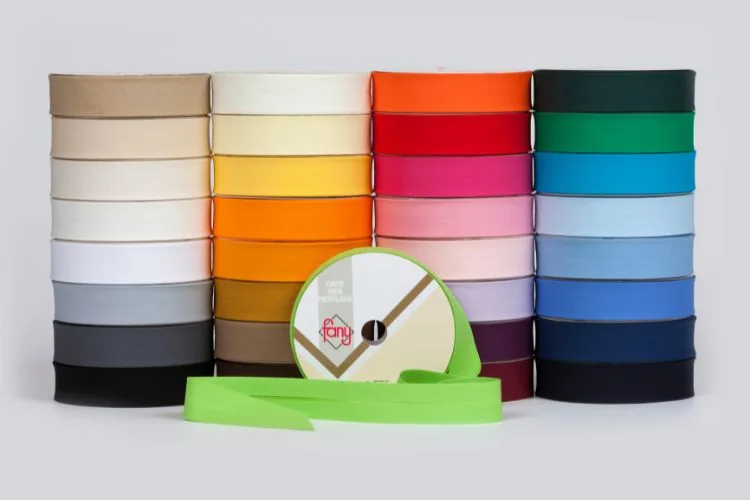
Cost Optimisation in Garment Manufacturing: Advantages of Buying Bias Tape Wholesale in Europe
How to cut workshop costs by buying bias binding wholesale.
Read articleDo you have a question about bias binding?
If you have any questions about our products or need personalised advice, please do not hesitate to contact our team. We are here to help you in any way we can. Write to us!
- Phone93 874 40 98
- Emailinfo@byetsa.es
- AddressC/ Artés, 4 · Pol. Ind. Els Dolors · 08243 Manresa (Barcelona)
Tell us what you need
We will reply with the right reference, format and width for your production.